


Written by
John Shieldsmith03/18/2026
Wine Ecommerce
Get The Print Version
Tired of scrolling? Download a PDF version for easier offline reading and sharing with coworkers.
A link to download the PDF will arrive in your inbox shortly.
Key highlights
Wine ecommerce is a business model in which a winery or seller can offer their products online, reaching a larger customer base than a traditional in-person winery.
The wine ecommerce market makes up roughly 10% of wine revenue in the U.S. and is poised to continue growing at a CAGR of 10.53%.
Wine ecommerce is rife with challenges, including legal and compliance matters, quality control and inventory management, and safe and legal shipping.
The increasing capabilities of AI-powered automation will result in a greater emphasis on a more personalized wine shopping experience, including digital tasting rooms and real-time product recommendations.
BigCommerce has a number of features that make it ideal for winery ecommerce, including automatic tax management, comprehensive point-of-sale support, and access to compliant shipping via integrations.
The wine market is alive and well in the U.S., with revenue hitting $62 billion in 2025. That’s a whole bunch of grapes. But what about selling wine online? Pop the champagne (or wine). In 2025, $6.73 billion in revenue was made in the wine ecommerce market.
Sure, the majority of connoisseurs go to their local wine shop or supermarket, but more and more people are opting to buy wine online. In the past 10 years alone, the number of people buying wine online has nearly doubled.
The rise of direct-to-consumer (DTC) sales has played a role in this, a model popularized by brands like Warby Parker and Dollar Shave Club. An increased access to powerful ecommerce platforms have also played a role in creating ideal soil for buying and selling wine online.
It’s not all cabernet sauvignon and chianti, though. Those looking to get into wine ecommerce have some sour grapes to deal with, including state and federal legal hurdles.
Fortunately, a little planning and the right ecommerce platform can get you on track, selling wine, and smelling the rosés in no time.
Challenges of wine ecommerce.
Like any ecommerce business, wine sellers have to deal with various shipping and logistics hurdles. Unlike many industries, winery ecommerce is rife with additional red tape, and industry-specific educational needs.
Compliance and licensing for online wine sales.
Whether you’re running a winery online or in Napa Valley, there’s no getting around the compliance and licensing requirements in the alcohol industry.
Unlike local wine shops, online wine stores need to obtain the appropriate license for their area of operation, and the appropriate shipping license for each state you plan on selling to.
Tip: Start by checking with your local state Alcoholic Beverage Control (ABC) board to see which requirements you need to meet to operate in the wine ecommerce market. Your state’s office will typically have resources to help you safely and legally expand, too.
Shipping and logistics.
Online wine sellers have a number of shipping and logistics hurdles that go beyond those of less regulated ecommerce businesses, such as:
Special packaging must be used, typically a pulp or molded foam.
Labels need to clearly state the container has alcohol inside.
Wine must be stored and shipped at the right temperatures to avoid spoiling the product.
Those shipping and delivering the wine need the right license, which can vary by state.
Upon delivery, the signature of someone 21 or older is required.
The amount of alcohol that can be in a package varies by state.
Keep in mind the above can not only complicate the shipping process, but result in higher shipping costs than those found in other industries. Partnering with a shipper that specializes in wine or alcohol can make up for their cost by taking a lot of the logistics burden off your shoulders.
Tip: Be transparent about added shipping costs and additional fees up front. This can help reduce cart abandonment and build trust with your customers, increasing the chances they come back for another bottle of chardonnay another day.
Inventory and supply chain management.
It’s unlikely your entire supply of wine is local, with many likely coming from France, Italy, Spain, or New Zealand. One of the biggest perks of ecommerce is being able to offer more products to a greater audience, after all. But, with wine in particular, this introduces some hurdles.
Wine must be stored at the appropriate temperature, otherwise it won’t deliver on promised notes of greatness. This means maintaining the right amount of inventory in the right environment, lest you have overflow product in a hot storage room.
Keep in mind supply chain management becomes increasingly tricky as you introduce more shipping and storage locations. You want to ensure you have a beloved prosecco or bordeaux available in each market, but you also don’t want them aging improperly or selling out too frequently.
Tip: Embrace inventory management tools, which can help you track product in real-time using AI-powered automation and analytics. This can help you optimize inventory levels, ensuring you have the right amount of premium wines, fewer favorite wines selling out all the time, and less spoilage.
Customer trust and education.
Wine has a long history of being a connoisseur’s drink. So much so, studies show many non-wine drinkers are intimidated by it.
Alongside this, online wineries have the usual challenge of building trust with customers. Fortunately, this is something you can accomplish over time by practicing transparency, starting with listing those shipping costs upfront.
Tip: Help customers with content that educates them on the difference between a rosé and a pinot noir, which pairs well with what, and so on. With the help of machine learning, you can even personalize wine pairings for customers based on their previous purchases.
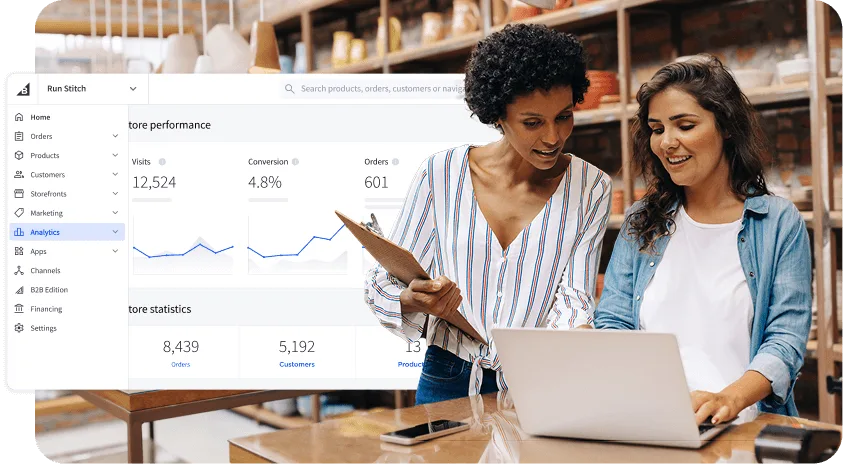
Find your favorite features.
Explore all of the capabilities of the BigCommerce platform.
Essential platform features for a successful wine ecommerce business.
Many ecommerce platforms have similar offerings, with functionality that spans everything from inventory management to helpful automations to site builders. These features can be a boon to winery ecommerce, but there are a number of wine-specific features you should also look for, like tax integrations and winery point-of-sale (POS) systems.
The following features can help you deliver the best online wine shopping experience and reduce the chances things go sideways.
Age verification tools.
Age verification is a must for online wine sellers. While not legally required the moment someone visits your site, adding it as an initial gate is a good idea. By doing so, you’re preventing underage visitors and reducing the chances of an illegal sale.
It’s also critical you have age verification in place at the time of checkout. Again, not every state has the same laws around this, but by putting it in place across the board, you’re protecting yourself no matter where you operate.
BigCommerce makes this easy, offering a number of apps designed for age verification.
Robust stock and inventory management.
It can’t be understated how important the right conditions are when it comes to storing wine. If wine is too hot, the cork can expand and air can turn vintage into garbage. A high level of UV exposure, like sunlight, can similarly spoil even the best sauvignon blanc.
Some ecommerce platforms will feature robust stock and inventory management tools, which can help by:
Notifying you when a certain product is low
Pulling from historical data to show inventory trends by SKU
Consolidating your inventory across locations
Automatically syncing inventory across locations anytime a sale is made
With the right inventory management tools, you can streamline wine management across the country, manage complex omnichannel sales, and ensure you have a healthy supply of new arrivals and old favorites alike.
Reliable payment processor system.
Ecommerce data breaches are incredibly damaging to customer trust. And, they’re expensive: the average data breach costs an organization upwards of $4 million. This makes a secure payment processor system a must.
When shopping for a platform, you need security, efficiency, and flexibility. Consider the following factors when vetting a platform:
Security: Choose a payment processor with secure technologies like SSL encryption to protect your transactions and sensitive customer data.
Fees: Compare the fees charged by different payment processors, including transaction, setup, and monthly expenses.
Payment methods: Choose a payment processor that accepts most common methods, like credit cards, debit cards, and online payment systems like PayPal.
Integration: Consider how well the payment processor integrates with your winery website and other software systems, such as your shopping cart, CRM system, and accounting software.
Striking a balance is key. You need to keep your customers safe, and you need to make sure you can accept as many payment types as possible, otherwise you risk losing business.
Shipping and compliance management.
Again, many states have different rules around shipping alcohol, including how many can be shipped at once. Fortunately, the right software and tools can simplify this.
Look for a platform or integration with tools that can:
Quickly identify shipping restrictions in each market.
Handle tax calculations automatically.
Simplify shipping rates.
Partner you with compliant shipping partners.
For example, BigCommerce offers an integration with ShipperHQ. With this integration, you can quickly identify which shipping partner in your area is the most cost effective, get real-time delivery updates, and ultimately reduce shipping frustrations and costs.
Subscription options.
Wine consumers aren’t averse to securing a steady supply. Just look at the long history of wine clubs, which have helped U.S. wineries generate recurring income since 1972. With an online subscription for wine, you’re doing your part to keep this tradition alive.
Choose an ecommerce solution that makes it easy for customers to sign up for a subscription plan using their preferred payment type. With this, you should also be getting their email, which opens the door to email marketing and newsletters.
You know what pairs well with subscription support? The option to sell and accept online gift cards.
Diverse marketing tools.
In-person tastings and exhibitions at your local farmer’s markets are great for connecting with an immediate audience, but digital marketing is a must if you want to expand and truly benefit from the online model.
The ideal wine ecommerce software should help you with this undertaking, offering features or integrations that support:
Email marketing: Support from trusted email marketing platforms, like Klaviyo or Hubspot, can make it easier to build and manage a list, quickly create templated emails, and engage with your customers.
Paid advertising: Integrations with various digital marketing and advertising platforms can streamline the paid process, making it easier to automate and launch ads across Google, social networks, and beyond.
Customer loyalty programs: Find a platform with support for customer loyalty programs. These can help you attract and keep current customers, which is far more cost effective than landing new ones.
Marketing tools are only half the equation. Marketing efforts take planning and time, often delivering an ROI long after launch. But, with the right digital marketing strategy and tools at your side, your competitors can be green with envy at all the red wine you’re selling.
Scalability.
Any ecommerce platform worth its weight in grapes needs to be scalable. Your ecommerce product catalog will grow, site traffic will increase, and you’ll hopefully expand into new markets. You need a platform to match.
When shopping for a platform, make sure it can accommodate well beyond your initial demands. Dream big. But, it’s also important the price doesn’t scale out of your range, either.
The future of wine ecommerce.
With ecommerce continuing to grow and platforms more available and capable than ever before, the future is bright for those looking to sell wine online. And with the rapid explosion of AI in ecommerce, the model as a whole is set to continue its evolution.
But, what’s this future look like for wine ecommerce?
Increasingly virtual adaptations of experiences.
In the beginning, online wineries could merely sell wine. Now, with advancements in AI and personalization, you can begin offering more personalized experiences that mimic that of a sommelier offering insights.
This is only scratching the surface, too. Some companies, like Wine360, are even embracing virtual reality to deliver multi-sensory experiences. Others are offering AI-powered sommeliers that can help shoppers find their next favorite.
Automation will humanize wine ecommerce.
It may sound counterintuitive, but automation can help humanize the online wine shopping experience, making it more akin to an in-person visit to a winery. Imagine:
A customer sees your brand via social ad, much like driving by a billboard.
That customer lands on your page and receives an automated chatbot message welcoming them.
The chatbot makes product suggestions based on the engagement, like a sommelier would.
The customer purchases the wine, later receiving an automated email, with personalized messaging that suggests additional wines to try.
The above scenario isn’t far-fetched, but possible today. And, its applications go beyond personalized product recommendations. You can have event invites sent to top shoppers, with personalized messaging, automatically send holiday reminders, and beyond.
Sustainable and eco-friendly practices.
Consumers are increasingly aware of the environmental impact of their purchases, embracing conscious consumerism — a movement that makes up 40% of North American spending. This extends to wine, too. The organic wine industry has a CAGR of 10.53% and could have a market size of 32.84 billion by 2034.
In 2026 and into the coming years, expect a continued demand for more organic wine offerings. Beyond this, you can make sure you’re doing your part in the conscious consumer movement by:
Using eco-friendly packaging.
Advertising any nonprofit or environmental work you’re taking part in.
Reducing your carbon footprint and using responsible shipping companies.
As an online business, you have the benefit of being website-centric. Use this space to be proud of your efforts and showcase what you’re doing to be more environmentally and socially aware.
An increasingly personal shopping and marketing experience.
While automation can help deliver an experience that mimics the personal one offered by an in-person winery, AI can help further personalization in shopping and marketing.
Eighty-three percent of U.S. shoppers are wanting more personalization, and modern AI and automation can enable exactly this with:
Increasingly accurate product recommendations based on purchases and browsing habits.
Marketing assets hyper-personalized to match a customer’s profile and shopping history.
Chatbots that pull from all channels to offer a more personalized conversation.
Automated discounts for customers with specific lifetime purchase histories, and more.
Automated surfacing of relevant content via chatbots and templated emails.
The above list is only a sampling of the ways in which AI and automation can help personalize shopping, marketing, and content for customers. And, it will further enable the best omnichannel experience possible.
Frictionless purchasing process.
Lower friction during the purchasing process is increasingly important in the world of ecommerce. Where the emphasis used to be on making checkout as simple as possible, businesses need to focus on the ENTIRE shopping process by:
Using clear, detailed product descriptions and images that make wine more accessible to connoisseurs and casuals alike.
Offering clear product filters that enable customers to sort products by region, type, bottle, price, and so on.
Including a live web chat service or questionnaire to help customers narrow their preferred wines based on their preferences.
Providing various payment options, including ongoing subscriptions that provide better value and simplify shopping.
Simplifying the checkout process, reducing the steps required to complete a purchase and the information customers have to enter.
Clearly listing shipping and return prices and policies, leaving no ugly surprises for the final stages of checking out.
Worth noting, none of the above should be ignored. In one survey, a lack of payment method support was the second reason for cart abandonment. In another, it was found younger generations are more likely to abandon a cart if e-wallets aren’t an option.
By streamlining your purchasing process and expanding what you accept, you’re future-proofing your business and setting the stage for ongoing success.
There's a lot to love ❤️
Watch a demo to see the BigCommerce platform in action.
Ecommerce platforms for wine industry websites.
There are countless ecommerce platforms used in the wine industry. To help you narrow it down, we’ve examined some of the top contenders in this space.
BigCommerce.
BigCommerce offers a powerful ecommerce platform with features that extend well beyond the usual.
With BigCommerce, you get access to:
A drag-and-drop site builder that makes it easy to create a professional website that reflects your brand, without the headache of finding a design agency or building it yourself. With mobile-responsive sites, you can rest assured your customers can access your business on the go.
Easily customizable checkout experience with a one-page design that streamlines the process for you and customers alike. With support for digital wallets and no added fees or penalties, you can future-proof your checkout experience and give younger generations what they want.
An extensive library of integrations and modules allows you to expand functionality quickly and safely, without having to worry about compatibility issues.
The suite of tools available with BigCommerce makes us ideal for those just starting and seasoned wine sellers alike. With the ability to scale and support multiple storefronts, we can grow with your business, no matter how big.
Commerce7.
Commerce7 is an ecommerce solution tailormade for wineries. With an emphasis on data, Commerce7 has a number of powerful features, including:
Dynamic pricing that matches a customer's shopping habits, history with your company, and more.
Real-time checkout optimization, including quick recommendations of products that help customers reach free shipping.
Integrations with your CRM platform that enable smart management of events, in-person tasting, and tours.
For those sticking to wine ecommerce and not branching into other markets, Commerce7 is a unique, data-fueled choice that can be especially helpful for those with physical stores. With the recent acquisition of Wine Direct, Commerce7 is looking to further expand in-person support, too.
Corksy.
Corksy is another wine-specific cloud-based ecommerce platform, prioritizing simplicity and a quick setup. Despite its simplicity, Corksy has a number of standout features:
Setup in less than 24 hours from the moment a client begins onboarding.
Single-tap wine club registration, enabling customers to quickly join your wine club and start earning discounts.
A mobile POS that makes it easy for you or your staff to sell in-person at events, markets, and so on.
For those looking to get into their local markets and start small, Corksy makes it easy to get up and running.
VinoShipper.
VinoShipper offers an all-in-one winery ecommerce experience, with features aimed at small-to-medium businesses. Some of their standout features include:
Wine-specific compliance management tools that take the stress out navigating the wine industry’s red tape.
A fee-less setup process that requires no down payment to start.
A direct-to-consumer approach through partnership with the Craft Wine Association.
For those making their own wine, VinoShipper is a unique offering that makes it easier to embrace the DTC model. With no fees upfront, it’s an especially compelling choice for those operating on a limited budget.
Shopify.
Shopify is a household name in the ecommerce space, offering a variety of features across industries. Specific to wine ecommerce, they have a number of strong features:
Support for physical POS hardware can help you seamlessly transition between selling online and in-person.
Membership tier systems make it possible to offer wine clubs or subscriptions with multiple pricing tiers and offerings.
Partnership with Winehub further supports clubs and memberships, along with referral rewards and flexible delivery options.
Shopify offers countless features, with support for hundreds of integrations. With a low monthly starter cost, it can fit those just starting or those looking to grow. Keep in mind many integrations come with additional costs that can quickly add up.
How BigCommerce can help you scale your winery ecommerce.
You take great care in selecting the best wines to offer your customers, choosing only to attach your name to the finest. The same care should go into choosing your ecommerce platform — care that your ecommerce platform should reciprocate.
With BigCommerce, you get numerous features and tools that can help you build long-term success, whether you’re just sprouting on the vine or a fine vintage.
Excise tax management.
It isn’t all well-paired meats and cheeses with wine. You’re still operating a business that sells alcohol, and that means navigating federal, state, and local excise taxes.
BigCommerce is partnered with providers like Vertex, Avalara, and TaxCloud, making it possible for us to offer automatic tax setup. This takes the guesswork out of taxes, and frees you up to focus on the finger things, like messaging, marketing, and meads.
Unified inventory management.
Feedonomics has redefined omnichannel retail with powerful tools designed to reach more people and drive more sales. You can manage inventory across marketplaces, social commerce, and sales outlets with this seamless integration.
With BigCommerce and Feedonomics, you can optimize, advertise, sell and fulfill products across 100+ channels, driving performance, higher returns on advertising spend, and, ultimately, more revenue.
Powerful Point-of-Sale (POS) integrations.
The ecommerce model enables you to sell online, to virtually anyone, but it shouldn’t limit in-person offerings either.
BigCommerce gives you freedom of choice with your point-of-sale (POS) system, allowing you to choose an option that enables online and in-person shopping. And, it integrates across your digital and physical storefronts, ensuring you don’t have any inventory mishaps.
B2B features.
A host of B2B features open the door to wholesale markets. With our Buyer Portal, you can automate invoices and quotes and streamline CRM efforts — two of the biggest hurdles when venturing into B2B.
BigCommerce also offers more than 100 B2B-optimized site themes, making it possible to quickly build a separate storefront for your B2B audience. From there, you can begin B2B marketing, without impacting your existing B2C messaging efforts.
Wine ecommerce success stories with BigCommerce.
BigCommerce has helped countless wineries take their tasting rooms online, expand their family-owned businesses into the digital world, and launch entirely new brands within ecommerce.
Take the following two companies for example, each of which found success through BigCommerce by taking totally different paths.
Moore Brothers Wine Company.
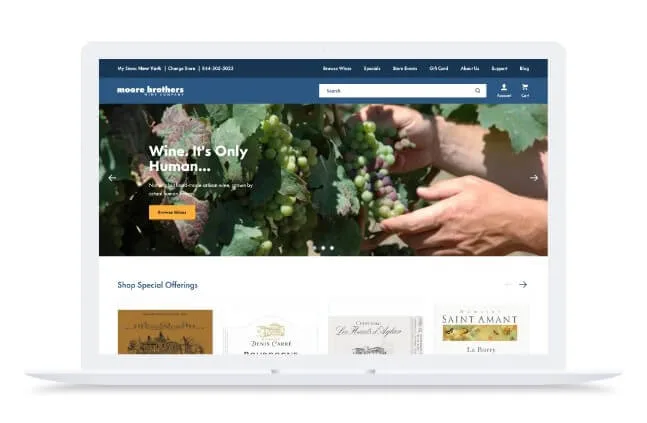
Case Study: Moore Brothers Wine Company
David and Greg Moore can trace their wine roots back to 1996, when they launched Moore Brothers Wine Company in New Jersey. From the moment they opened their doors they prioritized the customer experience, striving to make each customer experience personal and unique.
In 2014 they launched their first ecommerce store, eventually discovering their bespoke website couldn't handle growth like they'd hoped.
This is where BigCommerce came in, offering the brothers a customizable platform with extensive API support. This allowed them to continue growing, while fostering an online experience that put the customer first.
Since then, they've maintained a customer-first approach, while realizing a 28% increase in conversion rates, 16% increase in orders, and a 16% increase in revenue.
“Now that we’re on BigCommerce, I can kind of relax a little bit and focus on other things.”
— Terry Moore, Operations Manager, Moore Brothers Wine Company
Woodland Hills Wine Company.
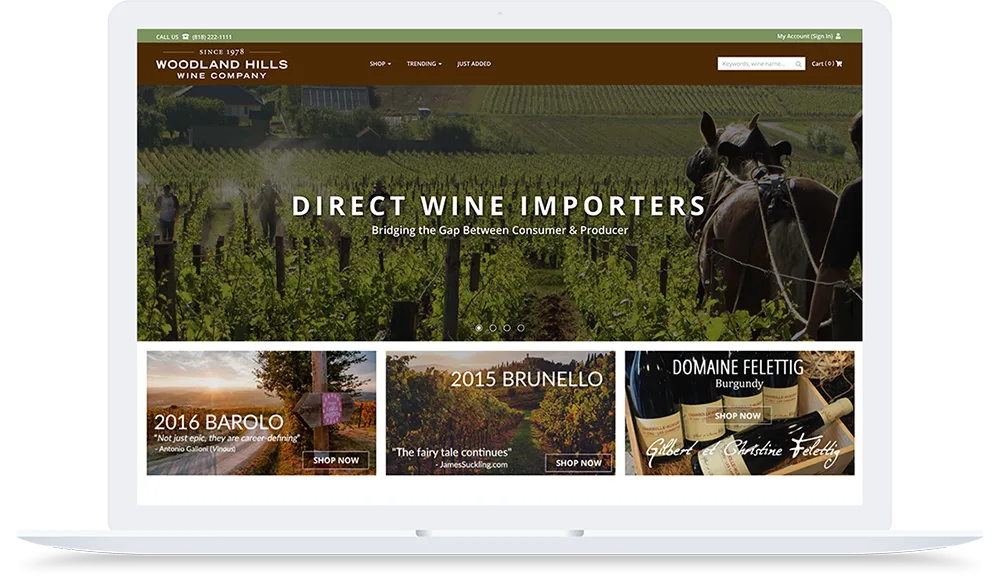
Case Study: Woodland Hills Wine Company
The Woodland Hills Wine Company began in 1978 as a family-owned business, eventually taking form as the winery it is today in 1998. Based out of Woodland Hills, California, Woodland Hills Wine Company focuses on delivering true specialty wines, often in the price range of $3,000-15,000.
As the business grew, so did their PCI compliance woes. This led them to BigCommerce, drawn in by our platform's ability to take on software maintenance and upgrades, along with PCI compliance matters.
“Personally, I was really pushing hard for the walled-garden of a SaaS solution. I wanted someone else to host and manage the servers and platform. I also wanted updates and payment integrations to be handled by somebody else. However, I wanted to retain a high level of control through JavaScript, HTML, or an API.”
— Jon Morgan, IT Project Manager, Woodland Hills Wine Company
Paired with the powerful services and integrations available at BigCommerce, Woodland Hills Wine Company achieved a 387% increase in organic search conversions, along with an 82% and 109% boost to revenue and conversion rates from all traffic sources. And all while maintaining their reputation for truly top shelf wine.
The final word.
It’s an exciting time for the world of wine ecommerce. With advancements in AI and automation, it’s never been easier to deliver the personalized experience tasting rooms are known for. Paired with the right ecommerce platform, and you can plant the seeds of long-term success for your business.
BigCommerce has helped countless wineries find their audience and drive sustainable growth. Whether you’re new, seasoned, digital only, hybrid, or finding a new niche in the world of virtual reality, we can help you, too.
Sign up for a free tasting and see how BigCommerce can help you navigate this increasingly personal, online world.
FAQs about wine ecommerce
Which licenses you need to sell wine online can vary depending on the state or country in which you operate and sell to. For example, to sell wine online in Florida, you’ll need a license from the Florida Division of Alcoholic Beverages and Tobacco.
It’s possible to dropship wine, but there are a number of considerations that can complicate the process, including state regulations and rules around direct-to-consumer (DTC) sales of alcohol.
If you want to dropship wine, you need to consider the following:
Legal requirements: Each state has laws and regulations governing the sale of wine, with some permitting DTC sales and others not.
Shipping logistics: Shipping wine requires special handling, packaging, and temperature control to ensure the wine arrives in good condition. Choose a supplier or manufacturer with expertise in wine shipping. It’s also important to ensure the state you’re shipping to doesn’t have limits on how much wine can be shipped at once.
Overall, dropshipping wine is a great option for selling wine online with the shortest time to market and minimal startup costs, but it requires careful planning to ensure compliance with regulations and to deliver high-quality products to customers.
Yes, winemakers can use a direct-to-consumer (DTC) model to sell products directly to consumers, rather than use an intermediary, like a retailer or wholesaler. This can result in higher profit margins, greater pricing control, and more flexibility in product offerings.
Additionally, selling directly to consumers lets wine businesses personalize the customer experience and build lasting relationships.
You can sell wine on Amazon, but take note that it's considered a “restricted” product. This means sellers must undergo a special approval process, which can include a number of safety and security checks.
You must also keep in mind:
Amazon only allows the sale of wine in certain states.
You still need the appropriate liquor license to sell alcohol online, and comply with state regulations.
You must comply with federal regulations regarding the sale of wine. This includes obtaining the appropriate labeling and packaging for your wine products.
Amazon has specific guidelines for the sale of wine on its platform. You must follow these guidelines to list your wine products for sale on Amazon.
Research shows that email marketing and social media are two of the top digital channels for wineries to drive traffic and repeat business. With advancements in AI and automation, you can further personalize efforts in these channels, resulting in further gains.
Offering virtual wine tastings to ecommerce customers can benefit your business by delivering a more engaging marketing experience, rather than a passive one. With a virtual wine tasting, you can have an actual specialist lead a virtual tasting experience, or use modern AI-powered tools to deliver a personalized, automated tasting and pairing experience based on customer preferences.
Wine companies can use modern AI to automate product recommendations, deliver more personalized automated emails and marketing collateral, and even provide constant support via chatbot.
All of these efforts can help engage customers and improve sales, while also taking numerous tasks off your plate. This frees up resources, making it possible to focus more on refining the customer experience and prioritizing growth.
⏰ Isn't about time that you evaluated your ecommerce platform?
Request a demo to see how the BigCommerce platform is different.