




Written by
Mandy Spivey02/27/2026
Ecommerce Payment Processing Explained (Updated 2026)
Get The Print Version
Tired of scrolling? Download a PDF version for easier offline reading and sharing with coworkers.
A link to download the PDF will arrive in your inbox shortly.
Key highlights
Ecommerce growth is accelerating global payment volume, driving rapid innovation in secure, digital-first transaction systems.
A payment gateway encrypts and transmits customer payment data, enabling fast and secure authorization between banks and processors.
A streamlined checkout with multiple payment options directly increases conversion rates and reduces cart abandonment.
Security tools such as tokenization, 3D Secure authentication, and AI-powered fraud detection protect revenue and build customer trust.
Platforms like BigCommerce simplify global payments with pre-integrated gateways, multi-currency support, and customizable checkout experiences.
Everyday global ecommerce continues to expand, and payment processing sits at the center of that growth. Every online purchase relies on a coordinated system of gateways, processors, banks, and security protocols that work together in seconds to authorize and settle transactions.
As digital commerce becomes the default purchasing channel, customers expect fast, flexible, and secure payment experiences. Businesses that invest in modern ecommerce payment infrastructure reduce friction at checkout, expand into international markets more easily, and are more able to protect revenue from fraud.
This guide explains how ecommerce payments work, the core components involved, the most popular payment methods, and how platforms such as BigCommerce support scalable, global payment strategies today and into the future.
The essential components of ecommerce payment processing
Ecommerce payment processing services are more than just ways for businesses to get paid; for online transactions, they enable secure and seamless electronic transactions between merchants and their customers.
Payment gateway: Your digital point-of-sale.
Think of a payment gateway as a software-based, secure intermediary in ecommerce that authorizes and processes credit card or digital wallet payments between a customer and a merchant. It acts as a digital, online version of a point-of-sale terminal, encrypting sensitive data and ensuring secure transactions from end to end.
Payment processor: The transaction handler.
Working behind the scenes, ecommerce payment processors manage the communication of transaction data between your business, the customer's bank (issuing bank), and your bank (acquiring bank). Many card companies now offer combined gateway-processor solutions, with industry leaders like Stripe, Square, and PayPal providing comprehensive services under one roof.
Merchant account: Your business banking solution.
To accept card payments, you'll need a specialized merchant account. However, modern payment platforms have simplified this requirement by allowing businesses to operate under their master merchant accounts, significantly streamlining the setup process and reducing barriers to entry for new online stores.
Security and fraud prevention: Protecting your business.
Online transactions inherently carry more risk than in-person sales. To safeguard your business and customers, implement robust security measures, including:
Address Verification Services (AVS)
Card Verification Value (CVV) checks
3D Secure authentication (Visa Secure, Mastercard Identity Check)
Tokenization technology
Advanced fraud detection algorithms
These tools work together to create multiple layers of protection against unauthorized transactions.
PCI DSS compliance: Meeting industry standards.
The Payment Card Industry Data Security Standard establishes the security framework all businesses handling card information must follow. Compliance protects sensitive information and reduces fraud risk. Many ecommerce platforms and payment providers reduce a business’s PCI scope by securing data storage and transmission on their behalf.
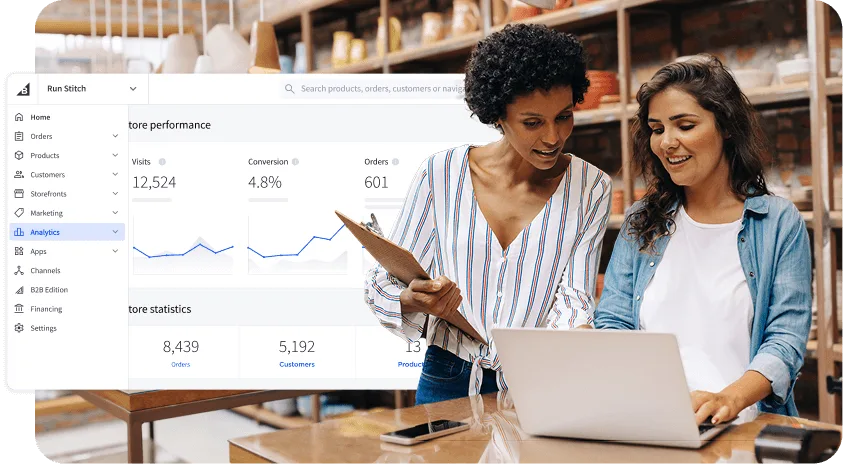
Find your favorite features.
Explore all of the capabilities of the BigCommerce platform.
Understanding the payment processing pipeline
Understanding the payment processing pipeline is not just a technicality, but a crucial part of your ecommerce journey. When a customer purchases online, their payment travels through an intricate, yet lightning-fast digital pathway. Let's explore this journey step by step.
Step 1: Customer submits payment.
It all begins with customer intent. After browsing and selecting items, the customer proceeds to checkout, where they enter their payment information — card number, expiration date, CVV, and billing address — on the merchant's website or app.
Step 2: Data encryption and transmission.
Once submitted, this sensitive payment information needs protection. The merchant's website immediately encrypts the data and securely transmits it to the payment gateway, the first checkpoint in the verification process.
Step 3: Authorization request.
The transaction details flow seamlessly from the payment gateway to the payment processor, which acts as a traffic director. The payment processor then routes the request through the appropriate card network (e.g., Visa, Mastercard, American Express) until it reaches the customer's issuing bank for verification.
Step 4: Approval or decline.
At this critical juncture, the issuing bank performs several essential checks. It verifies available funds or credit, confirms security details like the CVV and Address Verification System (AVS), and ultimately decides to approve or decline the transaction.
Step 5: Settlement.
The bank's decision doesn't stay put. Whether approved or declined, the response message travels back through the same channels — card network, payment processor, payment gateway — until it reaches the merchant's website, where the customer receives confirmation.
Step 6: Reconciliation.
The visible transaction may be complete, but the financial journey continues. If approved, the issuing bank sends the funds (minus interchange fees) through the card network to the acquiring bank. This financial institution, known as the acquiring bank, deposits the money into the merchant's account after deducting its fees and processor charges. However, this settlement typically happens in batches rather than instantly, usually taking one to three business days.
Closing the loop: Payment reconciliation.
Finally, the merchant's system reconciles the payment with the order, ensuring everything balances correctly. This involves cross-checking the payment details with the order information to maintain financial accuracy and complete the ecommerce payment processing cycle.
Popular ecommerce payment methods
The future of online shopping is here; ecommerce businesses that support multiple payment methods increase conversion rates and meet customer preferences.
Credit and debit cards.
The backbone of online commerce, these bank-issued plastic cards provide secure transactions with robust fraud protection while building credit history or directly accessing your funds.
Digital wallets.
Virtual payment powerhouses like PayPal and Apple Pay revolutionize checkout experiences by securely storing multiple payment methods for fast transactions across devices and platforms.
Bank transfers and ACH payments.
Direct account-to-account money transactions provide enhanced security and reduced processing fees for businesses while giving customers peace of mind through established banking infrastructure.
Buy Now, Pay Later (BNPL) options.
BNPL is becoming more popular for people shopping online, and it’s easy to see why. Financial flexibility meets instant gratification as merchant services like Klarna and Afterpay transform major credit purchases into manageable installments without the traditional burden of credit card interest.
Cryptocurrency.
Blockchain-powered digital currencies enable borderless, decentralized transactions with enhanced privacy and reduced fees, representing the cutting edge of financial technology innovation.
Prepaid cards.
Perfect for those who are budgeting, gifting, or shopping anonymously, pre-funded payment instruments offer spending control without requiring bank accounts or credit checks.
Examples of top payment processors
PayPal.
A leading digital wallet and online payment system, this secure payment system allows customers to send, receive, and manage funds. Paypal accounts act as a secure intermediary, so users can make online purchases without needing to disclose financial details with sellers — linking bank accounts, credit cards, or debit cards for fast, in-store, and online transactions.
Stripe.
The technology company that provides financial infrastructure for the internet, Stripe enables ecommerce businesses to accept online payments, send payments, and manage complex financial operations, all while offering a secure, customizable payment gateway for apps and websites. It supports credit cards, digital wallets, and local payment methods around the globe.
Square.
A comprehensive and cloud-based financial services platform, Square Payment (formerly known as Square) enables businesses to accept credit card payments in-person, online, or via their mobile devices, effectively turning smartphones or tablets into point-of-sale systems using plug-in hardware or contactless technology.
Apple Pay.
This form of payment functions as a secure, contactless mobile payment service by Apple that allows its users to make purchases in stores, online, and in apps using an iPhone, Apple Watch, iPad, or Mac. It digitizes both credit and debit cards, storing them in the Apple Wallet app to enable quick, secure payments via Face ID, Touch ID, or a passcode, without needing to share actual card numbers.
Amazon Pay.
Another secure online payment service, Amazon Pay allows users to make purchases on third-party websites and apps using the payment methods and shipping addresses already saved in their Amazon account. The ecommerce payment processing service streamlines checkout by eliminating the need to re-enter payment information, offering a fast, trusted, and secure experience.
Google Pay.
Google Pay is a free and secure digital wallet and contactless payment service developed by Google for Android devices. It allows users to make, store, and manage payments, purchasing in stores using NFC, in-app purchases, and using saved cards for online shopping.
Authorize.net.
A leading, Visa-owned ecommerce payment gateway service, Authorize.net enables businesses to securely process credit card and electronic check (eCheck) payments online, in-person, or via phone.
Adyen.
Adyen is a financial tech platform and is designed for enterprise-level commerce. Its services include acting as a payment gateway, processor, and acquiring bank in a single, unified ecommerce payments solution. Ayden allows businesses to accept payments via online, mobile, and in-person (POS) channels, providing tools for fraud management, revenue optimization, and cross-border transactions.
Worldpay.
With key features including payment gateways, card machines, and recurring billing,
Worldpay is a global fintech company that provides comprehensive payment processing services, enabling businesses to accept payments online, in-store, and via mobile.
2Checkout (Verifone).
Now part of Verifone, 2Checkout, is a cloud-based global payment processor and monetization platform designed for software, SaaS, and online service businesses to manage international transactions, subscription billing, recurring payments, and tax compliance.
How to choose the right ecommerce payment provider
Choosing the right payment provider for your online store isn't just a technical decision — it's a strategic one that directly impacts your bottom line and customer experience. Here's how to make this critical choice with confidence:
Assess your business fundamentals.
Before diving into options, evaluate your transaction volumes, business model, technical capabilities, and industry risk profile. High-volume sellers need solutions different from boutique shops, while subscription businesses require recurring billing functionality.
Look beyond the basic fee structure.
Don't be lured by advertised rates alone. Compare pricing models (flat-rate, interchange-plus, or tiered) while accounting for all potential costs — from gateway fees to chargeback penalties. The most transparent provider often delivers better long-term value than the cheapest option.
Ensure seamless platform integration.
Your payment solution must work flawlessly with your ecommerce platform. Whether you need plug-and-play simplicity or robust API capabilities, prioritize providers with proven compatibility for your specific setup.
Prioritize security without compromise.
With digital fraud on the rise, robust security isn't optional. Look for PCI DSS compliance and advanced fraud prevention tools, including address verification, 3D Secure, and AI-powered detection systems.
Match payment options to customer preferences.
Your ideal provider should support your target audience's payment methods, including local options and multiple currencies for international businesses.
Why payment processing makes or breaks the customer experience
In the digital marketplace, your checkout experience isn't just a transaction; it may be the last impression that determines whether customers complete their purchase or abandon their shopping cart.
The most well-designed website and perfectly curated product selection means nothing if customers can't easily pay. A streamlined payment process doesn't just process transactions — it builds trust, encourages repeat business, and significantly impacts your bottom line.
Simplify the checkout flow.
A streamlined checkout process is your secret weapon against cart abandonment. Choose between hosted checkouts, which redirect customers but simplify your security requirements, or integrated checkouts, which keep customers on your site for a more cohesive experience but require additional technical implementation.
Offer multiple payment options.
Customers expect choices. Beyond essential credit cards (Visa, Mastercard, Amex, and Discover), consider offering digital wallets like PayPal, Apple Pay, and Google Pay to boost conversions. Other options include BNPL and multi-currency support for global shoppers.
Enable guest checkout and auto-fill.
Speed and reliability are non-negotiable in ecommerce. Downtime means lost sales while forcing account creation, which adds unnecessary friction. Implement guest checkout options and leverage browser auto-fill capabilities to create a faster, more convenient payment experience.
Optimize for mobile users.
With mobile commerce continuing its rapid growth, your checkout must perform flawlessly on smaller screens. Ensure responsive design, touch-friendly elements, and simplified forms that accommodate mobile payments.
Localize for international shoppers.
Different regions have unique payment preferences. Customizing your payment options based on geographic location shows customers you understand their needs and increases conversion rates in international markets.
The future of online payments
The ecommerce payment landscape is undergoing a revolutionary transformation. As digital commerce continues its exponential growth, payment processing is evolving from a mere transaction step to an intelligent, seamless experience that shapes the entire customer journey.
Seamlessness and "invisible" payments.
The future checkout experience will virtually disappear into the background of the shopping journey. One-click solutions, securely stored payment credentials, and embedded payment technologies will create frictionless transactions. Biometric authentication using fingerprints, facial recognition, and potentially voice patterns will replace traditional passwords, especially on mobile devices. We'll also see contextual payments triggered automatically by IoT devices — imagine your refrigerator ordering and paying for groceries without human intervention.
AI-powered security and personalization.
Artificial intelligence will revolutionize fraud prevention through real-time pattern recognition across vast datasets beyond human capabilities. Security measures will become more dynamic, with adaptive authentication that adjusts based on risk signals rather than applying uniform rules. The checkout experience will become personalized, with merchants proactively offering preferred payment methods and tailored financing options based on customer behavior.
Borderless commerce.
Payment providers will create unified platforms handling multi-currency pricing, local payment methods, foreign exchange, and international compliance, making global selling significantly easier for merchants of all sizes. Cross-border payments remain a complex challenge, with industry experts noting that, unlike domestic systems, "there's no single rulebook or framework that all banks follow."
Crypto and decentralized finance (DeFi) innovations.
While cryptocurrencies remain niche for everyday transactions, stablecoins and Central Bank Digital Currencies show promise for faster, cheaper cross-border payments as regulatory frameworks mature. Though growing, DeFi represents a small fraction of overall ecommerce volume compared to cards, digital wallets, or even BNPL.
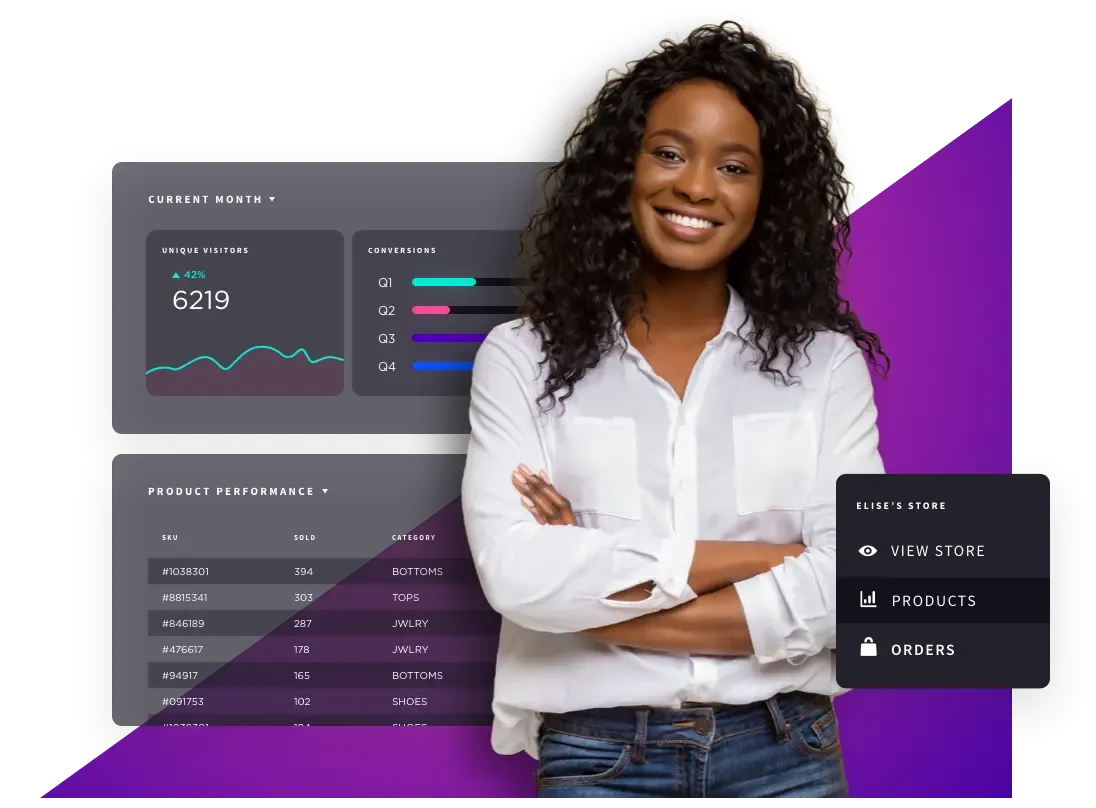
Get a proposal for a custom ecommerce plan.
Our highly-skilled service teams that are experts at growing ecommerce businesses. Reach out to get a personalized proposal.
How BigCommerce supports ecommerce payments
BigCommerce offers robust integrations and flexible options to support your ecommerce payment strategy, whether you're a small ecommerce business or an enterprise brand.
Pre-integrated payment gateways and providers.
BigCommerce simplifies ecommerce payments by offering over 65 pre-integrated, PCI-compliant payment gateways, enabling ecommerce brands to accept payments in more than 140 currencies across 230 countries.
With a one-click setup, businesses can quickly establish credit card processing. The platform supports digital wallets like Amazon Pay and Google Pay, enhancing mobile shopping experiences. It also provides accelerated checkout options, such as Stripe Link, PayPal, and Fastlane to streamline purchasing.
Maybe most importantly, merchants can choose their preferred ecommerce payment providers without incurring additional transaction fees, making BigCommerce a flexible and cost-effective ecommerce solution for global operations.
Multi-currency and localized payment support.
Accepting payments and displaying prices in more than 100 currencies, BigCommerce helps small businesses worldwide to stake a claim in their local markets through connections with Stripe, PayPal, and Adyen. Customers experience online shopping in their local currency format, while businesses benefit from precise exchange calculations.
Global sales expand as a natural consequence of seeing familiar currency symbols during the checkout process. No extra charges apply for these cross-border capabilities. Your international clients will appreciate the convenience of purchasing without mental math or conversion surprises.
Seamless checkout customization options.
Our enhanced ecommerce payment system provides customers with a fully customizable, single-page checkout experience. Features include guest checkout options, wallet integrations from multiple providers, various languages and currencies support, and convenient "Buy Now" buttons embedded throughout your site.
Each element works together to streamline purchasing, decrease abandoned carts, and boost conversions by creating an experience tailored to shopper preferences.
Scalable infrastructure for global expansion.
BigCommerce supports ecommerce payment processing and worldwide growth through reliable, scalable systems. Hosted on Google Cloud, it ensures high performance and reliability, even during peak traffic. Customer data remains protected thanks to PCI DSS Level 1 certification and ISO/IEC 27001:2022 compliance measures.
Flexibility comes from API-driven architecture that enables custom checkout experiences and various integrations. With tools for localized storefronts, language support, and regional payment methods, BigCommerce empowers businesses to manage international expansion from a single, central hub efficiently.
The final word
Ecommerce payments power every online transaction, connecting customers, merchants, financial institutions, and security systems in a matter of seconds. Behind each completed checkout is a structured process of encryption, authorization, settlement, and reconciliation.
Businesses that prioritize payment performance gain measurable advantages. Offering multiple payment methods increases conversions. Strong fraud prevention protects margins. Fast, reliable checkout builds trust and encourages repeat purchases. As global commerce expands, multi-currency support and localized payment options become crucial for continued growth.
BigCommerce supports this evolution with pre-integrated payment gateways, flexible provider choice, customizable checkout experiences, and global currency capabilities.
By combining security, scalability, and flexibility, brands are given the tools and the tech that enable them to build a payment strategy that supports long-term growth in an increasingly digital marketplace.
Learn more about our platform and what it can do for your business.
FAQs about ecommerce payments
A payment gateway is a secure payment technology that acts like an online POS terminal. It encrypts and transmits customer payment data from your ecommerce website to the payment processor for authorization. You typically need a separate merchant account.
A payment service provider (PSP) is a broader, often all-in-one payment processing solution. It includes gateway functionality but also handles payment processing. It usually provides the merchant account (or equivalent), supports multiple payment methods, and offers fraud prevention tools, simplifying the entire process under a single provider.
Some payment service providers (PSPs) may offer faster settlement options, sometimes with next-day or even faster processing for specific platforms or fees, but the standard timeframe remains one to three business days. Bank transfers, such as ACH, can sometimes take slightly longer to settle than credit card payments.
Yes, absolutely. Stores can accept recurring ecommerce transactions or subscription payments. Common use cases include:
Software as a Service (SaaS)
Streaming services (video, music)
Subscription boxes (beauty products, coffee, snacks)
Membership sites (online courses, premium content)
Recurring donations for non-profits
Service retainers
While it's a standard capability, setting it up requires choosing a payment provider with the necessary features and correctly configuring the billing logic.
B2B ecommerce payments are different from typical B2C transactions in a few ways: these transactions typically have higher transaction values, longer payment cycles (i.e., net terms), and more complex, negotiated invoicing rather than immediate credit card payments.
B2B payments often use Automated Clearing House (ACH), bank transfers, or trade credit, which usually require approval workflows for bulk orders.
Digital wallets, including Apple Pay and Google Pay, significantly improve mobile checkout performance by reducing transaction times to just a few seconds via biometric authentication, which minimizes friction and dramatically lowers cart abandonment rates. These digital wallets boost mobile conversions by providing a one-click, secure checkout experience, replacing manual form filling with saved payment credentials.
Online businesses can reduce payment-related cart abandonment by streamlining their checkout flow, offering more diverse payment methods (e.g., digital wallets, BNPL), and ensuring more transparent pricing.
Implementing guest checkout, autofill features, and displaying visible security trust badges also lowers friction and boosts trust, directly improving conversion rates.

There's a lot to love ❤️
Watch a demo to see the BigCommerce platform in action.