


- Featured
B2B Edition
Advanced B2B features for enterprise plans.Catalyst
NewCreate stunning, high-performing storefronts that captivate and convert.Feedonomics
Omnichannel feed and data transformation.Multi-Storefront
Manage multiple unique stores from one account.International
Grow your brand across the globe.

- Launch Services
Overview
Chart your path to success with specialized services.Implementation Project Management
Experts to ensure you launch on time and under budget.Solution Architecture
Seasoned advisors to help you best design your store.Data Migration & Optimization
Expertise on a clean and clear path to migrating your data.Enterprise Launch Package
Personal training on how to set up and launch your BigCommerce Store.

Professional Services Blog Series
Get to know our teams and how they support your success in this Q&A series.

The Global B2B Buyer Behavior Report
This in-depth report provides actionable strategies to help you sell more online.

BigCommerce vs. woocommerce
Think big.
Grow bigger.
Like every growing business, you're always thinking about your next move — that’s why you need a commerce platform that allows you to turn vision into reality and keep wowing your customers.
No pressure. No commitment.

Backed by brands who know the difference.


The Real Deal
Freedom to build. Power to scale.
Your current platform may be free, but it doesn’t give you freedom. Trade slow site speeds, complicated plug-ins, and high maintenance costs for a platform that works with you — not against you.


More plugins shouldn't mean more problems.
Eliminate plugin conflicts with native features designed to work together — so updates don’t put your revenue at risk.

Remember when your store used to be fast?
We bring that feeling back — with modern infrastructure, 99.99% uptime, and speed that scales with your business.

Free shouldn’t come with an *asterisk.
Each plug-in seems inexpensive — *until you add them up. Get lower ownership costs with powerful features built in from the start.
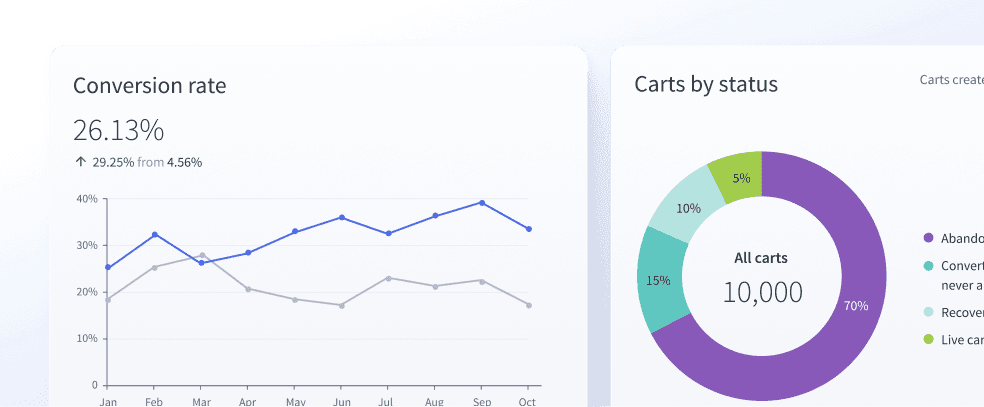
Stack less plugins and stack more wins.
Say goodbye to paid extensions and ongoing upkeep. With hosting, security, and updates included, spend less time fixing and more time growing.
See the difference.
211%
ROI within 8 months.
90%
developer time savings.
30%
increase in conversion.
One’s a puzzle. One’s a platform.
Plugins are great — until they run your roadmap. Get native features and performance that drive momentum.
Testimonials
From Woo to whoa.
“That's the simplicity of using nearly 70 different apps on WooCommerce to BigCommerce. BigCommerce is all we need.”

Rob Buckley, Managing Director
239%
increase in revenue.
164%
increase in orders


Where growing businesses go after Woo.
This is what scaling feels like when your platform finally stops getting in the way.

211% ROI within 8 months.
90% developer time savings.
30% increase in site conversion.
It's time to think bigger.
Meet with an expert to map out your move from Woo to a platform designed to grow with you.
Switching from WooCommerce to BigCommerce FAQs
BigCommerce offers multiple migration paths depending on how hands-on you want to be. You can:
- Use the Catalog Transfer app to move your products and catalog data independently.
- Leverage built-in WordPress integrations to maintain your existing content experience while running commerce on BigCommerce.
- Work with BigCommerce’s Migration Services team for expert-led support from planning through launch.
During migration, you can typically transfer:
- Products and SKUs
- Categories
- Customers
- Order history
- URLs (with proper redirects to preserve SEO)
The process usually follows four clear steps:
- Audit and planning: identify what data, design, and integrations you want to carry over.
- Data migration: move your catalog and customer data.
- Design and configuration: rebuild or refresh your storefront using BigCommerce themes or a custom frontend.
- Testing and launch: validate payments, shipping, taxes, and performance before going live.
WooCommerce is a WordPress plugin. To run a professional ecommerce store, you typically need to layer on multiple third-party plugins for essential features like subscriptions, advanced promotions, shipping rules, security, and performance optimization. That flexibility can be powerful, but it also means you’re responsible for managing updates, resolving plugin conflicts, maintaining hosting, and handling security.
BigCommerce is a fully hosted, open ecommerce platform built specifically for selling online. Essential capabilities like multi-currency, customer segmentation, advanced promotions, PCI compliance, automatic updates, and 24/7 support are built in, not bolted on. That means fewer moving parts, fewer surprise costs, and less maintenance overhead.
At first glance, WooCommerce appears less expensive because the core plugin is free. Running a professional store on WooCommerce typically requires paid extensions, premium themes, hosting, security tools, performance optimization, and ongoing developer support. Many essential features like advanced shipping rules, subscriptions, or enhanced checkout functionality come with annual fees. Over time, those add up, turning “free” into a much higher total cost of ownership.
BigCommerce uses transparent monthly pricing that includes hosting, security, automatic updates, PCI compliance, and a wide range of built-in features out of the box. There are no additional transaction fees from BigCommerce, and businesses often reduce reliance on paid third-party apps and developer maintenance.
It depends on how comfortable you are managing the technical side of your store.
WooCommerce is a WordPress plugin, so setup involves securing hosting, installing WordPress, configuring WooCommerce, and then adding extensions for payments, shipping, security, performance, and more. For business owners who are technical, or have a developer, this flexibility can help. But for many small and mid-sized businesses, the ongoing plugin management, updates, and troubleshooting can become time-consuming.
BigCommerce is a fully hosted ecommerce platform designed specifically for selling online. Hosting, security, automatic updates, PCI compliance, and essential features like advanced promotions, multi-currency, and customer segmentation are built in. That means fewer integrations to manage and less maintenance behind the scenes.
This is where the day-to-day reality shows up.
With WooCommerce, you’re responsible for managing the entire stack. That includes hosting, installing updates, monitoring plugin compatibility, handling security patches, maintaining backups, and ensuring PCI compliance. Every new plugin adds flexibility, but also another moving part. Updates can feel risky, and when something breaks, you’re often coordinating between your host, your theme developer, and multiple plugin providers to figure out what happened.
BigCommerce takes a very different approach: Security, hosting, automatic updates, and PCI compliance are built into the platform — not bolted on. The infrastructure is managed for you, with 99.99% uptime and enterprise-grade protection working behind the scenes. That means fewer late-night fire drills, fewer “what broke?” moments, and more confidence during high-traffic events.
WooCommerce offers customization because it’s open source. With enough plugins and developer time, you can shape almost any experience. But that freedom often depends on layering extensions, custom scripts, and theme tweaks, which can introduce complexity as your business grows.
BigCommerce takes a powerful approach: flexibility without fragility.
Get robust, built-in features like Multi-Storefront, advanced promotions, customer group segmentation, and multi-currency support, all natively supported. No hunting for plugins. No stitching together tools from different vendors. When you want deeper customization, BigCommerce’s open-APIs and headless capabilities give your developers the freedom to build what your brand needs.
With WooCommerce, speed often depends on your hosting provider, how many plugins you’re running, your theme, your caching setup, and how well everything plays together. As your store grows, database bloat and plugin conflicts can slow down both the frontend and backend. Getting to “fast” usually requires optimization tools, CDNs, and ongoing developer oversight.
BigCommerce is built differently: It’s a fully hosted open platform designed for performance at scale, with 99.99% uptime and infrastructure optimized for high-traffic events. Speed isn’t something you patch together, it’s engineered into the platform. In fact, brands that migrate often see dramatic improvements. After switching to BigCommerce, GourmetFuel achieved a 39% increase in conversion rate, a 164% increase in orders, and a 239% increase in revenue — performance gains that compound as traffic grows.
WooCommerce runs on WordPress, which is widely known for its blogging and content capabilities. If content marketing is central to your strategy, WordPress offers deep control over blog structure, plugins, and SEO tools. With the right extensions and technical setup, you can fine-tune many on-page elements.
BigCommerce, however, is built specifically for ecommerce growth — and that focus matters.
You get SEO-friendly URLs, automatic sitemaps, customizable metadata, and fast page performance out of the box, all on a platform engineered for scale. Because hosting, performance, and security are built in, you’re less likely to run into technical slowdowns that impact rankings or user experience.
WooCommerce can support multichannel and international selling, but it typically relies on third-party plugins for marketplace integrations, multi-currency, multilingual storefronts, and cross-border tax handling. That flexibility is powerful, but it often means managing multiple extensions, and ensuring they continue to work together as your catalog, traffic, and regions expand.
BigCommerce approaches expansion as a built-in capability, not an add-on. There’s native features like multi-currency, customer group segmentation, advanced promotions, and Multi-Storefront, allowing you to run multiple brands, regions, or storefronts from a single backend. BigCommerce also integrates directly with major marketplaces and social channels, helping you centralize operations while expanding your reach.
WooCommerce can support B2B use cases, but typically through multiple extensions. Features like customer-specific pricing, bulk discounts, quote requests, net payment terms, and role-based access usually require third-party plugins and custom development. It’s possible to build a robust B2B experience, but often involves stitching together tools and maintaining custom logic as your needs evolve.
BigCommerce, on the other hand, offers B2B capabilities built directly into the platform, including price lists, customer group segmentation, advanced promotions, and support for complex catalogs. With B2B Edition, businesses can manage company accounts, assign user roles and permissions, enable quote management, and offer payment terms, all within a scalable, secure environment.
WooCommerce can scale, but it typically scales with effort. As order volume increases, you may need stronger hosting, database optimization, caching tools, and developer support to maintain performance. Adding new functionality like subscriptions, advanced promotions, international storefronts often means introducing additional plugins and ongoing maintenance.
BigCommerce is designed to scale by default. It’s a fully-hosted open platform with 99.99% uptime and infrastructure built to handle high-volume traffic and large catalogs, including 2M+ SKUs and 400+ API calls per second. Features like Multi-Storefront, multi-currency, advanced promotions, and built-in security are native to the platform, so growth doesn’t require layering on additional tools.
WooCommerce is open source, so you have direct access to the PHP codebase and WordPress architecture for customization. You have direct access to the PHP codebase, database, and WordPress ecosystem. For developers who want full control over the stack and are comfortable maintaining it, WooCommerce offers freedom. Extend functionality through custom plugins, hooks, and theme overrides.
BigCommerce takes a different approach: open platform with enterprise-grade infrastructure.
Experience a fully-managed backend: hosting, security, PCI compliance, updates, plus powerful APIs and webhooks for deep integrations. Developers can build headless storefronts, integrate ERPs and PIMs, customize checkout experiences, and extend functionality without managing core infrastructure. The platform supports high API throughput (400+ calls per second), and massive catalogs (2M+ SKUs), which is critical for complex environments.