







Omnichannel Retail
Get The Print Version
Tired of scrolling? Download a PDF version for easier offline reading and sharing with coworkers.
A link to download the PDF will arrive in your inbox shortly.

Written by
Mandy Spivey02/11/2026
Key highlights:
Omnichannel retail connects online, mobile, and in-store experiences into one seamless customer journey, improving retention and lifetime value.
Retailers using three or more channels drive significantly higher engagement and retain far more customers than single-channel sellers.
A unified omnichannel strategy requires integrated data, inventory, and customer experiences across all touchpoints.
Brands that deliver consistent pricing, promotions, and service across channels outperform competitors on loyalty and conversion.
The ways we shop are changing everyday.
Sometimes it feels like minute by minute.
Mobile devices gave us 24/7 accessibility. Marketplaces like Amazon made it easy to window shop, add to cart, and have products delivered within a 2-day timeframe.
Shoppers now have a plethora of places where they begin their buying journey: digital channels, mobile devices, and social networking platforms just to name a few.
This ever-evolving demand for a seamless experience across sites and apps means businesses must be in more places, and the most successful plan for an omnichannel strategy.
Brands understand that to remain relevant, they must be omnipresent.
Omnichannel shopping has become a key driver for customer retention.
According to CapitalOne Shopping Research, as many as 91% of retail consumers are omnichannel shoppers.
The transformation demands more than just adding digital touchpoints or modernizing legacy systems. Success requires a complete reimagining of the customer journey.
What is omnichannel retail?
Omnichannel retail is a comprehensive strategy that creates a unified, seamless customer experience across all shopping channels, including ecommerce platforms, mobile apps, marketplaces, and physical stores.
Instead of operating channels in isolation, omnichannel retail integrates every touchpoint into one connected ecosystem, enabling brands on platforms like BigCommerce to deliver consistent pricing, promotions, inventory visibility, and service, regardless of how or where customers shop.
This integration means customers can start shopping on a mobile app, check inventory at a local store, and complete their purchases in person while maintaining consistent pricing, promotions, and service quality. The strategy transforms brick-and-mortar locations into hybrid spaces that complement digital channels through features like in-store pickup, mobile checkout, and access to digital product information.
The approach generates valuable customer data, enabling retailers to track shopping patterns, optimize inventory, and personalize experiences. This data-driven insight helps businesses refine operations, boost customer satisfaction, and increase retention rates.
Successful omnichannel implementation typically results in higher customer lifetime value, increased brand loyalty, and more efficient business operations through integrated inventory and customer relationship management systems.
Digital transformation has introduced retail strategies that brands have embraced to varying degrees. Omnichannel retailing and its strategy is different from adopting a multichannel or single-channel retailing strategy. Keep reading to learn more.

Ebook: Win Customers Across Every Channel
Get expert insights on data, branding, and marketing strategies to grow sales on every major ecommerce channel.
What is an omnichannel strategy?
An omnichannel strategy in ecommerce is a holistic approach that merges all sales and marketing channels (i.e., websites, apps, social media, and physical stores) to provide a seamless, unified, and consistent brand experience for customers.
It combines data across all touchpoints, allowing customers to begin a purchase on one platform and finish on another.
Omnichannel retail differs from multichannel retail, which operates different channels separately, instead integrating these touchpoints into one cohesive ecosystem.
The approach generates valuable customer data, enabling retailers to track shopping patterns, optimize inventory, and personalize experiences. This data-driven insight helps businesses refine operations, boost customer satisfaction, and increase retention rates.
Successful omnichannel implementation typically results in higher customer lifetime value, increased brand loyalty, and more efficient business operations through integrated inventory and customer relationship management systems.
Then there’s single-channel retailing.
Unlike omnichannel and multichannel sellers, single-channel retailing means focusing your business efforts on selling through just one primary sales channel, whether a brick-and-mortar store, an ecommerce website, or a social media platform. Some sellers limit their activities to their ecommerce storefront, while others rely on marketplaces like Amazon.
When you concentrate on a single channel, you can direct all your resources, attention, and expertise toward perfecting that one sales avenue. Yet, increasingly shoppers expect an omnichannel shopping experience.
Benefits of omnichannel retail strategy.
Omnichannel retailing delivers measurable business value by aligning customer experience, operations, and data into a single system. When executed effectively, it improves how omnichannel customers shop, strengthens brand loyalty, and increases operational efficiency across every channel.
Learn the lingo: Omni is from the Latin omnis, which means all or everywhere. Hence, omnichannel retailing means to be everywhere (online and offline).
The benefit of your omnichannel strategy of being everywhere all the time is the business value it creates:
Enhanced customer experience: A seamless omnichannel retail experience across channels lets customers interact with retailers however they prefer. They can browse products online, check in-store availability, and conveniently pick up purchases. This flexibility, consistent pricing, and service quality create a frictionless shopping journey that meets modern consumer expectations.
Improved brand loyalty: Customers develop stronger brand connections when they encounter consistent messaging and personalized interactions across all touchpoints. The cohesive experience builds trust and familiarity, encouraging repeat purchases and brand advocacy. Integrated loyalty programs that work across channels further strengthen these relationships.
Higher conversion rate: By collecting and analyzing customer data across touchpoints, retailers can identify and remove friction points in the purchase journey. This insight enables targeted marketing, personalized recommendations, and streamlined checkout processes. The result is higher conversion rates as customers encounter fewer obstacles to completing their purchases.
Streamlined operations: Integrated channel management creates operational efficiencies through unified inventory tracking, centralized customer data, and coordinated marketing efforts. This system-wide integration reduces costs, minimizes errors, and enables faster response to market changes and customer needs.
Improved customer experiences, operational efficiency, and data-driven insights represent the three prongs of a solid omnichannel strategy.
Challenges of omnichannel retail strategy.
While omnichannel retailing offers compelling benefits, organizations face several significant challenges in implementation and maintenance.
High implementation costs: Creating an integrated omnichannel system requires substantial investment in technology infrastructure, including new software platforms, hardware upgrades, and system integration. These costs often strain budgets, particularly for smaller retailers competing with larger organizations' resources.
Complex data management: Managing customer data across multiple channels creates significant complexity. Retailers must maintain accurate, real-time information about inventory, customer preferences, and purchase history across all touchpoints. Cohesion requires sophisticated data management systems and careful attention to data security and privacy regulations.
Time-intensive operations: Maintaining consistency across channels demands continuous monitoring and adjustment. Teams must coordinate pricing, promotions, and messaging across platforms while ensuring inventory accuracy and fulfillment capabilities align with customers' expectations.
Dependency on technology: Success relies heavily on advanced technological solutions like Customer Relationship Management (CRM) systems, Enterprise Resource Planning (ERP) software, and modern ecommerce and omnichannel platforms. These systems require ongoing maintenance, updates, and technical expertise, creating additional operational complexity and cost considerations.
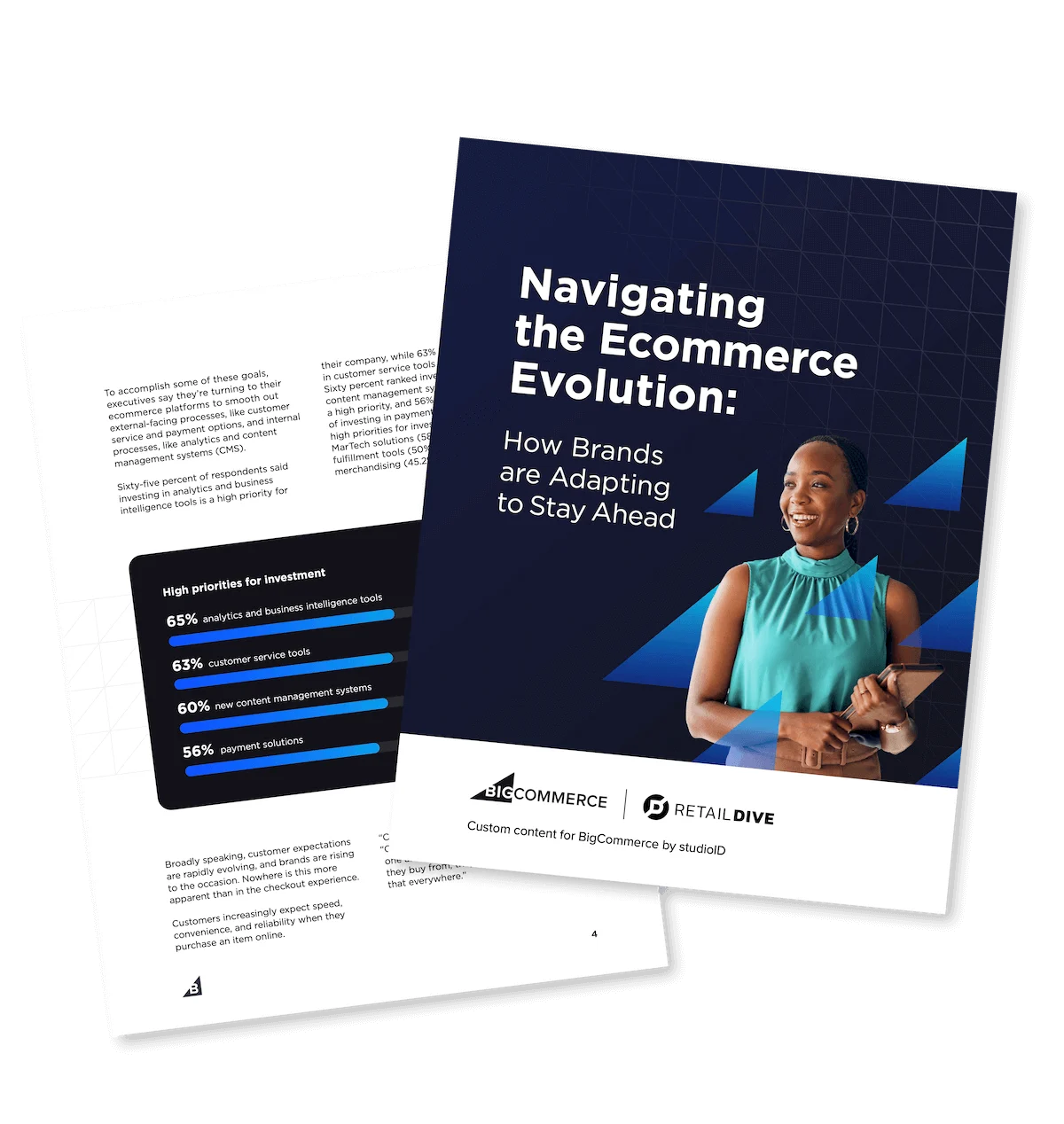
Ebook: How to Stay Ahead in Ecommerce
We surveyed 155 retail executives to see how they're adapting to the ever-changing technology of ecommerce.
The value omnichannel commerce offers retailers and customers
Omnichannel commerce creates a unified shopping experience that benefits both retailers and customers by connecting every interaction into a single journey. By integrating online, mobile, and in-store touchpoints, businesses gain richer customer insights, deliver more personalized experiences, and drive higher retention and profitability.
The primary benefits include increased customer retention and higher profits.
Real-world success stories demonstrate the impact of omnichannel. Veronica Beard's clienteling program exemplifies this approach. The program achieved a 35% conversion rate, with every fourth customer interaction leading to a sale.
Here are several key factors that make omnichannel retailing particularly valuable in today's competitive digital environment.
Financial benefits.
An omnichannel approach transforms businesses financially through several interconnected benefits. When companies integrate their channels, operational efficiency rises through unified systems and streamlined workflows that reduce labor costs. This integration naturally leads to tech stack consolidation, where businesses can eliminate duplicate systems and decrease IT spending on licenses and maintenance.
The revenue impact becomes clear as customers engage across multiple touchpoints. Companies see increased sales growth when shoppers can seamlessly move between channels. The unified customer data created through channel integration enables valuable insights and personalization opportunities that were impossible when data remained in silos.
This integrated approach proves especially valuable during economic downturns. Businesses can quickly shift resources between channels as market conditions change, maintain more efficient inventory levels, and preserve customer relationships through multiple touchpoints. This flexibility helps companies weather market turbulence more effectively than single-channel operations.
Meet customers where they are.
Making shopping easy is key to success.
Where customer journeys used to be relatively linear, today they're anything but. Customers might see ads on Facebook or Instagram, search on Google or Amazon, read reviews, visit stores, or hear from friends. They might also shop using their computer, phone, or TV.
Data consistently shows that customers prioritize convenience over quality — 77% of shoppers in the U.S. will give up on buying something if there’s too much friction.
Businesses that make shopping simple and convenient win more customers.
Physical stores still matter. While most people start their shopping discovery online, many prefer to start at local stores.
Social media shopping is growing fast, and extends beyond direct purchases. In fact, 84% of buyers research brands on social media before making a purchase.
A strong omnichannel strategy is sensitive to changing consumer behavior. Tools like Google Analytics and customer data platforms (CDPs) help businesses understand the customer journey in two key ways:
Google Analytics shows businesses which channels bring customers to their sites (like social media, search, or email), how customers move through their websites, and where they might get stuck or leave. This data helps identify which marketing efforts work best and where the buying process needs improvement.
CDPs combine data from all customer touchpoints, including website visits, store purchases, app usage, and customer service interactions. This complete view helps businesses understand how customers interact across channels and personalize their retail experience.
Together, these tools help businesses make smarter decisions about where and how to reach customers, ultimately meeting customers where they are.
Stand out in a crowded playing field.
With more retailers vying for online attention, standing out requires a more resonant brand, better shopping experience, and excellent service.
Businesses that can pivot to an omnichannel online shopping method can immediately set themselves apart from other brands, especially when compared to those reluctant to leave the traditional brick-and-mortar store experience.
A move to omnichannel is an immediate differentiator. It can boost your existing customer base while opening yourself up to a new market.
To truly stand out, you must adapt to new consumer needs and behaviors and recalibrate your understanding of your target consumer. Use data to understand if you'll need to rethink any of the following:
Product assortment
Sales channels
Advertising channels
Messaging
Analyze data for business impact.
As online channels play an increasingly central role in shopping journeys and consumer behavior, retailers may need to rethink their marketing strategies to stay competitive.
In today's digital landscape, data analytics provides crucial performance insights through key metrics like conversion rates, customer acquisition costs, and channel attribution. These metrics reveal not just current performance but opportunities across the omnichannel continuum. Analyzing customer lifetime value, cart abandonment rates, and cross-channel engagement patterns helps businesses identify friction points and optimize their marketing mix for maximum ROI.
The move to omnichannel may be challenging. However, given the need for consistent cross-channel collaboration, optimizing your data can streamline the process and ensure that nothing is lost in translation.
While optimizing data workflows is crucial, compliance with privacy regulations is equally important. GDPR in Europe, CCPA in California, and PIPEDA in Canada mandate careful handling of personal data. Implementing robust data governance frameworks helps businesses balance innovation with privacy protection while avoiding costly penalties and reputational damage.
Data-driven decision-making enables agile response to market changes. By transforming raw data into actionable insights through advanced analytics, businesses can quickly adjust inventory levels, optimize pricing strategies, and personalize customer experiences across channels. This adaptability is essential for maintaining a competitive advantage and meeting customers where they are, wherever they shop.
Elevate personalization.
In today's omnichannel ecosystem, businesses collect valuable data across physical stores, ecommerce platforms, and social media interactions. By analyzing these touchpoints effectively, companies gain deep insights into customer preferences, shopping patterns, and pain points, enabling them to craft personalized experiences that resonate with individual shoppers.
As a result, businesses can elevate personalization beyond basic product recommendations. For example, a beauty retailer could combine purchase history, browsing behavior, and skin type data to create customized skincare routines and product bundles. According to a report by McKinsey, 71% of consumers expect personalized interactions, and 76% get frustrated when this doesn't happen.
You can even build a curated experience for each shopper with the right marketing automation. Robust tools like CDPs help segment audiences, automate personalized communications, track engagement metrics, and unify customer data across channels to deliver targeted, more meaningful messaging.
Customers want to feel valued, but building trust is crucial to long-term success. Businesses must maintain transparent data practices through clear privacy policies and give customers control over their information-sharing preferences. When done right, personalization builds lasting customer relationships. Customers who feel understood are more likely to remain loyal and engage regularly with your brand.
Different avenues of omnichannel retail
Omnichannel success relies on how customers interact with a range of channels. Each channel serves different shopping needs; marketplaces let people compare prices and get detailed product information, while social media platforms build relationships through engaging content and direct messaging. Search provides instant answers and relevant ads. The key is making all channels work together as one system with consistent messaging.
Marketplaces.
Digital marketplaces are a cornerstone of modern omnichannel retail strategy. They provide businesses instant access to millions of active buyers and robust built-in infrastructure. These platforms offer everything sellers need, from shipping and returns to customer service and marketing tools, minimizing cash outlay while quickly growing their base.
By joining online marketplaces like Amazon, Walmart, and eBay, businesses can expand their reach, tap into new markets, and gain a competitive foothold. They also benefit from the halo effect of established trust and brand recognition.
Amazon.
Perhaps the most famous example of a booming omnichannel-enabling marketplace is Amazon. Starting as a simple online bookstore, Amazon has grown into the largest online marketplace in the world.
Marketing products on Amazon gives businesses access to:
Approximately 2.7 billion monthly visitors, dwarfing other online marketplaces for traffic
Amazon's fast, reliable fulfillment center, regardless of where you sell
More than 200 million Amazon Prime members
One of the largest data-gathering centers in the world
Walmart.
Walmart needs no introduction. As one of the largest retailers in the world, incorporating it into your omnichannel strategy can help businesses broaden their reach.
Massive reach: Walmart.com has 120 million unique monthly visitors
Fast delivery and returns: In-store pickup, free next-day, and 2-day delivery options, easy return policy
Seller tools: Offers robust advertising, reporting, and analytics
Mercado Libre.
Known as the "Amazon of Latin America," Mercado Libre helps businesses unlock the omnichannel opportunity across borders.
In 2024, online retail sales generated over $319 billion in Latin America with ecommerce sales expected to top $215 billion as shoppers demand rapid delivery, making this region a crucial consideration for your global ecommerce strategy. Here are two facts about the marketplace:
One of Latin America's fastest growing ecommerce marketplaces
Served 18 countries and approximately 100 million unique active buyers in 2024
Social commerce.
Social media platforms such as Facebook, Instagram, and TikTok provide another avenue for omnichannel businesses. Companies can expand their reach into previously untapped markets through digital advertisements on these platforms and mobile apps.
Once used primarily by individual users, Facebook drives significant sales through its marketplace and has grown to include larger businesses.
Facebook's Meta rebranding is also significant for omnichannel-based organizations, as Meta will also be associated with the channel metaverse. The latest data shows that Meta brands reach a combined 3.5 billion people monthly. As of April 2024, Facebook alone reached an average of three billion monthly active users (MAU).
With over one billion monthly visitors worldwide, TikTok has emerged as the world's most dynamic digital discovery engine.
Recognizing the platform's potential, BigCommerce has partnered with TikTok to offer TikTok for Business. This collaboration provides merchants in the US, UK, Australia, and Canada with a free, one-click integration through Channel Manager, lowering the barriers to entry for businesses seeking to leverage this innovative marketplace.
Organizations have a real opportunity with social commerce, and those that aren't participating stand to miss out on a significant revenue stream, especially when considering that:
73% of shoppers across markets purchased in-store after finding or discovering the item on social media
66% of Millennial shoppers and 73% of Gen Z shoppers make online purchases from social media creators
Search.
With millions of people turning to Google daily, placing ads and listings on Google is the perfect growth opportunity to showcase your brand and products to the right shoppers at the right time.
75% of global shoppers used a Google product in the past week to help with shopping
59% of shoppers surveyed say they use Google to research a purchase they plan to make in-store or online
76% of consumers enjoy making unexpected discoveries when shopping
How to build an omnichannel strategy that meets the needs of today’s shoppers
A valid omnichannel strategy connects every way customers engage with your brand — from your mobile app to your physical store to your social media presence — into one cohesive experience that feels natural and intentional. While the concept is straightforward, effectively integrating these elements requires careful planning and coordination.
Your path to building this unified presence will be distinctly yours, shaped by your business's particular strengths and customer needs. Let's explore the seven key areas that will help you craft a strategy that resonates with your audience and drives actual results.
Omnichannel Step | Primary Owner | KPIs to measure |
Step 1 - Segment your customers | Marketing/Growth | Percent of customers segmented; engagement rate by segment |
Step 2 - Determine which channels each customer segment uses | Marketing/Ecommerce | Conversion rate by channel; traffic quality (bounce rate, time on site) |
Step 3 - Map the customer journey | Product/Customer Experience (CX) | Cross-channel conversion rate; drop-off points in journey |
Step 4 - Provide cross-channel customer support | Customer Support/CX | First response time; CSAT or NPS across channels |
Step 5 - Integrate your technology | IT/Operations | Inventory accuracy; data sync latency between systems |
Step 6 - Take advantage of automation | Marketing Operations/Growth | AOV lift; abandoned cart recovery rate |
Step 7 - Make testing a habit | Analytics/Product | Conversion lift from experiments; test win rate |
1. Segment your customers.
You can segment your customer base in several ways, and it’s important to consider which will work best for your business. Also known as market segmentation, the goal is to identify distinct groups within your target market to further personalize your offering to them.
Segmenting your customers allows you to build a better, more tailored strategy to reach different groups instead of a broad, one-size-fits-all option.
Here are a few identifiers merchants use to segment their customers:
Income
Geographical area
Generation (e.g., Gen Z, Millennials, Gen X, Baby Boomers)
Online behavior
Values
Interactions with marketing campaigns
Once you've identified clear customer segments, you can examine how to position your offer to each one more deeply.
2. Determine which channels each customer segment uses.
Customer segments exhibit distinct shopping preferences across channels, from specialty retailers and AI-powered agentic checkout to Amazon, from Instagram to physical stores. Channel strategy should align with these natural behaviors.
Data analysis can validate channel selection through multiple indicators:
Website analytics reveal traffic sources
Sales data show conversion points
Customer surveys provide direct feedback on shopping preferences
Focus resources on channels demonstrating measurable success with target segments using qualitative and quantitative metrics. Regular performance monitoring enables strategic refinement and optimal marketing spend allocation.
3. Map the customer journey.
An ecommerce business should track how customers research and purchase items through multiple channels. Consider a customer seeking a fashionable gold watch:
Customers might look at style options on visual platforms like Pinterest, TikTok, or Instagram. Brand research often follows, with customers reading reviews and comparing prices across websites. Some visit stores to try products, while others purchase directly online after seeing targeted ads.
Determining the customer journey can reveal insights into a customer's thought processes and help organizations determine what is working and what is not.
There are countless ways that the customer's journey could have been waylaid or steps reshuffled, but the customer still expects a seamless experience. That's one of the biggest challenges of omnichannel — creating a unified path to purchase.
Focus resources on channels showing consistent results. Some buyers may respond better to personalized emails and in-store experiences, while younger customers engage more through social media and mobile shopping.
4. Provide cross-channel customer support.
Customers expect seamless support across all shopping channels. With channel coordination, customers may be able to get help when problems arise.
For example, a customer who clicks a Facebook ad but needs help finding a product link needs clear direction on where to get support, which can include Facebook or the vendor's website. Poor coordination between support teams can frustrate customers and result in lost sales.
Unified customer service across all channels helps resolve issues quickly, no matter how customers discover or purchase products. Reliable support builds customer loyalty and encourages repeat business.
5. Integrate your technology.
As you start selling on multiple channels, you'll want a unified view of all available inventory in real time. Similarly, you'll want a single source of truth for product information, such as a PIM or comparable solution, so you don't have to enter product information individually on every channel you sell.
A data feed management service like Feedonomics can help unify your data across multiple channels. At the same time, a multichannel selling tool allows you to link and sync accounts across Amazon, eBay, Google, and Walmart.
When your marketing and ecommerce efforts are closely tied together, you can aggregate your most essential data to assess performance better and identify opportunities.
Seamless hand-offs among channels represent a massive boon for customer support as well. If your smartphone agent knows about the email thread with a particular customer, they can pick up communication where the email left off. This connection helps customer service staff access complete customer histories and resolve issues faster.
Quality customer support represents a huge opportunity to create "wow moments," McKinsey asserts, and build brand loyalty.
6. Take advantage of automation.
Business leaders often focus on urgent but low-impact work. Instead, they should identify and prioritize tasks that create lasting value. These activities compound benefits over time and drive significant growth for ecommerce businesses.
Intelligent automation frees time for strategic work. Here are key ways to automate effectively:
Deploy chatbots to handle basic support queries so that support staff can provide more focused attention to more complex issues.
Integrate your tech stack to enable data-driven decisions. This way, you can always have a real-time view of operations and make decisions based on aggregated data.
Create targeted messages based on customer behavior to deliver more personalized marketing across the customer journey.
Recover abandoned purchases through automated reminders using an app integration.
Send personalized follow-up emails with relevant offers.
This approach lets staff focus on complex problems while automated systems handle predictable tasks.
7. Make testing a habit.
Testing should integrate seamlessly into daily operations rather than occurring only before launches.
Ecommerce businesses should validate how customers interact with their site across devices, examine software performance during peak use times, and measure marketing effectiveness for different customer groups. Rather than treating these as separate activities, combine them into a systematic program that provides continuous feedback.
Automated testing tools can track performance metrics and alert teams to issues before they affect customers. The key is selecting platforms that effectively consolidate data from all channels to enable quick analysis and improvements.
The future of omnichannel retail
The shift to digital retail accelerated dramatically in 2020, forcing retailers to adapt their business models quickly. Buy Online, Pick Up In Store (BOPIS) became essential rather than optional, with retailers scrambling to implement curbside pickup and expanded delivery options. Payment methods evolved to support this transition, with contactless payments, digital wallets, and mobile payment solutions becoming mainstream.
The grocery sector provides a clear example of this transformation. Services like Instacart moved from a convenience to a necessity for many households. In fact, 34% of U.S. consumers regularly use this once-novel shopping method.
Traditional grocers partnered with delivery platforms or developed proprietary solutions, combining physical stores with digital ordering. Many stores now operate as retail spaces and micro-fulfillment centers for online orders.
As consumer behaviors have shifted notably, BOPIS shows no signs of slowing. The market will reach $440.39 billion by 2032, disrupting outworn retail strategies.
Technology's ascendance.
The retail landscape has transformed as brands embrace digital hybrid shopping models that blend physical and online experiences. Virtual fitting rooms powered by augmented reality (AR) technology lets shoppers see how clothes, makeup, or accessories would look on them using their device's camera. Retailers like Warby Parker blend online shopping with home try-on programs and physical stores, creating a seamless experience across channels.
These immersive technologies are bridging the gap between in-person and online shopping, reshaping how customers interact with products before purchasing.
Voice commerce and conversational AI are becoming increasingly sophisticated. Chatbots have evolved beyond basic customer service to track orders, handle returns, answer detailed product questions, and even assist with purchase decisions.
Voice assistants like Alexa and Google Assistant enable hands-free shopping, from creating shopping lists to completing purchases. Smart speakers are evolving into personal shopping assistants, offering product recommendations and price comparisons.
The rollout of 5G networks has revolutionized the retail landscape. Their increased speed and uptime enabled more advanced retail capabilities like:
Instant updates to mobile shopping apps
Seamless AR/VR experiences without lag
High-definition video shopping assistance
Real-time inventory tracking through IoT (internet of things) devices
Innovative shelf technology is transforming physical stores into connected spaces. These systems adjust real-time pricing, track shopping patterns, and automatically monitor stock levels.
The combination of these technologies creates a more fluid shopping experience. For instance, a customer might start their journey by asking their voice assistant about a product, then use AR to visualize it in their space, chat with an AI assistant about specifics, and finally complete their purchase — all while the retailer's IoT systems ensure the item is available for immediate pickup at their nearest store.
These innovations are not just about convenience; they're creating new ways for brands to engage with customers and gather valuable data about shopping behaviors and preferences. The key challenge for retailers is integrating these technologies seamlessly while maintaining a consistent brand experience across all channels.
Embrace retail trends.
The digital retail evolution continues, with AI and machine learning being used to deliver hyper-personalization and eco-friendly options.
These technologies analyze vast customer data, from browsing patterns to purchase history, to predict needs and preferences accurately. Retailers now use AI to create personalized shopping experiences that adapt quickly.
Dynamic pricing systems powered by AI continuously adjust prices based on factors like demand, competition, inventory levels, and even weather patterns. For example, a retailer might automatically adjust prices for winter clothing based on an upcoming cold front. Grocery retailers are using cutting-edge AI to modify pricing for perishable items as they near expiration to optimize sales and reduce waste.
Real-time inventory management has become crucial in this integrated approach. When a customer purchases an item online, inventory levels update immediately across all channels. This precision prevents overselling and enables quick shipping. Similarly, when an item is sold in-store, online availability updates instantly.
The future of retail lies in fully integrated commerce systems that eliminate the boundaries between physical and digital shopping. These unified systems instantly synchronize data across all channels, ensuring consistency whether customers shop in-store, online, or through a mobile app.
Prepare for the future.
Businesses must evolve their omnichannel strategies while relentlessly focusing on customer needs. Developing organizational agility is crucial in this quest.
Retailers need infrastructure and processes that rapidly incorporate new technologies and respond to shifting customer behaviors. Due to market changes, Target embarked on a large-scale digital transformation journey, transforming its stores into fulfillment hubs and expanding same-day delivery options. Their guest-centric AI approach helps foster an emotional connection with customers and delivers exceptional experiences.
Customer feedback has become increasingly vital in shaping omnichannel strategy. Best Buy demonstrates this by continuously refining its digital services based on customer input, improving its curbside pickup process, and improving the functionality of its mobile app.
Exploring emerging channels presents significant opportunities. TikTok Shop has shown promising results for early adopters like Nike, which leveraged the platform's unique features for product launches and exclusive drops.
Future success in retail requires balancing established channels with emerging opportunities. Businesses must remain attentive to customer preferences and be ready to pivot when new technologies or platforms emerge. Being prepared means maintaining robust core operations while allocating resources for experimentation and innovation.
The key is creating a flexible foundation that can evolve with customer needs and technological advances rather than trying to predict exact future trends. Companies that master this balance will thrive in the ever-changing online landscape.
Connected commerce is here.
Connected commerce merges physical stores with digital experiences powered by AI, augmented reality, and real-time data. What began as convenient add-ons like curbside pickup and virtual try-ons are now essential services customers expect.
Success depends on retailers quickly adapting to new technology and changing customer needs while maintaining seamless connections between online and in-store experiences.
This retail revolution is changing how we buy and fundamentally reshaping how brands and customers connect.
Those who embrace emerging platforms, maintain strong customer feedback loops, and focus on creating personalized shopping experiences will thrive.
Ebook: Win Customers Across Every Channel
Get expert insights on data, branding, and marketing strategies to grow sales on every major ecommerce channel.
How BigCommerce supports your omnichannel strategy
The journey to omnichannel excellence isn't just about technology — it's about empowering brands to innovate and adapt. Whether expanding into direct-to-consumer markets, streamlining B2B operations, or bridging the digital-physical divide, successful businesses need a stable and flexible foundation.
BigCommerce, in partnership with Feedonomics, supports your current operations and enables future growth by opening new channels and markets.
The following case studies reveal how diverse businesses have transformed operations, increased customer engagement, and achieved sustainable growth through unified commerce. Their experiences offer practical insights for organizations seeking to thrive in an increasingly connected retail world.
Houzer.

US supplier Houzer and its global group, Hamat, are kitchen and bath powerhouses. Despite dominating online marketplaces like Amazon and Home Depot, they faced a crucial gap: no direct-to-consumer presence. With ambitious plans to expand their catalog and launch a DTC site, they needed the perfect tech stack to make it happen.
The clock was ticking. With Houzer's new DTC site set to debut at an upcoming ecommerce conference, transforming their outdated system seemed nearly impossible. Enter BigCommerce and Feedonomics — the dynamic duo up for the challenge.
In fewer than 60 days, Houzer accomplished the seemingly impossible: evolving from a B2B-only to a full-fledged DTC operation. The migration handled their complex portfolio while supercharging site speed, and thanks to Feedonomics, they gained the power to manage products across 100+ channels without breaking the bank.
“If you’re a brand that’s selling across omnichannel and aspires to sell direct-to-consumer, or if you're a brand with complex products or complex customers, there's nothing else but BigCommerce and Feedonomics.” — Michael Challinger, CEO, Houzer
Wovenbyrd.

From day one, Wovenbyrd broke the traditional furniture retail mold. Instead of launching with a storefront, they cleverly carved their niche through marketplaces like Wayfair before conquering Amazon, Overstock, and Target. With this success, founder Baucum set their sights on an ambitious new frontier: direct-to-consumer sales.
But there was a snag. Wovenbyrd's existing platform was unstable and limiting, like trying to build a mansion on quicksand. Enter BigCommerce, the ecommerce platform that promises room to grow and brings the strength to support its vision.
Working with their agency partner, Wovenbyrd didn't just build a website, they crafted two distinct shopping experiences. While everyday customers browse their DTC storefront, business clients step into the exclusive world of Wovenbyrd Trade, complete with VIP perks like custom pricing, special discounts, and tailored shipping options. BigCommerce's sophisticated B2B Edition powers all of this.
While Wovenbyrd has yet to utilize all of BigCommerce's capabilities, they view the platform as a long-term investment supporting their continued expansion in DTC and B2B markets.
“There are parts of the platform that we haven’t unlocked or aren’t using yet, but we will. We’ll need them as we grow. That’s why we chose BigCommerce, and that’s why I’m so excited about the opportunities ahead.” — Ty Baucum, President and CEO, Wovenbyrd
Tradelink.
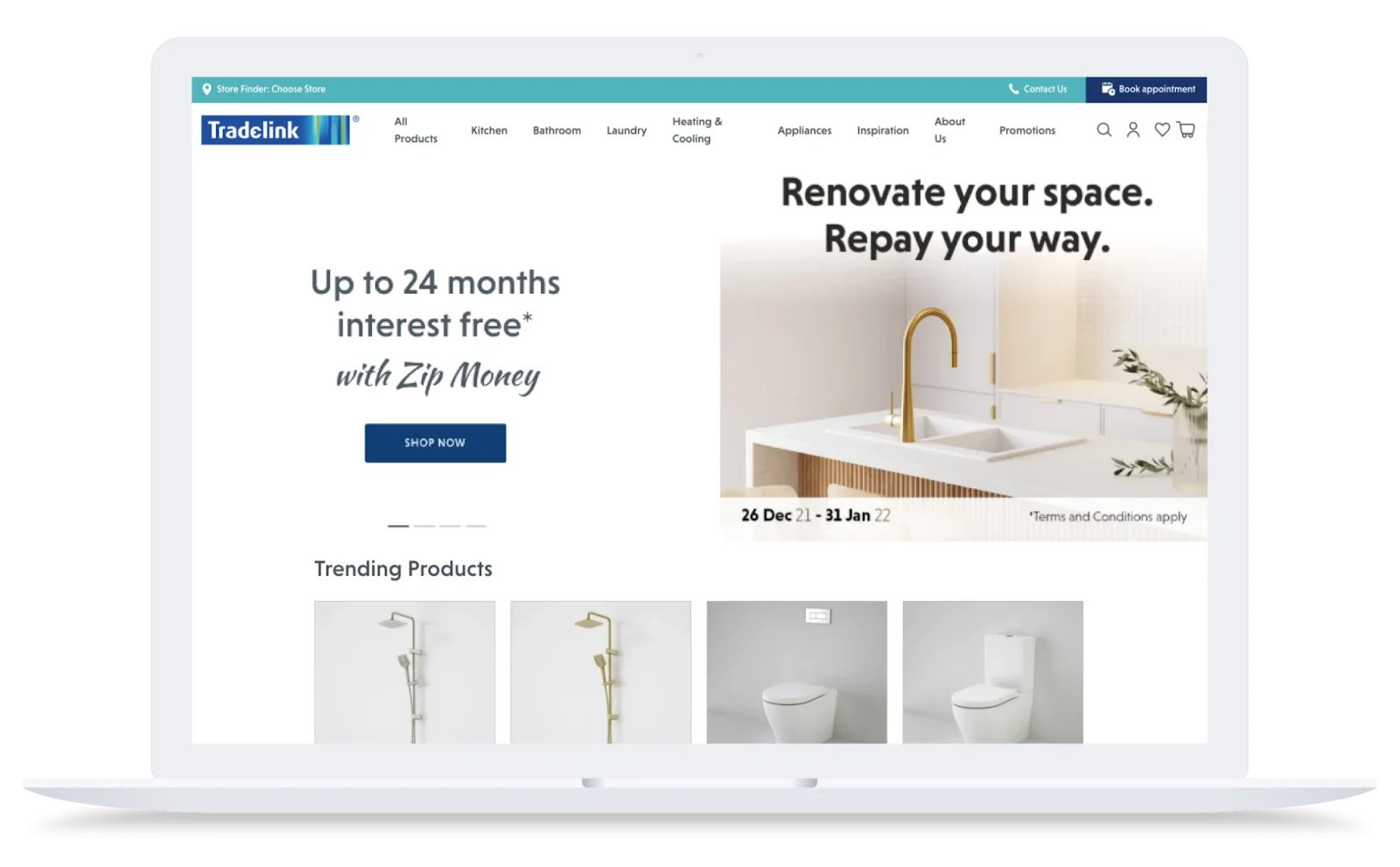
For a century and a half, Tradelink has been the cornerstone of Australia's plumbing industry. They built their reputation on convenience and time savings for tradespeople and home renovators. When it came time to develop a new website, they sought to translate this commitment to customer service into the digital realm.
Their previous online presence wasn't cutting it; static pages and basic ecommerce weren't enough for an industry leader like Tradelink. They needed a dynamic platform that could match the energy and expertise of their busy stores, bringing that signature personalized service online.
Imagine navigating a massive catalog of over 15,000 products quickly. Ease of use is precisely what Tradelink delivered. But they didn't stop there. Their innovative virtual showroom takes online shopping to the next level, connecting customers directly with expert consultants at the click of a button.
By partnering with BigCommerce, they gained access to cutting-edge tools that delivered the lightning-fast performance and seamless connectivity their customers deserve.
While proud of its digital transformation, Tradelink recognizes that success requires continuous adaptation to evolving customer needs and technological capabilities. As it continues this journey, BigCommerce will remain its trusted partner in supporting future innovations.
“The question we asked ourselves was, ‘how do we find the quickest path to value? We didn't have 12 months to get things done, we had six months.” — Luke Naish, Executive General Manager, Tradelink
The final word
Omnichannel retail has reshaped how customers discover, evaluate, and purchase products, and it continues to redefine how retailers operate.
By unifying physical stores, ecommerce, and mobile touchpoints into a single system, businesses gain greater visibility, flexibility, and control over the customer journey.
Retailers that succeed with omnichannel focus on consistency and connection. They use shared data to understand behavior across channels, streamline operations through automation, and deliver personalized experiences that build trust and long-term loyalty.
Technology plays a central role, but it works best when it supports strong fundamentals. Seamless pickup options, personalized recommendations, and emerging experiences like voice and virtual shopping are most effective when they enhance service rather than distract from it.
The retailers best positioned for the future are those building adaptable systems around customer needs. As shopping behaviors and technologies continue to evolve, a unified omnichannel strategy remains the most reliable way to meet customers wherever they choose to shop, and to keep them coming back.
Talk to a sales representative to learn more about how BigCommerce can support your omnichannel strategy.
FAQs about omnichannel retail
Inventory visibility is arguably the most significant barrier to proper omnichannel inventory management. Without it, you can't access data for accurate reporting or promise customers that items will be back in stock on all platforms. Centralized inventory visibility can help you optimize your supply chain and never miss a beat between sales platforms when expanding to new channels.
No matter the size of your business, many different potential avenues for marketing and advertising are available. Here are some of the most recommended digital marketing and advertising channels for retailers going forward:
Marketplace advertising.
Retargeting ads.
Social media.
Search engine optimization (SEO).
Influencer marketing.
Word of mouth.
Email and SMS.
Omnichannel offers cross-channel flexibility, giving customers more options and avenues for purchasing decisions. With nearly 75% of shoppers saying that they use multiple channels to shop and compare prices, committing to omnichannel is not only the wise decision, it is ultimately the smartest decision to make in order to set your ecommerce business up for success today and into the future.
A brand that can successfully deliver products and services to its customers will survive and succeed and build lasting customer relationships.
Omnichannel strategies boost customer loyalty by building a seamless and personalized experience across all digital and physical touchpoints, leading to higher retention and more repeat purchases. Businesses with robust omnichannel engagement retain an average of 89% of customers, compared to 33% for those with weak strategies. Key impacts include 23% more repeat trips, personalized engagement, and higher spend.
With such a sudden and drastic change in consumer behavior, some retailers may need to adjust their sales and marketing channel mix to optimize for the new reality. Understanding your data will help you identify where and how to focus your energy. Gathering data at every turn will be critical to making the decisions that elevate your business.
Here are a few examples of how automation can give you more control over your business:
Use a chatbot to answer routine customer questions and concerns so that support representatives can provide more focused attention to more complex issues.
Prioritize a tech stack that supports seamless integrations so you always have a real-time view of your business and make decisions based on aggregated data.
Set up behavioral triggers to deliver more personalized marketing across the customer journey so prospective buyers see the right messages at the right time.
Using abandoned cart programs, marketers can encourage individuals to return and finish purchases, regardless of the channel in which they began the interaction.
Automated follow-up messages can thank customers for their purchases and offer items for future purchases, such as discounts.
Measuring the success of an omnichannel strategy means tracking integrated metrics that reflect seamless, cross-channel customer journeys rather than siloed channel performance.
Key metrics include:
Rising Customer Lifetime Value (CLV)
Improved Net Promoter Score (NPS)
Higher conversion rates
Reduced Customer Effort Score (CES)
These metrics should be considered alongside increased adoption of cross-channel features like BOPIS (Buy Online, Pick Up In-Store).
The biggest mistake retailers make when moving to omnichannel is treating sales channels as siloed, independent operations rather than a single, unified customer experience.
This manifests as fragmented data, disconnected inventory systems, and inconsistent branding, all of which prevents a seamless transition between online and offline.
Omnichannel strategies for B2B prioritize complex, relationship-driven, and high-value transactions requiring personalized, account-specific portals and ERP integration.
B2C strategies, on the other hand, focus on rapid, emotionally driven, and high-volume purchases that occur on social, mobile, and direct-to-consumer channels.
B2B involves lengthier sales cycles with multiple stakeholders, while B2C emphasizes speed and convenience for their customers.
Find your favorite features.
Explore all of the capabilities of the BigCommerce platform.