




Written by
Mandy Spivey
Mobile Commerce
Get The Print Version
Tired of scrolling? Download a PDF version for easier offline reading and sharing with coworkers.
A link to download the PDF will arrive in your inbox shortly.
Key highlights
Mobile commerce now drives the majority of ecommerce activity, with smartphones accounting for most retail traffic and orders, making mobile optimization a core revenue strategy, not an optional upgrade.
Mobile-first design, fast load times, and streamlined checkout directly reduce friction and improve conversion rates on devices where attention spans and screen space are limited.
Personalized mobile experiences like dynamic pricing, targeted promotions, and AI-driven recommendations increase conversion rates while building loyalty.
Emerging mobile commerce trends, including social commerce, voice shopping, QR codes, and AI-powered chatbots, are reshaping how customers discover, evaluate, and buy products.
Businesses that invest in secure, high-performance mobile experiences and omnichannel consistency are better positioned to overcome mobile-specific challenges and sustain long-term growth.
Mobile devices are now the primary way consumers discover, browse, and purchase products online.
Smartphones account for the majority of global retail traffic and a growing share of completed orders, making mobile commerce a critical growth channel for modern ecommerce businesses.
While mobile commerce continues to grow in popularity, it also faces specific drawbacks; in spite of having a higher global add-to-cart rate than desktops and tablets, Statista reports that mobile phones exhibit the lowest conversion rate among all devices.
This gap represents a major opportunity: businesses that prioritize mobile-first design, streamlined checkout, and personalized experiences can significantly improve conversion rates and customer retention.
As customer expectations rise, brands must deliver fast, intuitive, and secure mobile experiences to remain competitive.
This guide breaks down what mobile commerce is, why it matters, and how businesses can optimize mobile shopping experiences to drive engagement, increase revenue, and build long-term customer loyalty.
What is mobile commerce?
Mobile commerce, also known as m-commerce, refers to any monetary transaction conducted through wireless handheld devices, such as smartphones and tablets. It is a subset of ecommerce that enables users to perform a wide range of commercial activities without needing a desktop computer.
Examples of ways customers have benefited from simplified transactions using a mobile device for products and services include:
Small businesses selling products at an art fair or local services, like massage therapists.
Individuals conducting mobile banking, like depositing a check, transferring money, or participating in online bill pay.
People accessing information services like sports scores, weather maps, traffic, and news updates.
Two benefits of mobile commerce are the convenience and portability of mobile devices, which allow users to engage anytime and anywhere with internet connectivity.

There's a lot to love ❤️
Watch a demo to see the BigCommerce platform in action.
Crafting an exceptional mobile commerce experience
In the era of smartphones, mobile-first design is crucial for ecommerce success. As mobile devices increasingly dominate online shopping, businesses must adapt their strategies to meet the evolving needs of smartphone users.
This shift requires a comprehensive approach encompassing user-friendly interfaces, streamlined checkout processes, and personalized experiences. By prioritizing mobile optimization, companies can tap into a vast market of on-the-go consumers, driving engagement and boosting conversions.
Mobile-first ecommerce design best practices.
It starts with building your ecommerce store on a platform that supports mobile-first design and responsive page translation. A responsive design optimizes your site for smaller screens with thumb-friendly layouts that make it easy for shoppers to click, tap, and scroll. It also allows page elements to automatically adapt to different screen sizes, aspect ratios, and resolutions, creating a seamless browsing experience and a more enjoyable visit overall.
There are features, like drop-down lists and image carousels, which ensure the site is accessible on smaller screens. Menus are accessed via a hamburger button and categories are pared down to the essentials for online shopping. Mobile-first design themes simplify the layout of websites, so shoppers spend less time getting frustrated.
It’s smart to design interactions to be suitable for touchscreens, such as swipe gestures for flipping through a product catalog or pinch-to-zoom to view a product image in greater detail.
How to create a fast, frictionless mobile checkout.
Provide a swift, secure checkout process that minimizes the information users must enter. Guest checkout options let shoppers finalize purchases without mandatory account creation, reducing friction for first-time buyers who may not wish to register.
Provide simplified forms with address lookup and auto-fill features to minimize typing. Progress indicators show users the number of steps in the checkout process and provide visual feedback when they complete an action.
BigCommerce's one-page checkout eliminates friction. When combined with payment processors like Apple Pay, Google Pay, and PayPal, enterprise stores enjoy a 70.8% checkout conversion rate.
Using personalization to improve mobile shopping experiences.
Mobile apps and websites generate vast repositories of customer behavioral data, including time spent on the site, products viewed, item wishlists, and purchase history.
Users can set their preferences through account creation or filtered search results, enabling retailers to provide personalized mobile marketing.
Enhance the customer experience with personalized pricing. Catalog and pricing personalization is possible without coding through your BigCommerce control panel.
Combine customer groups and display dynamic content, such as banners and promotions, that change based on user behavior and preferences. Promote new arrivals or special offers tailored to your user's history.
Mobile commerce security and customer trust.
Encryption technology has made high adoption rates on mobile sites possible. Previously, 2G networks were not encrypted, severely limiting online shopping.
The internet never sleeps, and neither do cyber attackers. Good security practices lead to appropriate security protocols. BigCommerce's platform ensures a safe mobile shopping experience. It's built on Cloudflare Network, providing Enterprise-grade security and speed worldwide.
Legislation around data and privacy protection is only increasing. For ecommerce stores, a privacy policy is crucial. A failure to have a sound privacy policy now puts companies at risk in the future, so it’s important to take website security into account when designing your mobile commerce experience.
Mobile payment options that increase conversion rates.
There's nothing online shoppers like more than having options. With that in mind, BigCommerce is pre-integrated with over 130 payment providers.
We make "buy now" easier than ever. Place mobile wallets, Buy Now, Pay Later (BNPL), and crypto payment options so shoppers have the ultimate purchasing choice at their fingertips.
BigCommerce allows retailers to choose the best payment options, experience, and pricing for their business to turn more mobile shoppers into buyers, and in the long run, return customers.
Ebook: How to Stay Ahead in Ecommerce
We surveyed 155 retail executives to see how they're adapting to the ever-changing technology of ecommerce.
Advantages of mobile commerce
Technology makes connecting with customers more effortless than ever. Americans check their phones nearly 200 times a day. So much time on their phones means they often interact with mobile apps. The ubiquity of smartphones and the frequency with which consumers use them make mobile commerce an area ripe for investment and growth.
Omnichannel mobile commerce for consistent shopping experiences.
Omnichannel retailing refers to transacting across multiple channels, including marketplaces, social channels, and brick-and-mortar. It allows customers to browse items on one device and complete a purchase on another.
Persistent shopping carts and location-tracking ensure that when customers visit the ecommerce platform from another device, they can access items previously added to the cart and see the same personalized content across devices.
Mobile commerce is also an essential source of store foot traffic, and vice versa. Shoppers like to visit stores to see or touch products, even if they plan to buy online. Having a seamless, unified shopping experience helps them build trust in your business and encourage them to purchase products from your store.
Location-based mobile marketing strategies.
Location-based marketing delivers targeted digital content, promotions, and advertisements to users based on their device's location.
Geo-targeted content is meant to resonate with the user's current situation. For example, someone might see an ad for a local music festival or real estate listings in their neighborhood and be more receptive to the localized messaging.
Here's how it works:
Geofencing: Defines virtual boundaries around a specific area, such as a store, shopping mall, or event venue. When a user's mobile device enters or exits these boundaries, it receives targeted notifications or offers.
Beacon technology: Beacons are small, Bluetooth-enabled devices placed in public locations. They transmit signals to nearby mobile phones, allowing businesses to deliver messages, promotions, and other content directly to users' smartphones when near a beacon.
Location-based notifications: Businesses can send SMS or push notifications for promotions, discounts, event details, or reminders to users' devices near a specific location.
Local search: Ecommerce businesses can encourage users to check in at their physical locations on social media, offering rewards, discounts, or loyalty points as incentives.
Increasing customer engagement through mobile experiences.
A companion mobile app or mobile-friendly website can encourage customers to engage with a brand more often. Send timely push notifications to notify customers about promotions, new arrivals, abandoned carts, and special events. Implement in-app messaging to provide live chat support for mobile shoppers.
Experiment with augmented reality to provide a virtual "try before you buy" experience, letting users visualize furniture items in their space or see what a pair of glasses or shade of eyeshadow would look like on them.
Expanding reach with global mobile commerce.
Advancements in technology have allowed commerce businesses to enter markets they may not have considered otherwise. Retailers can experiment with global ecommerce and dip their toes into foreign markets before committing to a full-on international strategy.
Expanding your customer base by boosting global reach represents an untapped profit center. Before taking the plunge into international waters, here are a few things to consider.
Operations: Ensure your people are equipped to handle international expansion. Team members should have international experience or be willing to expand their skills. Building separate teams and budgets for domestic and global operations may also be beneficial.
Product demand vs. international supply: Track search activity to determine how often foreign customers visit your website and which products they buy most often in their home countries.
Scope of expansion: Outlining the scope of your expansion will make it easier to take tangible steps toward success. Define your business needs. Do you need to open a new brick-and-mortar store or simply adapt your web design and payment methods to meet the needs of your new market?
Why mobile commerce enables faster, more convenient purchases.
Smartphones have made multitasking the norm. What may annoy your friends and family is celebrated by online retailers. Responsive websites, easy access, and simplified checkout processes have made it easier for customers to complete transactions quickly.
BigCommerce's shopping cart and one-page checkout features are designed to delight customers and represent a crucial component of conversion optimization.
Challenges of mobile commerce
Designing digital interfaces for mobile devices means accounting for their inferior computing power and signal variability. To solve these challenges, mobile commerce businesses should consider the following when building their online stores.
Managing security and privacy risks in mobile commerce.
Mobile devices introduce many security concerns that don't apply to desktop computers.
For instance, users may connect to unsecured public Wi-Fi networks on their smartphones, exposing their data to possible interception and hacking. Mobile devices are also susceptible to loss or theft, thus exposing the owner's data.
But there are several ways you can secure your customer's data on mobile devices:
Robust authentication: Encourage users to create unique passwords and enable multi-factor authentication. They can also sign out remotely in case someone steals their device.
Encryption: Ensure sensitive payment information is encrypted during transmission and storage.
App permissions: Avoid requesting unnecessary permissions, such as location tracking, unless they are integral to the app's function. Disallow these permissions when the app is not in use.
Security updates: Regularly patching a mobile app or website prevents cyber attackers from exploiting unknown vulnerabilities.
Optimizing mobile site speed and performance.
Minimizing heavy graphics and complex layouts is crucial to designing for better speed and performance, especially on mobile devices. Only focus on elements that enhance the shopping experience. One way to do this is to use Content Delivery Networks (CDNs) to distribute content across multiple servers, depending on where most of your sales come from. CDNs reduce latency and improve load times for users in different geographic locations.
Businesses can also use advanced technologies like Progressive Web Apps (PWAs) and Accelerated Mobile Pages (AMP). PWAs combine the best features of mobile websites and native apps, offering faster load times and offline functionality. With AMP, customers experience a lightweight version of a retailer's website that loads almost instantly on mobile devices.
Storing frequently accessed data locally on users' devices reduces server requests and improves app performance, as well.
Navigating mobile app store compliance requirements.
App developers must adhere to guidelines set by the Apple App Store and Google Play Store to get their app approved and maintain a presence on the platform. Ignoring these regulations can result in your app being rejected or removed:
App store guidelines: Each platform has rules regarding content, functionality, design, and user experience.
User privacy and data collection: Communicate how user data will be collected, used, and protected. Comply with relevant data protection regulations.
In-app purchases: App stores have guidelines regarding payment processing, subscription models, and price transparency.
User experience: Avoid excessive ads, pop-ups, and intrusive notifications that could lead to negative reviews.
Age ratings: If your app is age-restricted, ensure you correctly set age ratings and implement content restrictions.
App store metadata: Provide accurate app descriptions, titles, and keywords.
Competing effectively in a mobile-first ecommerce landscape.
Mobile shopping puts the world at your fingertips, but your business is just one of many competing for attention in national and international markets. While mobile apps can foster stronger customer relationships, having a personal assistant in their pocket may prove more compelling.
Customers may visit your electronics store but comparison shop online while standing in the aisle — this is known as “showrooming.” They're also looking for coupons and reading online reviews. Reports compiled by eMarketer found that nearly 80% of consumers worldwide visit a retailer’s website from their smartphone while shopping in-store, and 74% use a retailer’s app.
Top trends shaping the future of mobile commerce
Mobile devices introduce opportunities for ecommerce retailers to connect with audiences in novel ways, from hands-free purchases to social shopping and more.
AI-driven recommendations bring better results for mobile shoppers.
As technology continues to evolve to involve more agentic AI in ecommerce, shoppers can expect to see AI-driven recommendations in the online shopping experience.
Using machine learning to analyze user data (including browsing, purchase history, behavior) AI agents are able to offer hyper-personalized product suggestions, functioning as a digital sales assistant.
AI agents boost engagement, increase conversions, and build loyalty by adapting in real-time to fluctuating interests and by providing relevant content, smarter search, and proactive notifications, all of which transforms the mobile shopping experience for shoppers.
For businesses, AI-recommendations could include curated “For You” sections or “Frequently Bought Together” sections on their site. Artificial intelligence can also be used in mobile commerce to send timely, relevant push notifications (like abandoned cart offers).
Using QR codes to connect mobile and physical commerce.
During the pandemic, QR codes gained popularity due to the touchless transactions they brought to restaurants and stores.
QR codes are versatile tools that help bridge the worlds between physical and digital shopping by linking products, ads, or packaging to specific online destinations. These can be product pages, social media accounts, payment portals, or menus when scanned by a smartphone, allowing businesses to streamline marketing, offer touchless checkout, and boost customer engagement.
Social commerce and in-app mobile shopping.
Social media, or online networking, has a long history going back to the 1960s and 1970s; social selling is relatively new in comparison.
Instagram introduced a shopping feature in 2016, but social buying has only accelerated since, opening up new opportunities for brands. TikTok Shop has since made its debut, allowing users to shop and buy without ever leaving the app, fueling ecommerce sales while reducing friction. In 2024, retail sales on TikTok from the United States alone generated around nine billion dollars in gross merchandise value (GMV).
Social media platforms are ideal conduits for users to discover new products and brands through posts, stories, videos, and influencer recommendations. Brands can repost user-generated content to provide social proof, engage with audiences via live streaming to offer time-limited promotions, or generate interest in a new product. Users can complete purchases within a social app through shoppable social media posts. When users tap an item, they see a price tag and basic product information.
Social commerce will continue to evolve, putting more products in front of more people on their preferred apps. For brands that want to employ a mobile commerce strategy, getting to know the selling features available for businesses is the first step.
Voice commerce and mobile voice search optimization.
Convenience and immediacy are two driving forces fueling voice commerce. Hands-free shopping and 24/7 access have made voice search a popular choice for today's tech-savvy consumers.
The voice shopping market size reached $150.34 billion in 2025, and is expected to grow to $484.09 billion in 2030.
This rapid growth demonstrates consumers' increasing popularity and acceptance of voice shopping technology.
Speaking is often faster than typing, so shoppers can buy more quickly. Most smartphones feature built-in voice assistants, enabling users to inquire about products hands-free. Voice assistants can send links to product pages matching the user's query, allowing them to complete the purchase on their mobile device. With the adoption of AI apps like ChatGPT, Gemini, and Bing's Copilot, voice search will soon accommodate almost any voice request.
Here are a few easy ideas to implement to ensure your website and apps take advantage of the promise of voice commerce:
Use conversational language that matches natural speech patterns.
Offer FAQ sections that directly address common questions users might say out loud.
Optimize for featured snippets and add schema markup to provide structured data.
Monitor performance rankings for voice search keywords and incorporate them into your content.
Mobile chatbots for conversational shopping and support.
Historically, users started a webchat when they had a complaint or couldn't find something.
Today's sophisticated ecommerce chatbots are like stand-in shopkeepers who can predict which products a shopper may want, accept mobile payments and find and ship an order.
Businesses can even program chatbots to identify escalation triggers and gather context to alert an agent to an issue. Sometimes, a live agent can make the difference between a sale and a disconnected shopper.
In addition to answering product-related questions, bots are great for new customer onboarding. The bot can guide users through the initial setup or account creation process by offering clickable prompts or a virtual guided tour.
Conversation shopping via AI chatbots has further changed the game, reducing the time it takes to find products while curating more relevant products, even assisting with safe and secure checkout through agentic checkout, right in the user's preferred GPT application.
One-click ordering for faster mobile purchases.
First patented by Amazon in 1999, one-click ordering is a simplified checkout process that uses a shopper's existing payment and shipping information associated with their account to complete purchases in a single click.
One-click ordering is handy for customers who frequently purchase the same items. It makes the reordering process almost instantaneous. Mobile users who face limited time and screen space can likely benefit most from this simplicity. One-click checkout puts the customer in control, leading to reduced friction for them (and fewer abandoned carts for you).
Using short-form video to drive mobile commerce engagement.
We are constantly bombarded by interruptions, from daily reminders to always-on instant messaging apps. Research suggests that our attention spans are decreasing as a result.
Videos accommodate our increasing desire to consume content in small chunks. Video grabs and holds our attention more than text or static images can. For example, a B2B commerce business can demo a complex product installation, a fashion retailer can interview an influencer, and a local mechanic can host an unboxing and position themselves as the expert.
It's no surprise that short-form video content has exploded. The popularity of user-generated content (UGC) on TikTok has prompted other platforms, like Instagram Reels and YouTube Shorts, to join the social parade. Consumers are increasingly drawn to authentic, relatable content.
In fact, 92% of consumers trust peer recommendations over brand advertising. Trusting friends and family first doesn't necessarily mean brands lose out. UGC helps brands feel more human and approachable. When done well, video content helps businesses connect with audiences, leverage user creativity, and drive engagement cost-effectively.
Omnichannel integrations that support mobile commerce.
As mentioned above, omnichannel retailing, i.e., connecting with customers across multiple channels, is a definite advantage when considering mobile commerce. This trend will continue as data-gathering technology continues to improve. AI is the latest tool to offer a 360-degree view of each customer with predictive analytics and real-time data.
Omnichannel takes the concept of "multichannel" and creates a seamless experience between offline and online channels. Thanks to emerging technology, the customer journey is unbroken; from desktop to social to the retail app to the physical storefront, brands can create a more unified shopping experience.
Augmented and virtual reality in mobile shopping.
Augmented reality (AR) and virtual reality (VR) have been around for years and have ushered in the ability to create immersive customer experiences. Warby Parker was an early adopter of virtual try-ons for glasses, and IKEA popularized VR with its 3D-room customizations through mobile devices.
"Try before you buy" enhances the shopping experience and reduces return rates for related products, bridging the online and offline worlds. AR product views on mobile devices help customers examine items thoroughly before buying, increasing confidence in mobile transactions.
Now Meta has unveiled Orion, a prototype of augmented reality glasses that project holograms onto the real world. The glasses enhance VR experiences with neural wristbands that use electromyography (EMG) technology to interpret electrical signals from the brain controlling hand movements.
This technology could be a game-changer for entertainment and gaming companies. More seriously, its applications in the medical field could be profound.
Meta's vision of the future reads like science fiction.
Mobile commerce optimization success stories
Growth is good, but for many ecommerce businesses, growth means growing pains. The ancient Chinese equate challenge with opportunity. Successful online retailers seek robust solutions that will grow with them.
The following are companies that took mobile commerce optimization to the next level.
Just Sunnies.

Just Sunnies boasts a catalog of over 13,000 sunglasses from over 130 major brands, selling products worldwide and in local U.S. stores. Like many early online retailers, the brand had outgrown its old platform and wanted to create a seamless customer experience.
Their team developed a progressive web application that supports speed and scalability to improve the mobile and desktop user experience. BigCommerce helped the company achieve its front- and back-end goals, allowing Just Sunnies to continue growing in the ecommerce space.
Since optimizing its mobile experience, 75% of their sales have come from mobile devices, a 13% increase year over year.
White Stuff.

White Stuff founders funded their obsession with skiing in the Alps in 1985 by selling t-shirts. Over time, the business opened more than 100 physical stores in the UK and Germany. But White Stuff was not the leader in fashion ecommerce that they are today.
When they realized they needed to adapt to a new reality — customers wanted to do so through their smartphones — switching from a slow, clunky platform to BigCommerce's composable architecture.
Content agility became the star of the new online experience.
The new site was 85% quicker overall and 100% faster on mobile phones, which makes its customers happy since most choose to interact with the brand on a mobile phone.
SportsShoes.
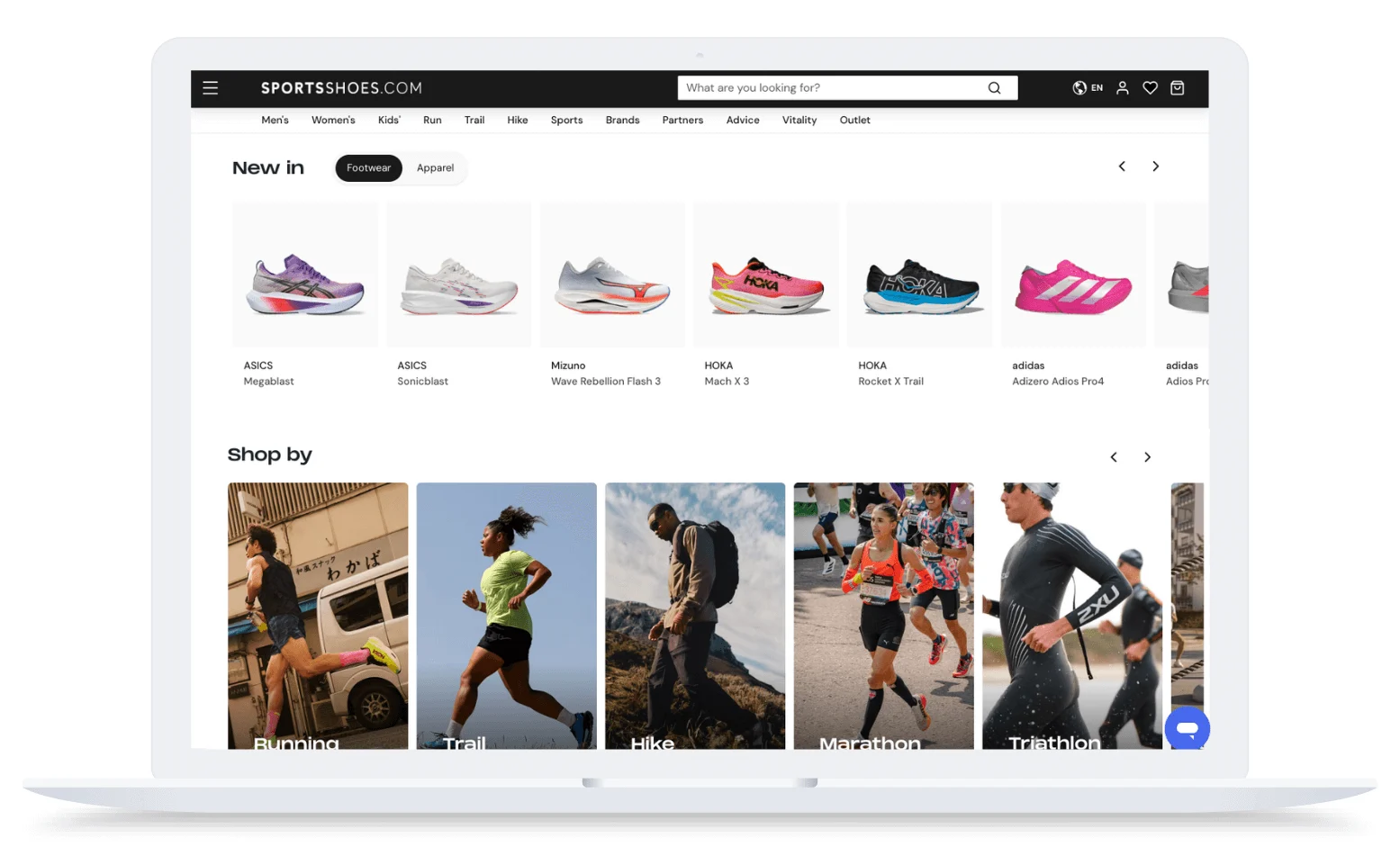
SportsShoes is the UK’s largest specialist sports and outdoor wear retailer dedicated to helping every adventurer and athlete go faster, further, and higher, offering more than 15,000 products.
While seeking growth in its domestic UK market, it also had ambitious plans to continue building revenue streams across the EU. To simplify this growth strategy, the team turned to BigCommerce multi-storefront. This enabled the UK-based brand to launch a new mobile app, expanding to six different storefronts in English, Spanish, Italian, German, and French languages.
The efforts paid off and even led to a 50% increase in conversion rate, putting more customers in touch with the brand by offering a personalized, mobile-first approach.
How BigCommerce supports mobile ecommerce growth
Mobile-optimized ecommerce storefronts.
Even though a website is responsive, developers must still optimize it for mobile. BigCommerce's Catalyst storefront solutions are pre-optimized for performance, SEO, and accessibility. With the addition of our best-in-class visual editor, Makeswift, marketers can create beautiful and engaging shopping experiences with no coding knowledge. Localized content can be displayed based on a visitor's location, increasing audience relevance and expanding your market reach.
Streamlining checkout for mobile shoppers.
Every consumer wants a pain-free online shopping experience, but most are frustrated when buying something on their mobile phones. Giving users the option of using a digital wallet like Apple Pay and Google Wallet streamlines this crucial process, increasing revenue. Contactless payments instill confidence because customers know that their credit card or debit card won't be stolen or their data breached at the point of sale.
Security and privacy are critical components to engendering trust and preventing fraud. BigCommerce's one-page checkout process includes the highest security and compliance features and site encryption.
AI-powered personalization for mobile ecommerce.
Agent-ready storefronts make it easy to support the next wave of AI-driven, agentic commerce. BigCommerce’s platform includes a robust set of webhooks and events for carts, checkouts, and orders. These signals allow AI agents to respond in real time to inventory changes, price updates, or promotional adjustments.
In partnership with payment provider Stripe, BigCommerce supports AI-led shopping and checkout through the Agentic Commerce Suite.
Supporting cross-border and global mobile commerce.
The internet ushered in the democratization of ecommerce. Smartphones smashed open the gates to global access. These two combined opened a whole new world for m-commerce.
The global share of cross-border ecommerce is growing, and BigCommerce is here to support that growth by offering over 100+ currencies. This feature allows merchants to display, transact and settle in multiple currencies, allowing shoppers across the globe to transact in their local currency.
We also offer localized store experiences, whereby any new store is created in your local language by default and multi-language checkout.
The final word
Mobile commerce is rapidly transforming the retail landscape. Statista projects that 62% of all ecommerce purchases will be made through mobile channels by 2027.
As mobile devices drive a growing share of ecommerce purchases, businesses must go beyond basic mobile compatibility and focus on delivering fast, intuitive, and secure experiences that meet modern expectations.
Effective mobile commerce strategies reduce friction across the entire customer journey. Mobile-first design, streamlined checkout, and relevant personalization help convert on-the-go shoppers and build lasting loyalty, not just one-time sales.
At the same time, mobile introduces ongoing challenges, from security and performance to increased competition and showrooming. Brands that treat mobile commerce as a core, evolving capability, and continue adapting to new technologies with help from their ecommerce platform will be best positioned for long-term growth in a mobile-first world.
FAQs about mobile commerce
Mobile commerce experiences cover various platforms, from responsive websites to dedicated shopping apps and social networking sites.
Mobile websites
A mobile website is a version of a traditional website optimized for viewing on mobile devices. Users access the website through a web browser and don't need to install an app or create an account, lowering barriers to entry.
Mobile websites are indexed by search engines, boosting their visibility.
Mobile applications
Users can download m-commerce apps on their devices. These apps are designed to offer a tailored and immersive experience, enabling users to browse, shop, and interact directly through the app.
Apps can leverage device features like GPS, camera, and microphones to offer unique functionalities (e.g., location-based services, barcode scanning), push notifications, and location-based services.
Social media
Social media platforms now feature ecommerce functionalities that let users discover, browse, and purchase products directly within their favorite social networks.
From shoppable social media posts with in-app purchasing and interactive product catalogs to livestreaming and influencer content, brands have innumerable options for engaging with customers on social media.
Success metrics for mobile commerce are no different than the KPIs you'd use to measure ecommerce website performance.
However, it may be helpful to compare mobile commerce metrics to those of your other channels to measure the overall effectiveness of your mobile strategy.
Here are the top KPIs to watch:
Conversion rate: Percentage of mobile visitors who complete a desired action, such as a purchase or newsletter subscription.
Mobile revenue: Track total revenue generated through mobile websites and apps.
Mobile traffic: Monitor the volume of mobile visitors to your online store for mobile apps, track the number of downloads, daily active users (DAU), and session duration to assess user adoption.
Mobile engagement: Analyze metrics such as time spent on site, page views per session, and bounce rate for mobile visitors.
Mobile payment adoption: Monitor the percentage of users who use mobile payment methods.
Responsive websites are traditional websites adapted for mobile devices. They are reprogrammed to fit any screen size, and information is triaged according to smartphone users' priorities.
Users must access the website through a web browser; no downloads or mandatory account creation is required. People can access websites from any browser on any device, whereas apps are developed for Android (think Samsung) or iOS (iPhone) operating systems.
A mobile app is a standalone application downloaded onto a user's mobile device. Account creation lets users save their preferences and purchase history for enhanced personalization. These apps can enable many different functions, from shopping to ordering takeout to online banking.
Mobile apps can leverage the device's capabilities (e.g., geolocation, phone camera) to offer unique services such as push notifications, location-based offers, and image searches. Some mobile apps provide offline functionality, while website access always requires an internet connection.
Progressive Web Apps (PWAs) are important in m-commerce for many reasons: they bridge web and native app experiences, delivering faster performance, offline access, and push notifications. PWAs are less costly to build and maintain than separate native apps, making them ideal for reaching shoppers without app store friction. They also allow mobile commerce businesses to deliver an app-like experience directly from a browser, reducing site abandonment that can happen from slow loads or poor connections.
While the benefits of m-commerce can look similar for B2B and B2C, they do have some distinct differences.
B2B mobile commerce focuses on complex, team-based purchases with detailed product specs, contract pricing, and purchase orders. The goal is to aim for efficiency and long-term relationships with their customers.
B2C m-commerce emphasizes individual, impulse purchases, emotional connection, simple UX, instant payment, and quicker checkouts.
Key differences include: content (detailed vs. simple), pricing (negotiated vs. public), checkout (purchase orders/quotes vs. one-step checkout), and support offered (rep-driven vs. self-service).
Voice search transforms mobile commerce by using conversational, long-tail SEO. It also can be used in m-commerce to enable hands-free shopping for instant purchases, reducing friction for faster checkouts. Voice search enhances accessibility, and highlights the critical importance of securing featured snippets for top visibility as users expect direct answers.
Mobile commerce strategies should focus on being discoverable in these spoken queries, often through natural language FAQs and succinct product answers, simplifying the user experience while assisting shoppers through the customer journey.
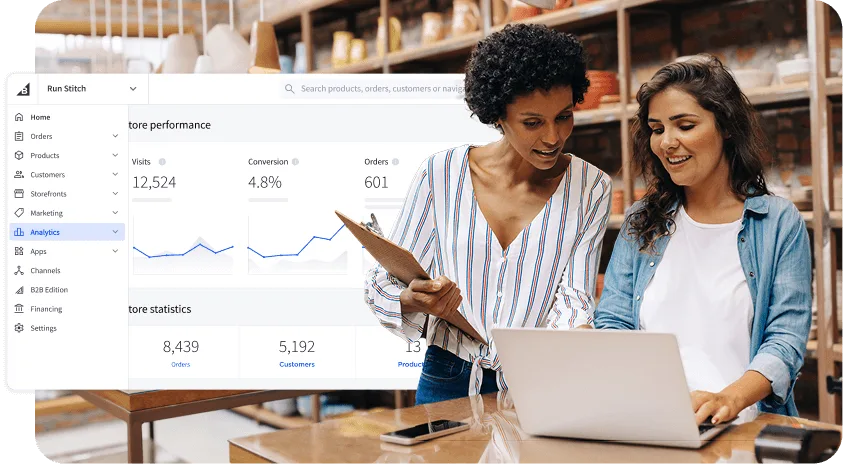
Find your favorite features.
Explore all of the capabilities of the BigCommerce platform.