Start & build


Launch Services
Overview
Chart your path to success with specialized services.Implementation Project Management
Experts to ensure you launch on time and under budget.Solution Architecture
Seasoned advisors to help you best design your store.Data Migration & Optimization
Expertise on a clean and clear path to migrating your data.Enterprise Launch Package
Personal training on how to set up and launch your BigCommerce Store.

Professional Services Blog Series
Get to know our teams and how they support your success in this Q&A series.


The Trend Report: Why Going “Digilogue” In an AI-Driven World Matters

Create your store and start selling today.
Create your new website.
See if the BigCommerce platform is a good fit for your business.
No credit card required.

Written by
Carmen Marxuach06/04/2026
The Trend Report: Why Going “Digilogue” In an AI-Driven World Matters
Get The Print Version
Tired of scrolling? Download a PDF version for easier offline reading and sharing with coworkers.
A link to download the PDF will arrive in your inbox shortly.
Key highlights:
AI is increasing the value of human, high-touch retail experiences.
Consumers still crave physical shopping experiences rooted in trust, discovery, and connection.
Shoppers are growing exhausted by endless digital choice and transactional interactions.
Unified commerce helps brands seamlessly connect digital convenience with in-person experiences.
The retailers winning today are blending AI efficiency with genuine human connection.
Brand story and customer experience will increasingly shape how consumers instruct AI shopping agents.
The future of commerce belongs to “digilogue” brands that combine modern technology with human warmth.
About the Series
The Trend Report is an ongoing blog series that examines the forces reshaping how consumers discover, evaluate, and buy products. Each installment spotlights an emerging trend in ecommerce, grounded in real research and focusing on customer experience. The goal? To cut through the noise, expose fresh thinking, and help merchants not just understand where retail is heading, but how to get there.
The kickoff installment was inspired by Anders Sörman-Nilsson’s keynote at Commerce Live 2026, In When AI Becomes the Buyer: What Really Changes in Commerce (and What Doesn’t), the futurist and author took the audience back to early 20th century Stockholm to weave a story of a world in which the best of analog and digital collides — a “Digilogue” future . “Arguing that this AI-led world, “may, in fact, be more empathetic, be more humane, and more cortisol- lowering, than anything we've experienced in the past.”
So, let me tell you about my wine guy
A few years ago, convenience would’ve won me over every single time.
Need a bottle of wine? Open an app. Add to cart. Checkout. Done. A box shows up at my doorstep a few hours later with all the efficiency modern ecommerce has promised us for years.
And there’s absolutely nothing wrong with that. The inventory is accurate, the delivery windows are reliable, the algorithms are good at suggesting what I might like next.
But then I ordered from my local wine shop.
Not because their website was dramatically better or because the checkout flow was revolutionary. Actually, their digital experience is a little less polished than the national retailers (but don’t tell them I said that).
I kept ordering from them because I began to notice, upon every delivery, the same delivery driver shows up. He remembers me. He asks what I’m celebrating. He double-checks the order before he leaves. Sometimes we chat for a few minutes about a bottle I should try next or a restaurant nearby. It feels personal in a way that’s becoming increasingly rare.
And now? I won’t order wine any other way.
That experience stuck with me because it highlights something a lot of brands are getting wrong right now: as AI becomes more integrated into commerce, the value of genuinely human experiences doesn’t decrease — it skyrockets. We’re entering a world where automation can handle almost everything transactional. But the more efficient commerce becomes, the more memorable human connection feels.
Welcome to The Trend Report.
AI isn’t killing physical retail — bad experiences are
There’s a persistent narrative that AI, automation, and ecommerce will eventually replace physical retail altogether, but consumers are telling us something very different.
Despite having endless ways to shop digitally, people are still showing up in stores. In fact, 80% of shopping still happens in physical stores, according to Deloitte. So the issue isn’t foot traffic — it’s experience.
Only 9% of consumers say they’re satisfied with the in-person retail experience today. That gap is massive, and it represents one of the biggest opportunities in modern commerce.
Consumers still crave:
Ambiance
Tactile discovery
Human guidance
Memorable interactions
Community
Surprise and serendipity
What they don’t want is friction.
Anders Sörman-Nilsson described this perfectly through his concept of “digilogue” thinking: the future isn’t fully digital or fully analog. It’s about combining the best parts of both. “Embracing the best of the analog — the human touch, the tradition — alongside the digital, the virtual, the AI-led, and the high tech.”
Or, as he memorably put it, not “throwing the analog baby out with the digital bathwater.”
That idea feels especially relevant right now because AI is accelerating the value of what humans uniquely provide.
AI handles the transaction. Humans create the memory.
Here’s the paradox of modern commerce:
The more technology removes friction, the more emotionally impactful human moments become.
AI can:
Recommend products
Optimize pricing
Manage inventory
Personalize search results
Automate fulfillment
Summarize reviews
Predict demand
But it cannot recreate the feeling of:
Discovering something unexpectedly
Being recognized by name
Receiving a thoughtful recommendation from a real person
Trusting someone’s expertise
Feeling emotionally connected to a brand
In his keynote, Anders put a fine point on the commercial stakes of this, “Data today gets you discovered. Story still gets you chosen.” That distinction is everything right now.
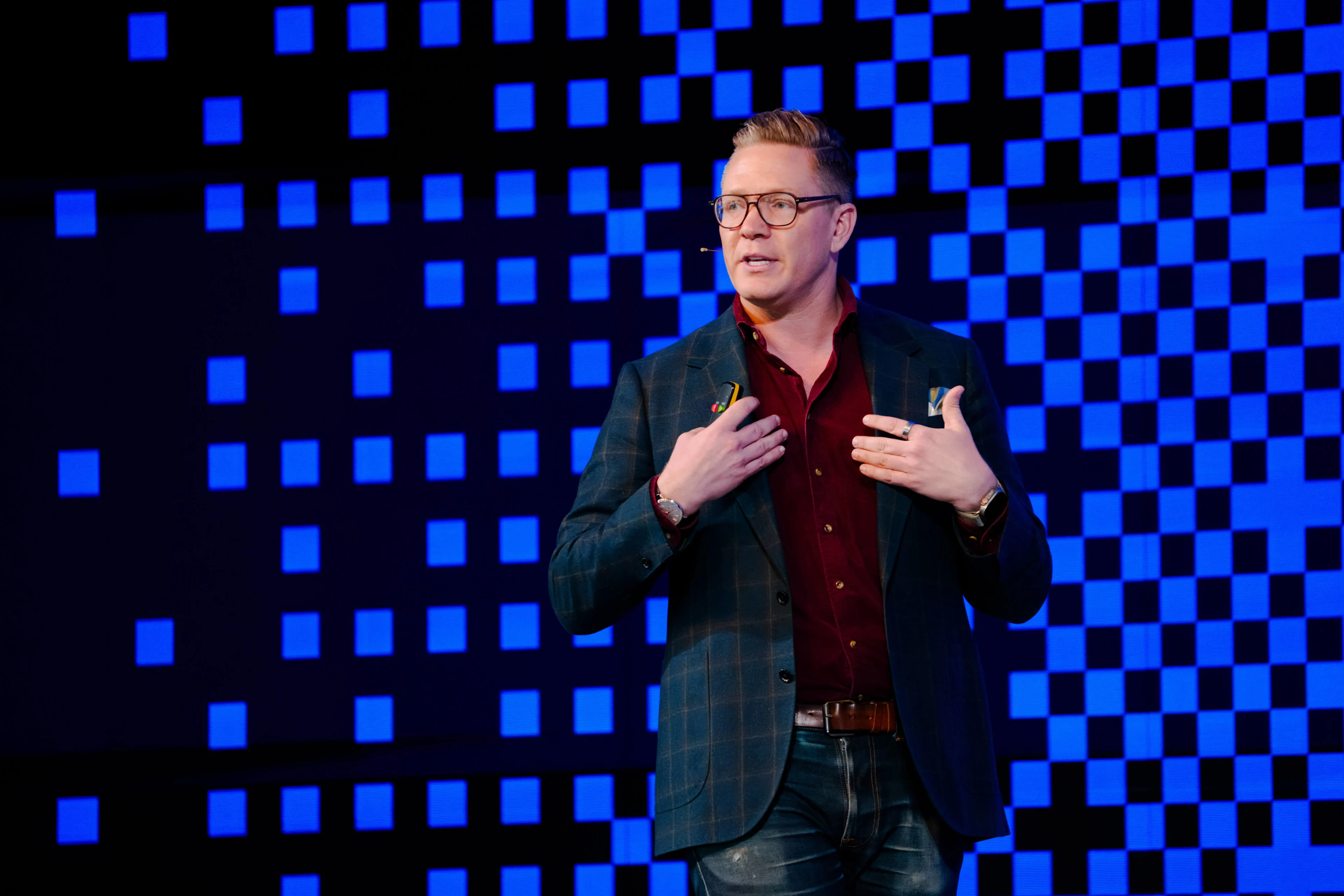
Anders Sörman-Nilsson on stage at Commerce Live 2026
And it has real implications for where commerce is heading. Consumers won't manually browse endless product catalogs the way they do today — they'll increasingly rely on AI shopping assistants to narrow choices on their behalf. So what will inform those AI preferences?
“Your brand stories will still be the parameters that humans feed into their AI agents to make selections for them.”
— Anders Sörman-Nilsson, futurist and author
“Find me sustainable skincare.” “Recommend local coffee roasters.” “Only show me independent wine shops.” “Prioritize brands with exceptional service.”
Those preferences don’t appear out of nowhere. They’re built through lived experiences, which means the brands creating memorable human moments today are building competitive advantages that will matter even more tomorrow.
Consumers are exhausted by infinite choice
Digital convenience solved a lot of problems. It also created new ones.
Consumers are overwhelmed.
According to Accenture, 72% of heavy generative AI users say the technology helps them manage shopping overload and too many choices. And honestly, who can blame them? At some point, optimization stops feeling empowering and starts feeling exhausting.
Anders touched on this directly when he said digital disruption taught us all how to become our own bank tellers, checkout clerks, and travel agents. But not all of that labor is enjoyable. In his words, we've all become our own procurement agents — and sometimes that spikes our cortisol.
Sometimes, convenience quietly turns into cognitive overload. That’s why curated, high-touch retail experiences feel increasingly valuable. They reduce decision fatigue and make a great in-store experience — or even a great delivery interaction — feel like relief.
Serendipity is becoming a luxury
One of the most interesting words Anders used repeatedly on stage was serendipity because, as he pointed out, serendipity doesn’t happen particularly well in highly-digital algorithmic environments.
“There’s an art and a science in the future of commerce. We need the logic, but we also have to have the emotion — finding and feeling at the same time.”
— Anders Sörman-Nilsson, futurist and author
Physical retail still excels at the things AI struggles to manufacture:
Unexpected finds
Emotional atmosphere
Tactile experiences
Community energy
Sensory engagement
Spontaneous conversation
And consumers crave more of it. In 2025, 52% of U.S. adults actively sought out tactile, in-person experiences that create “stickier impressions you can’t easily scroll past or swipe away,” according to Forrester research.
That’s a powerful shift.
Consumers aren’t rejecting digital commerce, they’re rejecting forgettable experiences. Because who wants to be bored in a world with so much to offer?
The retailers winning right now understand this
The brands thriving right now aren’t choosing between digital and physical — they’re blending them seamlessly. Please welcome to the stage: unified commerce.
Creating modern, high-touch experiences requires the backend systems to actually work together. A customer shouldn’t have to wonder whether inventory online is accurate or whether an item is available nearby.
Anders shared a perfect example when he talked about trying to buy Baxter of California pomade from local Chicago retailers. He wanted to support local businesses. But disconnected systems got in the way. There was no accurate inventory, no real-time visibility, no seamless fulfillment. He ended up on Amazon instead. “The sad thing is I couldn't support the little retailer,” he reflected. “Amazon got me out of trouble because they'd done all the product cataloging. They looked after the data.”
The problem wasn’t physical retail itself. The problem was that the digital rails supporting the experience were broken. And that’s the real opportunity for retailers today.
Unified commerce isn’t just an operational strategy anymore. It’s an experience strategy. When inventory, customer data, fulfillment, POS, and ecommerce systems are connected, brands can free their employees to focus on what humans actually do best — being emotional, relatable, memorable humans.
“The promise of artificial intelligence is that it's helping us take the robot out of the human — to do less of the menial and the mundane, and more of the meaningful and the humane.”
— Anders Sörman-Nilsson, futurist and author
AI handles the mundane so people can focus on meaning.
That’s the future.
The future belongs to “digilogue” brands
Anders’ core argument isn’t that technology is replacing human connection. It’s that technology should amplify it. And the window for action is narrowing faster than many brands realize. “While we're skeptically sitting on the sidelines,” he warned, “our competition is 2x-ing us next quarter, 4x-ing us in two quarters, and 256x-ing us in two years.”
The retailers best positioned for the next decade will be the ones that:
Modernize their digital infrastructure
Unify their commerce systems
Remove friction
Leverage AI intelligently
All while still obsessing over the human layer of the experience.Because eventually, every brand will have AI-powered personalization, but not every brand will create moments customers remember.
And that’s the thing I keep thinking about every time my local wine delivery guy shows up at my door. The transaction itself isn’t what keeps me coming back, it’s the feeling that there’s still a real person on the other side of it.
And I’ll always tip him generously, but I’m not so sure I’d do the same for the automated grocery store security robot.
To gain more insights on the future of commerce, explore more at Commerce Live 2026.
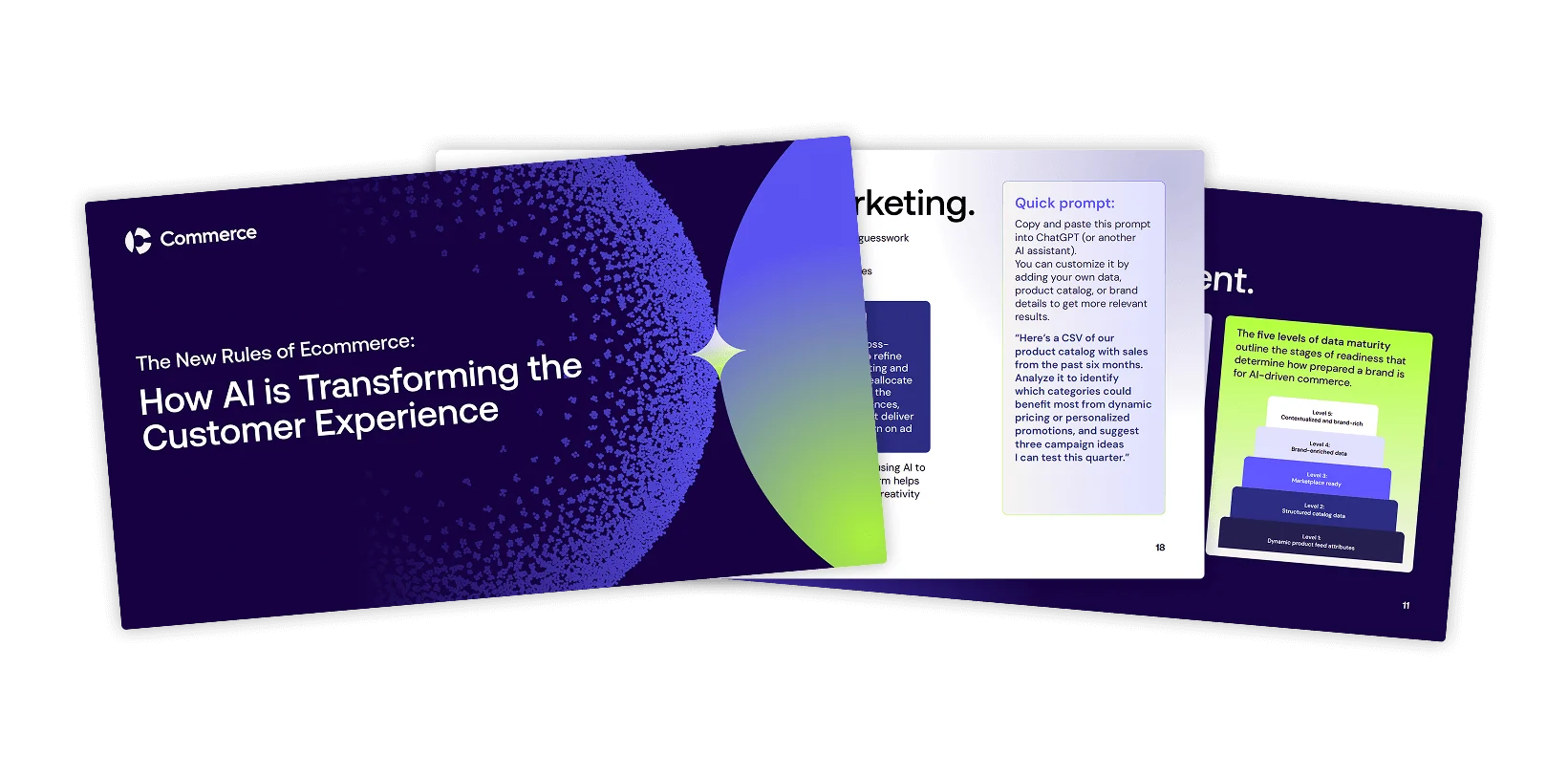
Discover How AI is Transforming the Customer Experience
AI is quickly reshaping the landscape of ecommerce. Learn how you can prepare for the next wave of AI commerce.