




Written by
Annie Laukaitis04/30/2026
12 Proven Ways to Promote Your Online Store
Get The Print Version
Tired of scrolling? Download a PDF version for easier offline reading and sharing with coworkers.
A link to download the PDF will arrive in your inbox shortly.
Key highlights:
How to segment your audience into existing customers and new prospects, then tailor marketing messages that speak directly to what each group needs.
Which marketing tactics to prioritize based on your launch stage — from foundational SEO and email to advanced strategies like feed management and AI personalization.
How to choose the right advertising platforms by matching your products and budget to where your customers actually spend time, whether that's Google Ads, Instagram, or emerging AI shopping tools.
Practical ways to expand reach without increasing ad spend through partnerships, influencer collaborations, and leveraging your physical store (if you have one).
How to prepare your ecommerce store for agentic commerce, where shoppers purchase directly through ChatGPT and AI platforms, by optimizing your product data now.
Your new online store can reach customers worldwide — but launching is just the beginning. You need a clear plan to stand out and drive traffic.
The digital marketplace is crowded. Shoppers browse search engines, scroll social media, and compare prices across ecommerce platforms. But this competition also creates opportunity: 41% of global consumers start their shopping journey through search engines, making online visibility essential.
Effective marketing strategies for your online store start with one critical step: understanding who your customers are and why they buy.
Understanding your audience
Marketing your ecommerce site works best when you focus on specific groups. Break your audience into two categories: existing customers and new prospects.
Existing customers.
Your current customers aren't all the same. They include:
Repeat buyers who purchase regularly
One-time buyers who haven't returned yet
High-value customers who spend significantly more
Lapsed customers who haven't bought recently
Each group needs different messaging. Send lapsed customers a "we miss you" discount through your email provider. Create a VIP rewards program for high-value shoppers.
New prospects.
This category includes people who haven't purchased yet:
Website visitors who browse but don't buy
Cart abandoners who leave items behind
Email subscribers interested in your brand
Lookalike audiences who match your best customers' profiles
Reach new customers through search engine marketing like Google Ads. Target specific demographics — age ranges, interests, locations — that match your ideal buyer.
When you segment your audience this way, you stop broadcasting generic messages. Instead, you create campaigns that speak directly to what each group needs, helping you attract new customers and keep the ones you have.
Find your favorite features.
Explore all of the capabilities of the BigCommerce platform.
Top 12 marketing tactics to promote your online store
1. Optimize your site for SEO.
Search engine optimization (SEO) has many moving parts. Start with these fundamentals instead of trying to tackle everything at once.
Think like your customers.
How do potential customers describe your products? What questions do they ask before buying? Use keyword research tools like Google Keyword Planner, Ahrefs, or SEMrush to find these terms, check search volume, and see what competitors rank for. Then work these keywords into your product pages naturally.
Write explicit content.
Your product titles, descriptions, and photos should match the words customers actually use when searching. If someone searches "waterproof hiking boots size 10," your product page should include those exact terms. Add content that answers common questions: "How do I choose the right hiking boot?" or "Are these boots suitable for winter?"
Optimize meta tags.
Meta tags tell search engines what each page contains:
Title tags act like headlines in search results. Make each page's title unique and descriptive: "Women's Waterproof Hiking Boots | Your Store Name"
Meta descriptions provide a summary (150-160 characters). This text appears below your title in search results and convinces people to click.
Getting these elements right helps search engines understand your site and helps customers find exactly what they need.
2. Create engaging, helpful content.
Quality content attracts visitors and establishes your expertise. Focus on formats that answer real questions your customers ask.
Choose the proper format
Blog posts explain complex topics and answer "how-to" questions on your website
Videos demonstrate products, share brand stories, or walk customers through setup (YouTube, TikTok, Instagram)
Infographics turn data into visual guides that people share on social media
User-generated content shows real customers using your products (reviews, photos, unboxing videos)
Case study: Home Outlet
Home Outlet's team created educational content tied to product searches. When someone searched for kitchen faucets, the site suggested articles like "How to Choose the Right Faucet for Your Sink Type."
This approach gave shoppers a reason to return. Results after adding blog content and migrating to BigCommerce:
17% increase in sessions
19% increase in users
The key: they focused on answering questions, not pushing sales.
Where to publish
Match your content to where your audience spends time:
Technical audiences → Medium or LinkedIn articles
Visual products → Instagram Reels or YouTube Shorts
DIY customers → Pinterest guides or how-to blog posts
Post across multiple channels to reach people in different places. Repurpose one piece of content into several formats: turn a blog post into a video script, pull key stats for an infographic, or share customer photos alongside tips.
3. Harness the power of email marketing.
Your email list is one of your most valuable assets. Start building it before launch and keep growing it after.
Build your list
Collect email addresses from:
Current customers
Website visitors (use a pop-up offering 10% off their first order)
Social media followers
People who request product updates
When your online shop launches, email your list first with an exclusive offer or referral bonus that rewards them for sharing with friends.
Automate your campaigns
Tools like Mailchimp or Klaviyo let you set up automated email sequences:
Welcome series for new subscribers
Abandoned cart reminders
Post-purchase follow-ups
Re-engagement campaigns for inactive customers
Automation keeps your online store top-of-mind without manual work. Schedule regular emails about new products, seasonal discounts, or helpful content related to what customers bought.
Case study: LandCafe
This Polish coffee roaster used educational email marketing campaigns to teach subscribers about coffee origins, brewing methods, and flavor profiles. Their welcome series included brewing tips alongside product recommendations.
Results from their email marketing strategy:
41.30% conversion rate in welcome series
13.30% conversion rate from discount emails
54% total conversion rate across campaigns
The takeaway: combine education with promotion. Don't just push products — help subscribers get more value from what they buy.
4. Enhance your organic social presence.
Strong social media channels keep your online business visible without paid ads. Focus on consistency and engagement over perfection.
Post regularly with platform-specific content
Share product photos, behind-the-scenes videos, and customer stories. Tools like Onollo, Buffer or Later let you schedule posts in advance, so followers know when to expect new product launches or restock alerts.
For example, Dippin' Dots uses Instagram to post vibrant product photos in unexpected settings — ice cream at sports events, festivals, and theme parks. The visual variety keeps their feed interesting while staying on-brand.
Boost engagement
Try these tactics to increase brand awareness:
Giveaways that require follows, tags, or shares to enter
User-generated content by reposting customer photos (always ask permission first)
Relevant hashtags like #sustainablefashion or #handmadejewelry to reach new audiences
Collaborations with micro-influencers in your niche (5K-50K followers often have higher engagement than celebrities)
If you already have an active audience, increase your posting frequency. Reply to comments, answer questions in DMs, and reshare customer content. When followers interact with your posts, their network sees it too.
Pick your platforms wisely
You don't need to be everywhere. Choose 2-3 channels where your customers actually spend time:
Visual products (clothing, home decor) → Instagram, Pinterest
B2B or professional services → LinkedIn
Younger audiences → TikTok, Instagram Reels
Community building → Facebook Groups
Put your energy into doing those platforms well rather than spreading thin across every network.
5. Participate in online events and discussions.
Online events put you directly in front of potential customers who are already interested in your industry.
Types of events to join
Virtual trade shows let you demo products to a targeted audience (find industry-specific shows through your trade association).
Webinars where you share expertise — host your own or join as a guest speaker on topics related to your products.
Online Q&A sessions on platforms like Reddit AMAs, LinkedIn Live, or industry forums, where you answer questions in real-time.
Virtual marketplaces and pop-up shops give you access to multiple sellers in one digital space.
Use Eventbrite, Meetup, or industry association calendars to find relevant events. Start by attending a few to understand the format before hosting your own.
Make connections count
Prepare a clear 30-second introduction: who you are, what you sell, and what problem you solve.
Example: "I'm Sarah from GreenThread Apparel. We make activewear from recycled ocean plastic for people who want sustainable gym clothes that actually perform."
After the events, follow up with people you connected with. Send a short message referencing your conversation and offer something helpful — a resource, an answer to their question, or an exclusive discount code.
Online events work best when you participate actively: ask questions, contribute to chat discussions, and engage with other attendees rather than just promoting your store.
6. Leverage your offline store(s).
If you have a physical location, use it to drive traffic to your online store. Your in-person customers already trust you — now give them reasons to shop online too.
Connect in-store shoppers to your online presence
At checkout: Ask customers to join your email list for early access to online sales or new arrivals.
QR codes: Place them on receipts, shopping bags, or window displays linking to exclusive online discounts (example: "Scan for 15% off your next online order").
Loyalty program: Explain that points work both in-store and online, so they can shop wherever it's convenient.
Social media: Offer a small discount (10% off) when customers follow your accounts and show proof at the register.
Use local marketing to build online buzz
Your physical presence gives you local credibility. Use it.
Optimize local SEO: Claim your Google Business Profile and ensure your website mentions your location (helps people searching "coffee roaster near me" find both your store and site).
Sponsor local events: Set up a booth at farmers' markets or community festivals with tablets showing your online store.
Printable promo codes: Include flyers in shopping bags with codes customers can share ("Give this to a friend for $10 off their first online order").
Turn customers into advocates
Ask satisfied customers to leave online reviews or share photos of their purchases on social media (tag your store for a chance to win monthly prizes). Happy in-store shoppers often become your most authentic online promoters — their recommendations carry more weight than any ad.
7. Try out Google Ads.
Google Ads puts your store at the top of search results immediately — no waiting for SEO optimization to kick in.
When someone searches for products you sell, your ad appears above organic results. You only pay when people click.
Getting started in three steps
Step 1: Research keywords
Find terms people actually search for using Google Keyword Planner:
Product names: "organic dog food," "leather laptop bag"
Branded terms: your store name (protect against competitors bidding on it)
Competitor names: bid on rival brands if their customers might switch
Step 2: Set your budget
Start small — $10-20 per day — and scale up based on what works. Google Ads lets you pause, adjust, or stop campaigns anytime. Monitor cost-per-click (CPC) and conversion rates weekly.
Step 3: Write clear ad copy
Your ad has limited space. Make it count:
Headline: Include the search term + your key benefit ("Organic Dog Food - Free Shipping Over $50").
Description: Provide one specific reason to choose you ("Vet-approved ingredients. No fillers. Delivered monthly.").
Call-to-action: Tell people what to do ("Shop Now," "Get 20% Off Today").
Expected results
Businesses using Google Ads typically earn $2 for every $1 spent. The average conversion rate ranges from 3-5%, though results vary by industry and campaign quality.
Track your performance weekly and adjust bids, keywords, or ad copy based on what's working. Even minor improvements compound over time.
8. Advertise on social platforms.
Social ads put your products in front of people while they scroll, shop, and connect with friends. Match your platform to where your customers spend time.
Choose the right platform
Instagram: Visual products (fashion, food, home decor) perform well here. Audience skews younger (18-34). Use Stories, Reels or shopping posts.
Facebook: Broader age range (25-65+) with detailed targeting options. Best for reaching specific demographics, interests or behaviors.
TikTok: Youngest audience (16-30). Works for trendy products or brands with personality. Short, authentic videos outperform polished ads.
LinkedIn: B2B products, professional services or high-ticket items. Target by job title, industry, or company size.
Pinterest: A discovery platform for home, DIY, wedding and fashion. Users actively search for ideas and products to buy.
Start with simple ads
Launch with photo or video ads showing your product in use:
A before/after comparison
Someone unboxing or using your product
Customer testimonial with their photo
Skip the expensive production at first. Phone videos often outperform studio-quality ads because they feel authentic.
Set a test budget
Start with $5-10 per day per platform. Run ads for 7-10 days, then check your results:
Click-through rate (CTR): Are people clicking?
Cost per click (CPC): What does each visitor cost?
Conversion rate: Are clicks turning into sales?
Use each platform's built-in analytics to track performance. Stop ads that aren't working and optimize the ones that are — test different images, headlines or audiences to improve results.
Once you find what works, gradually increase your budget on your best-performing platform before expanding to others.
9. Partner with complementary brands.
Partnerships let you tap into another brand's audience — people who already trust them and likely need what you sell.
Find the right partner
Look for businesses that:
Target the same customers but sell different products
Share similar values or brand positioning
Have an engaged audience (not just a large one)
For example, if you sell camping gear, partner with a coffee roaster specializing in portable brewing equipment. Their customers camp, your customers drink coffee — both audiences benefit.
Ways to cross-promote
Choose tactics based on where you are in your launch:
Early stage (building awareness):
Co-sponsor a podcast or YouTube channel that your audiences follow
Create a seasonal gift guide featuring both brands' products
Write guest posts for each other's blogs
Driving traffic and sales:
Bundle offers: "Buy our tent, get 15% off [partner's] sleeping bag"
Co-host a giveaway requiring entries to follow both brands
Feature each other in email newsletters with exclusive discount codes
Share each other's posts on social media
Case study: Starbucks and Spotify
Starbucks gave employees free Spotify Premium subscriptions and let customers discover in-store playlists through the Spotify app. This co-branding drove traffic to Spotify while keeping customers engaged in Starbucks stores longer. Both brands reached new audiences through a partnership that made sense for their customer experience.
How to approach potential partners
Email them with a specific idea, not a vague proposal. Instead of "Let's collaborate," try: "Our audiences overlap — would you want to co-host a giveaway where entrants get 20% off both our stores? We'd promote it to our 5,000 Instagram followers."
Make it easy for them to say yes by proposing something mutually beneficial with precise details about distribution.
10. Explore influencer marketing.
Influencers are people with engaged online audiences who can introduce your products to thousands of potential customers who already trust their recommendations.
Choose the right fit
Match influencers to your brand based on:
Audience overlap: Their followers should match your target customer.
Authentic alignment: They should genuinely like products similar to yours (forced promotions backfire).
Engagement rate: 10,000 followers with 5% engagement beats 100,000 followers with 0.5% engagement.
Size matters less than relevance
Nano-influencers (1K-10K followers): Highly engaged, niche audiences. Best for specialized products or local businesses. Lower cost equals higher trust.
Micro-influencers (10K-100K followers): Balance of reach and engagement. Often, experts are in specific areas like sustainable fashion or home organization.
Macro-influencers (100K-1M followers): Broad visibility but may feel less personal. A larger following is suitable for awareness campaigns with larger budgets.
Common partnership formats
Product reviews or unboxing videos
Tutorial posts showing how to use your product
Discount codes exclusive to their audience (tracks conversions directly)
Takeovers of your social accounts for a day
Mentions at events or in newsletters
Track your results
Monitor these metrics to measure ROI:
Engagement rate: Likes, comments, shares on sponsored posts
Click-through rate: Traffic from their unique link or promo code
Cost per engagement: Total spend divided by meaningful interactions
Conversion rate: How many of their followers actually bought
Finding influencers
Use platforms like:
Afluencer: Search by audience demographics and interests
TRND: Connects you with micro-influencers for product testing and authentic reviews
Or search relevant hashtags on Instagram and TikTok to find creators already talking about products like yours. Send a direct message with a specific collaboration idea and what you're offering in return (payment, free product, commission).
11. Use product feed management.
Product feed management keeps your inventory synchronized across multiple sales channels — Google Shopping, Facebook, Instagram, Amazon and comparison sites — without manually updating each one.
What product feeds do
A product feed is a file containing your inventory data: product names, prices, descriptions, images, and availability. Each platform requires this information formatted differently. Feed management tools automatically:
Convert your catalog into the correct format for each platform.
Update prices and stock levels in real-time.
Optimize product titles and descriptions for each channel's algorithm.
Flag errors before they cause disapproval.
Why it matters
Without feed management, you'd manually upload products to each platform and update them individually when prices or inventory change. That's time-consuming and error-prone — out-of-stock items still showing as available frustrate customers and waste ad spend.
How Feedonomics simplifies multi-channel selling
Feedonomics connects directly to your BigCommerce store and automates feed creation for major platforms. Here's what it handles:
Automatic optimization: Rewrites product titles using keywords shoppers actually search for on each platform.
Real-time sync: Updates inventory and pricing across all channels whenever you make changes in BigCommerce.
Error detection: Alerts you to missing attributes, incorrect formatting, or policy violations before platforms reject your products.
Performance tracking: Shows which products perform best on each channel, so you know where to focus.
12. Experiment with AI.
AI tools can handle repetitive marketing tasks, personalize customer experiences, and help you reach shoppers in new places — including AI platforms where people are starting to buy products directly.
Ways AI improves marketing for your ecommerce business
Content creation:
Generate product descriptions at scale (then edit for accuracy and brand voice).
Create email subject lines and test multiple variations.
Write social media captions or ad copy based on top-performing posts.
Produce blog outlines or first drafts that you refine.
Customer personalization:
Recommend products based on browsing history.
Send abandoned cart emails with items customers actually viewed.
Adjust homepage content based on visitor behavior.
Create dynamic email campaigns that change content per recipient.
Ad optimization:
Test hundreds of ad variations to find what works.
Adjust bids automatically based on conversion likelihood.
Generate multiple headlines and description combinations.
Allocate budget to best-performing campaigns in real-time.
The rise of agentic commerce
Shoppers are beginning to purchase products directly through AI platforms like ChatGPT, Claude, Perplexity and Google's AI search results. Instead of browsing your website, they ask: "Find me organic dog food under $50 with free shipping."
The AI recommends products from multiple stores based on its understanding of available options. If your products appear in these recommendations, you gain a new sales channel. If they don't, you're invisible to this growing segment of buyers.
How to prepare for AI-powered shopping
This shift requires clean, detailed product data.
Complete product information: AI can't recommend products with missing specifications. Include dimensions, materials, use cases, and benefits — not just basic descriptions.
Structured data markup: Add schema.org markup to your site so AI can easily parse product details, pricing and availability.
Clear categorization: Use consistent, specific categories and attributes (not vague labels like "miscellaneous").
Updated inventory: Real-time stock levels prevent AI from recommending unavailable items.
Customer reviews: AI often considers ratings and reviews when making recommendations.
Tools like Feedonomics help ensure your product data meets these standards across platforms.

There's a lot to love ❤️
Watch a demo to see the BigCommerce platform in action.
How BigCommerce supports promoting your online business
BigCommerce includes marketing tools that connect directly to the platforms covered in this guide — so you can implement these tactics without switching between multiple systems.
Sell where your customers shop.
Connect your store to Google Ads, Facebook Ads, Instagram Shopping, Amazon, eBay, and TikTok. Sync your product catalog once, and it appears across all channels. When customers buy on Instagram or TikTok, orders flow directly into your BigCommerce dashboard.
Built-in SEO.
BigCommerce automatically handles technical SEO for your product pages: clean URLs, meta tags, structured data, and mobile optimization. You focus on writing good descriptions — the platform handles the code that helps search engines find you.
Since 41% of shoppers start their online shopping journey through search engines, this foundation matters.
Integrate your email marketing.
Connect Mailchimp or Klaviyo directly to your store. Customer data syncs automatically — purchases, cart abandonment, browsing history — so your email campaigns target the right people with relevant offers. Set up automated welcome series, win-back campaigns, and post-purchase follow-ups without manual exports.
Manage multiple channels.
List products on Amazon, eBay, and TikTok Shop from your BigCommerce dashboard. When inventory or prices change, updates push to all channels automatically. Orders from every marketplace appear in one place for streamlined fulfillment.
Real results from BigCommerce merchants
Our customers use these features to overcome challenges unique to their ecommerce stores:
Walton's.
Case study: Walton's
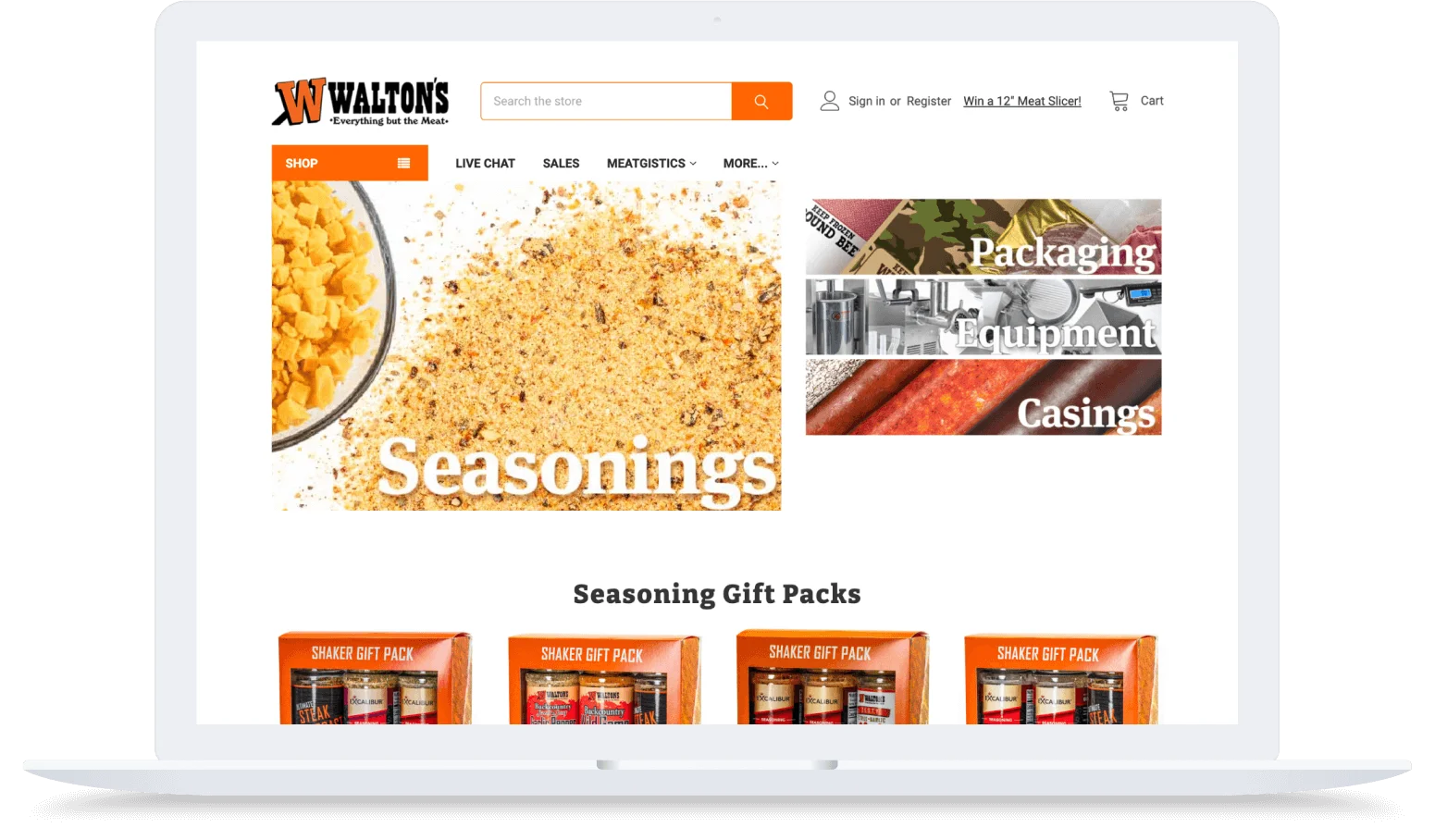
Don Walton started his meat processing equipment business in 1986 with a focus on expert service. Over 40 years later, that expertise extends to both direct-to-consumer and B2B sales on one platform.
Walton's needed a system that handled both customer types without clunky workarounds. After migrating to BigCommerce, they noticed a drop in organic traffic.
Their Customer Success Manager connected them with a BigCommerce SEO auditor who identified technical issues within hours. The fixes improved Core Web Vitals scores, and search rankings recovered immediately.
Key advantage: Built-in SEO tools with expert support when you need it.
Brondell.
Case study: Brondell
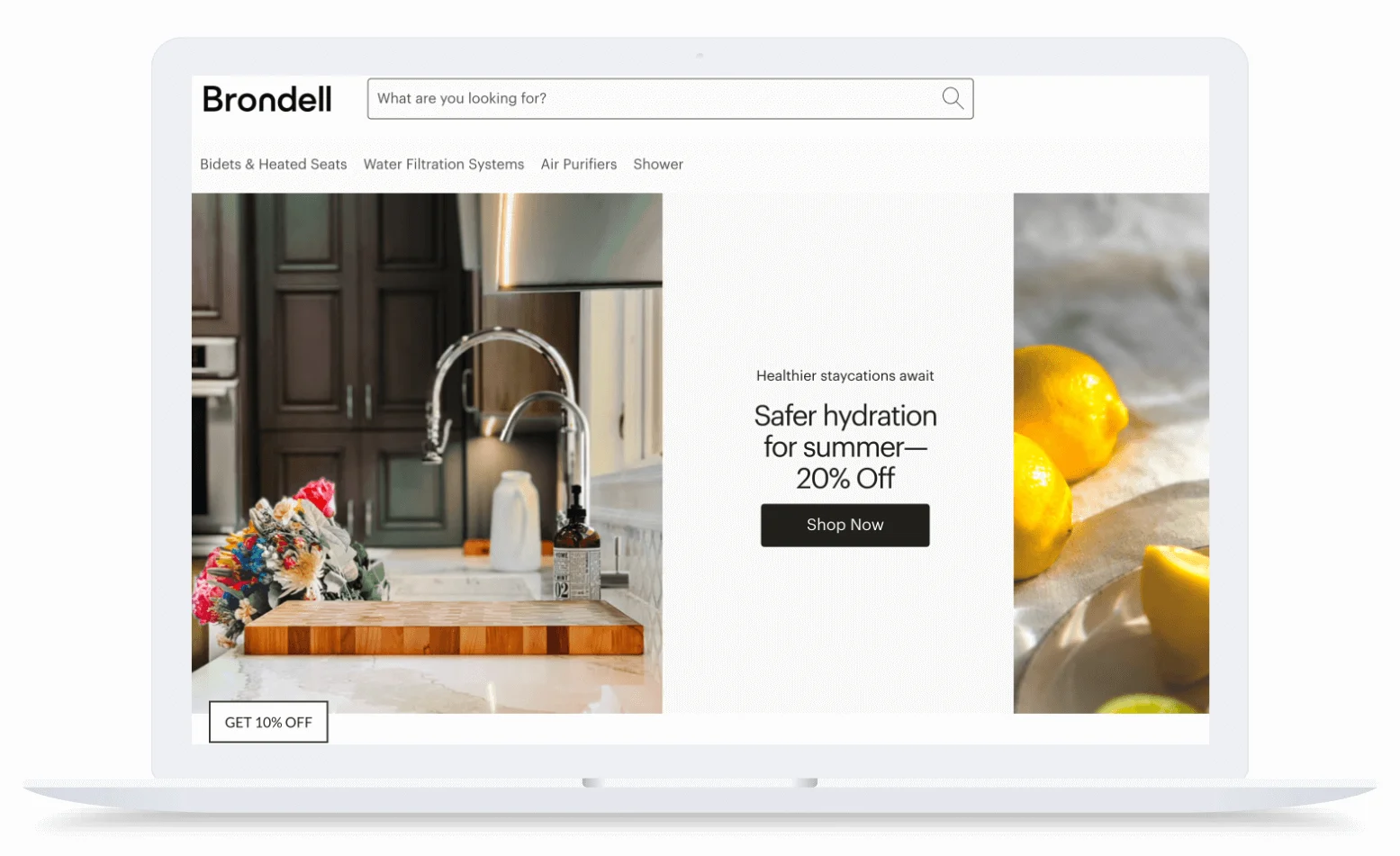
Brondell, a wellness brand selling products like bidets and air purifiers, needed to improve its online visibility and reduce reliance on paid acquisition. Their previous platform limited SEO flexibility and required developer support for even simple updates.
After migrating to BigCommerce, their team was able to take full control of SEO, optimizing site structure, URLs, and on-page content without technical bottlenecks. This allowed them to execute their organic strategy faster and more effectively.
With improved site performance and stronger SEO foundations, Brondell increased organic traffic and drove meaningful growth in both orders and revenue.
Key advantage: Built-in SEO tools that empower marketing teams to drive organic growth.
The final word
Launching your online store is step one. Getting customers to find it — and keep coming back — requires a strategic mix of tactics.
Start with the fundamentals: optimize your site for search engines, create helpful content, and build your email list. Once those are in place, expand with Google Ads, social platform campaigns, and listings on Google Shopping and marketplaces.
Partner with complementary brands and test influencer collaborations. If you have a physical location, use QR codes and in-store promotions to connect both channels.
Your organic online presence strengthens when high-quality, niche-specific sites link to you. These editorial backlinks are difficult to obtain — sites link because you've created something valuable, not because you asked. Focus on building that value first.
BigCommerce gives you the tools to implement these strategies without juggling disconnected systems — your success comes from using them consistently and refining as you learn what resonates with your audience.
FAQs about how to promote an online store
Start with what you already have.
If you've built an email list from your brick-and-mortar store, email marketing should be a priority. If your audience spends time on specific social media platforms, focus there first.
A new store building awareness should prioritize SEO and content marketing to attract people actively searching for solutions. Established stores might add pay-per-click (PPC) campaigns or partnerships to scale faster.
You don't need to do everything at once. Pick 3-4 tactics that match where you are now. Track what works, drop what doesn't, and adjust based on results.
Analytics show you what's working and what's wasting the budget.
Track metrics like conversion rate by traffic source, customer acquisition cost, and which products drive sales most effectively.
Use this data to create customer segments: first-time buyers, repeat customers, high-value shoppers, and those who haven't purchased recently. Send each group tailored emails based on their behavior — abandoned cart reminders for browsers, loyalty discounts for repeat buyers, win-back offers for lapsed customers.
Platform analytics (Google Analytics, BigCommerce dashboard, email tools) reveal which marketing efforts generate revenue versus just traffic. Double down on what converts and cut what doesn't.
Make it easy for shoppers to find you when they search for products you sell.
Optimize product titles, descriptions and images with terms customers actually use. If you sell "waterproof hiking boots," use that exact phrase — not just "outdoor footwear."
Create content that answers questions shoppers ask: buying guides, how-to articles, comparison posts. A camping gear store might publish "How to Choose a Tent for Winter Camping" or "Sleeping Bag Temperature Ratings Explained."
Technical SEO matters too: fast page load speeds, mobile-friendly design, and clean site structure help search engines understand and rank your pages.
Focus on solving real problems through content marketing rather than just mindlessly repeating keywords.
Search relevant hashtags on Instagram and TikTok to find creators already discussing products like yours. Look for people whose followers match your target customer and whose content aligns with your brand values.
Check engagement rates, not just follower counts. A creator with 15,000 followers and 800 likes per post (5.3% engagement) is more valuable than one with 100,000 followers and 1,000 likes (1% engagement).
Start with micro-influencers (10K-100K followers) who are more affordable and often have stronger audience trust. Reach out with a specific collaboration idea: "Would you review our product for your audience? We'll send a free sample and offer your followers 15% off."
Affiliate programs turn content creators, bloggers and loyal customers into your sales team. They promote your products using unique tracking links and earn commission on each sale they generate.
Set up an affiliate program through platforms like Refersion or Impact. Offer 10-20% commission on sales — enough to motivate affiliates without ruining your margins.
Recruit affiliates who already serve your target audience: bloggers writing product roundups, YouTubers creating tutorials or niche websites with buying guides.
Provide them with product samples, high-quality images and key talking points. The best affiliates create authentic content that helps their audience make informed purchases, not just pushy sales pitches.
Track which affiliates drive sales and build stronger relationships with top performers through higher commission rates or exclusive discount codes for their audience.
Create urgency without being pushy. Use specific end dates ("Sale ends Sunday at midnight") rather than vague phrases like "limited time."
Promote across multiple channels simultaneously:
Your email list
Social media platforms
Targeted PPC ads
Banners on your homepage
Each touchpoint reinforces the message.
Time your promotions strategically. Black Friday and holiday sales work because customers expect them. But off-season promotions (like "Summer Gear Sale" in July) can outperform peak periods because there's less competition for attention.
Highlight your best deals prominently with transparent pricing — show both original and sale prices so customers immediately see the value. Include customer reviews on promotional landing pages since social proof increases conversion rates during sales.
Follow up with cart abandonment emails during promotions. Many shoppers browse deals but don't buy immediately. A reminder email the next day can recover those sales.
AI handles repetitive tasks so you focus on strategy.
Use it to generate product description drafts (then edit for accuracy), create email subject line variations for testing, or write first drafts of social media captions based on your top-performing posts.
AI ad tools automatically adjust bids and budgets based on which campaigns drive sales. Google Ads and Meta both offer AI optimization — they test hundreds of headline and image combinations to find what converts best.
For personalization, AI recommendation engines suggest products based on browsing history, increasing average order value. Email platforms like Klaviyo use AI to determine the optimal send time for each subscriber.
Prepare for agentic commerce where shoppers buy through ChatGPT and similar platforms. Ensure your product data is complete (detailed descriptions, specifications, accurate pricing, current inventory) so AI can confidently recommend your products when users ask for buying suggestions.
Start with one AI tool in your weakest area — if writing product descriptions takes hours, try AI copywriting. If ad management is overwhelming, test automated bidding. Monitor results and adjust, since AI suggestions aren't always perfect.
Begin by defining clear campaign objectives. Your targets could be website traffic growth, higher conversion percentages, or increased sales numbers. Measuring success requires specific key performance indicators (KPIs) aligned with these goals. Track meaningful metrics that demonstrate real impact and incorporate tracking mechanisms at the beginning of every campaign to ensure proper attribution. These data-driven insights will reveal which strategies deliver the most substantial results for your business. Understanding performance metrics transforms good campaigns into great ones.
You will determine your social media marketing based on the social media platforms your target audience is on. If you are unsure about their preferences, do market research and create personas.
Make feedback collection effortless through automated follow-up emails after delivery. Shoppers trust authentic opinions from real customers before committing their money. Your review process should include clear prompts and specific questions, guiding buyers to share detailed experiences. Streamline feedback collection by sending well-timed requests when excitement peaks. Simple templates help customers articulate their thoughts without feeling overwhelmed. Personalized outreach transforms satisfied buyers into vocal advocates for your brand. Consider offering small incentives like loyalty points to spark more engagement.
Effective email marketing starts with trust. Your subscribers should actively want your content in their inbox. Building a quality list demands organic growth rather than purchased databases, while regular cleanup keeps engagement high.
Compelling subject lines grab attention without misleading readers. Data shows that personalized greetings significantly boost open rates. Previous purchase details help tailor messages to individual interests.
Messages that connect should stay focused and clear. Position important calls to action where readers can see them immediately. Brand voice matters, but brevity wins — most people skim emails.
Monitor metrics to understand what resonates with your audience. Testing different approaches reveals which elements drive the best results. Respect subscriber preferences by making unsubscribe options prominent and straightforward.
Focusing on specific, longer-tail keywords helps attract buyers who are ready to purchase. Highly targeted phrases may yield lower search volumes but often face reduced competition and connect you with motivated customers. Compelling headlines and descriptions that match user intent boost click-through rates significantly. Analytics should guide your optimization choices; track performance metrics weekly to refine your approach. Regularly testing different ad variations reveals which messaging resonates most effectively with your audience.
Start by understanding your audience's needs. Valuable resources, helpful guides, and engaging stories build trust naturally without pushing sales. Digital creators thrive by mixing up their content formats —from detailed how-to articles to quick video tips.
Success demands realistic planning that matches your team's capabilities. Well-executed monthly blog posts override scattered daily updates that drain resources. Focus on delivering genuine insights through various channels while maintaining steady output. Your readers will recognize authentically helpful information that addresses their challenges.
During checkout, staff can highlight exclusive web deals that complement recent purchases. Physical receipts create perfect opportunities to showcase your digital storefront through QR codes or memorable URLs. Consider placing eye-catching displays near popular products showcasing additional colors or styles online. Savvy business owners turn physical shoppers into digital brand advocates by offering loyalty rewards for both channels. Remember to capture email addresses at the register; these valuable connections bridge the gap between your retail space and website.
Want to make your marketing truly personal? Intelligent use of customer data holds the key. Modern analytics reveal crucial details about shopping habits, preferences and online behavior. Breaking down this information helps create distinct customer groups for targeted messaging. Dynamic content systems then deliver tailored experiences across your website and emails. Advanced automation tools streamline this process, sending the right message at the perfect moment. Your customers receive relevant offers while you maintain careful data privacy standards. Your online store can forge stronger connections through strategic data analysis and drive remarkable growth.
While not 'free,' SEO is a budget-friendly tactic any small business can handle. It's important to understand that SEO is your friend. Optimizing your product descriptions and website content can make a big difference, costing you nothing but time.
Organic posting on social platforms like Facebook and Instagram can be pretty effective. Share engaging content to draw people to your store.
Also, building an email list and sending out regular newsletters helps to keep your customers informed. Offering exclusive deals to those who sign up can be an incentive. The best part is that your email list is a growing business asset.
Collaborating with other businesses is often mutually beneficial. Partnering with complementary brands for cross-promotion expands your reach.
Another option is to focus on customer reviews. Encouraging happy shoppers to leave positive feedback builds trust, boosting your site's credibility.
Loyalty programs: Reward returning shoppers with discounts or special perks to keep them engaged. They'll feel appreciated and be more likely to return.
Personalized email marketing: Send customized emails based on past purchases to make customers feel valued. Suggesting products they might like can also increase sales.
Exceptional customer service: Respond quickly to inquiries and resolve issues, building trust. Happy customers are far more inclined to shop with you again.
Building an online community: Social media groups or forums allow customers to connect and share their experiences, fostering a sense of belonging.
Offer exclusive content: Blog posts, videos or tutorials related to your products can add value and establish you as an authority.
Get a free 15-day trial of BigCommerce.
No credit cards. No commitment. Explore at your own pace.