- Start & Build

Product Overview
What you can do with BigCommerce.
Agentic Commerce
 AI-powered solutions for growth.
Design Your Store
Build your store with or without code.
Apps & Integrations
Over 1,200 apps to help you grow.
Migrate to BigCommerce
Switch from Shopify, Woocommerce, Salesforce, Magento, and more.
- Launch Services
Overview
Chart your path to success with specialized services.Implementation Project Management
Experts to ensure you launch on time and under budget.Solution Architecture
Seasoned advisors to help you best design your store.Data Migration & Optimization
Expertise on a clean and clear path to migrating your data.Enterprise Launch Package
Personal training on how to set up and launch your BigCommerce Store.

Professional Services Blog Series
Get to know our teams and how they support your success in this Q&A series.

The Global B2B Buyer Behavior Report
This in-depth report provides actionable strategies to help you sell more online.
Commerce Unplugged: Five takeaways from Newport Beach and London

Create your store and start selling today.
Create your new website.
See if the BigCommerce platform is a good fit for your business.
No credit card required.
Written by
Carmen Marxuach10/08/2026
Commerce Unplugged: Five takeaways from Newport Beach and London
Get The Print Version
Tired of scrolling? Download a PDF version for easier offline reading and sharing with coworkers.
A link to download the PDF will arrive in your inbox shortly.
Key highlights:
The technology behind commerce is changing, but the core jobs remain: reach customers, run the business efficiently, sell where shoppers are, and build for what comes next.
Product data needs to capture both accurate specifications and the everyday language shoppers use to describe what they want.
Emerging protocols are bringing AI discovery and checkout closer together, making trust and a smooth payment experience essential.
AI can already help teams tackle practical work, from managing catalogs to understanding customer feedback.
You don’t need a sweeping transformation to get started. Pick a use case, test it, and learn from the results.
What does it take to prepare for the next wave of commerce when the technology — and the terminology — keeps changing?
That question brought commerce leaders, customers, and partners together for the first two stops of Commerce Unplugged: Newport Beach on September 22, and London on September 24. Sponsored by PayPal, this traveling series makes room for practical conversations about what’s working, what’s still taking shape, and what businesses can do today.
The discussions ranged from AI shopping agents and emerging standards to product data, payments, and the work happening behind the scenes at real businesses. Here are five takeaways for anyone who couldn’t make it into the room.
1. The technology is changing. The jobs of commerce aren’t.
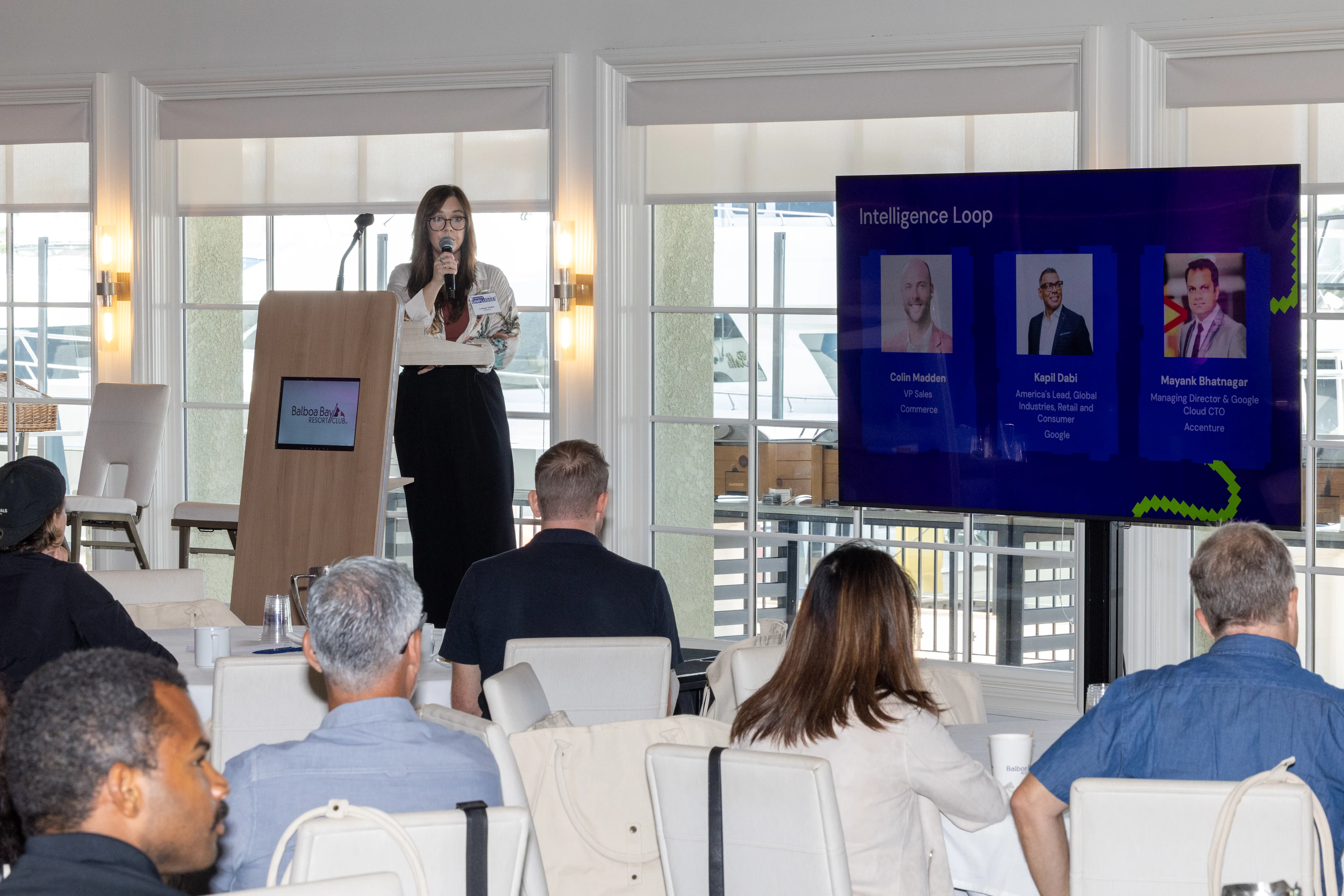
In Newport Beach, Commerce’s Director of Product Marketing, Lindsay Trinkle, gave attendees a way to cut through the noise. A store became a website. A website became an app. An app became a feed. Now, the feed is becoming an agent. Each shift has changed the tactics and tools required to run a successful commerce business, but the core work itself has remained constant.
Commerce describes that work in four parts: Reach, Run, Sell, and Build. Get found by the people who want what you sell. Run the business effectively. Make it easy to buy when a shopper is ready. Build on a foundation that can adapt to the next shift.
Kristina Pototska, Commerce Product Management Director, returned to that framework in London. Agentic commerce may introduce new places to reach shoppers and new ways to serve them, but it doesn’t require merchants to forget what they know about their customers. It asks them to apply that knowledge in a changing environment.
2. Your catalog needs to answer the question a shopper actually asks.
Imagine someone asks an AI assistant for a vintage lamp with warm light for a reading nook. A merchant might sell the right product, yet its catalog may list only the material, dimensions, and bulb type. If the assistant can’t connect the product to the shopper’s aesthetic description, it may never appear in the answer.
That example ran through both events, culminating in a key lesson: product data has to communicate with people and the AI systems helping them shop.
In Newport Beach, a discussion with hardware seller PrimeLine showed why this takes more than adding descriptive language. A buyer still needs precise measurements and specifications to choose the right part. But a catalog also needs contextual data to explain what those details mean for the buyer’s project. How can a company manage this? PrimeLine discussed using AI to help a three-person team manage content across roughly 70,000 SKUs, while keeping technical accuracy central to the work.
The London panel added another dimension. Accenture described working with Commerce and Feedonomics to connect customer insights, product data enrichment, distribution, and performance. The goal is to learn which information helps shoppers find and choose a product, then use that learning to improve the catalog over time.
For merchants, a useful first question is: Can our product data answer the kinds of questions customers ask?
3. Discovery and checkout are getting closer together.
Shoppers can already use AI tools to research products. The next challenge is helping them move from a useful recommendation to a completed purchase without losing the context of that conversation.
At Newport Beach, Google and Accenture joined Commerce to discuss the Universal Commerce Protocol, or UCP.
Put simply: protocols give different systems a shared way to communicate, supporting more of the shopping journey across AI experiences. Google UCP is an end-to-end protocol — spanning discovery, advisory, account linking, loyalty, personalization, and checkout in one connected agent experience across Google AI Mode and the Gemini app.
In London, PayPal brought the discussion back to a familiar priority: helping people pay with less friction. As shopping journeys change, merchants still need customers to feel confident about the transaction and to be able to complete it easily.
These experiences are still developing, and availability differs by market and platform. But, it’s still a good idea to prepare now. Make product information clear and contextually rich, understand where shoppers discover your products, and work with partners who are preparing for new buying flows.
4. Some of the most useful AI applications are already behind the scenes.
Agentic commerce is often pictured as a shopper talking to an assistant. Both events showed how much of the opportunity also lies in helping commerce teams do their existing work.
PrimeLine’s catalog work was one example in Newport Beach. AI helped its small team speed up tasks that would otherwise take far longer to complete manually. The discussion also touched on a straightforward B2B use case: turning the information in a purchase order into a cart, reducing the time a buyer spends re-entering an order.
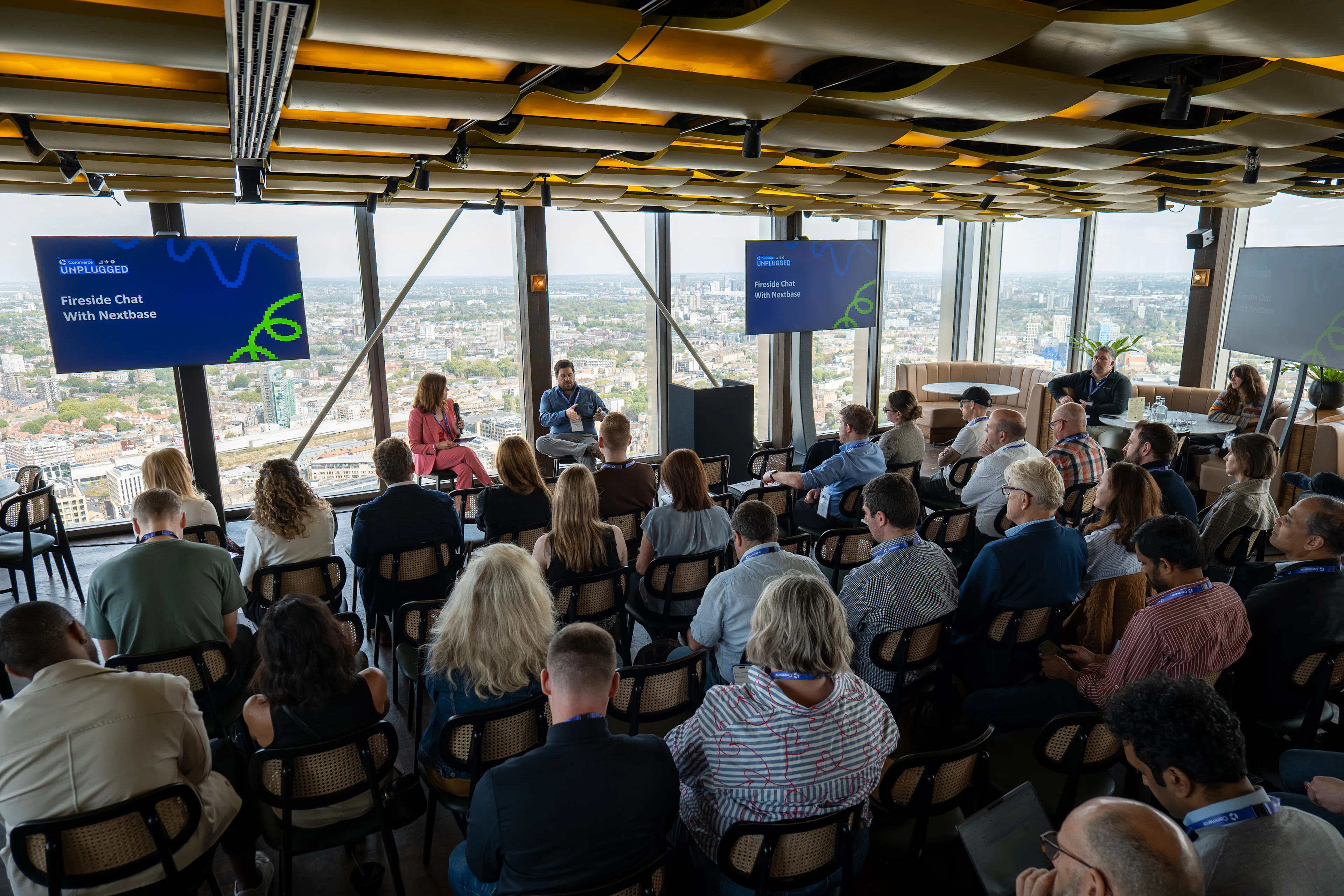
In London, Nextbase shared several ways it’s using AI across its business. By bringing information from commerce, customer support, advertising, and other systems together, its team can investigate questions such as why sales changed without manually comparing separate reports. Nextbase also described using AI to analyze customer comments, prototype product experiences, and help support teams find the information they need.
Across the companies and use cases, the common thread was context. These tools become more useful when they can work from accurate product information, relevant business data, and a clear understanding of how the company serves its customers.
5. Start small, and make ownership part of the plan.
Across both cities, speakers encouraged attendees to begin with a focused use case: enrich one category, test a new discovery experience, or improve a workflow that takes too much time today. Then measure what happens and build from there.
London’s discussion surfaced a challenge that can be easy to miss. A new AI shopping channel may touch marketing, ecommerce, technology, product data, and payments at once. When this happens, teams need to agree on who maintains the data, who manages the experience, and how they’ll evaluate the results.
This approach gives businesses a practical place to begin. Choose one customer or team problem. Identify the information needed to solve it. Give the work an owner. Test, learn, and decide what to do next.
The final word
The conversations in Newport Beach and London made one thing clear: preparing for agentic commerce starts with the work merchants already do.
Understand how customers look for products. Make those products easier to find and buy. Give teams better ways to run the business. And keep learning as new shopping experiences emerge.
Commerce Unplugged is heading to New York on October 13 and Dallas on October 26.
Explore the upcoming events and register your interest to join the conversation. Attendance is invitation-only and subject to approval.

Commerce built for momentum.
Get up to speed with new features that drive your business forward — from core capabilities to agentic commerce (and beyond).