




Written by
Lance Owide
11 B2B Ecommerce Trends to Transform Your Business
Get The Print Version
Tired of scrolling? Download a PDF version for easier offline reading and sharing with coworkers.
A link to download the PDF will arrive in your inbox shortly.
Key highlights:
Artificial Intelligence is quickly changing the B2B ecommerce landscape, with Agentic shopping and checkout accelerating the buying experience and bringing new opportunities for businesses.
Brands that embrace composable architecture, complete with access to API-first systems that seamlessly integrate with ERPs and CRMs, are able to achieve faster time to market and lower cost of ownership.
The purchasing journey for many B2B buyers is circuitous, including social media, marketplaces like Amazon, and via mobile search, making an omnichannel presence more important than ever for early-stage engagement.
In order for B2B businesses to offer better digital experiences (and keep scaling profitably), ecommerce teams must stay vigilant about things like poor product data, manual quote processes, and fragmented systems.
Implementing new technologies in place of outdated ones, such as monolithic ecommerce platforms, is key to building a foundation for growth for today and well into the future.
B2B buying has gone digital.
Buyers expect the same speed and convenience they get as consumers. Digital wallets, mobile ordering, and seamless checkout aren't B2C luxuries anymore. They're baseline expectations in B2B ecommerce, and the numbers prove it.
Seven out of 10 B2B buyers prefer purchasing online over traditional methods. They want efficiency. They want control. They want self-service options that let them research, compare, and buy on their own schedule.
The B2B ecommerce market reflects this shift.
According to eMarketer, B2B ecommerce site sales grew 10.5% year over year in 2024, reaching $2.297 trillion. If that momentum continues, sales will hit $3.027 trillion by 2028, growing at 7.8% annually.
B2B buyers have evolved, and now ecommerce strategy must evolve with them.
We've identified 11 B2B ecommerce trends reshaping how businesses sell, serve customers, and scale their operations.
Whether you're replacing legacy systems or optimizing existing operations, these emerging trends can provide a roadmap for competitive advantage.
Why B2B ecommerce demands your attention now
Digital channels dominate B2B sales, and the number of companies that rely on ecommerce to drive their success is still growing.
By 2028, B2B ecommerce will represent 27.5% of all electronic sales and 14.3% of total B2B product sales — up from 23.7% and 12% in 2024.
This growth reflects a fundamental shift in how B2B buyers research, evaluate, and purchase.
Mobile drives the research phase.
Upwards of 60% of B2B buyers use smartphones and tablets to conduct product research and interact with suppliers, according to BCG. They compare pricing. They read reviews. They evaluate product catalogs before ever contacting a sales rep.
Businesses without optimized mobile experiences lose credibility early in the buying process. Buyers move on to competitors who make research effortless.
Millennials control purchasing decisions.
This generation now represents 73% of B2B buyers. They grew up with Amazon, expect self-service portals, and demand the same customer experience they get as consumers.
Speed matters to them. Transparency matters. User-friendly technology isn't optional, it's the baseline.
Automation and AI-powered tools accelerate adoption.
Buyers increasingly favor digital purchasing because it streamlines procurement workflows.
AI-powered chatbots answer questions instantly. Automation handles reordering and invoicing without human intervention. Real-time inventory data eliminates guesswork.
These capabilities don't just improve customer experience, they reshape buyer expectations across the entire B2B ecommerce market.
Brands that prioritize intuitive, personalized, mobile-first ecommerce experiences gain competitive advantages. Those that delay digital transformation risk losing market share to competitors who've already adapted.
The question isn't whether to invest in B2B ecommerce trends. It's which trends deliver the highest return for your business.

Get a clear view of your B2B digital maturity.
Learn key areas for improvement and actionable insights to help your business grow faster and smarter.
Top B2B ecommerce trends driving competitive advantage
These trends aren't predictions, they're strategies already delivering measurable results for B2B brands that have implemented them.
Deploy AI
Replace legacy ecommerce platforms
Adopt composability
Personalize experiences
Improve product discovery
Expand reach through third-party B2B marketplaces
Explore social media
Accelerate orders
Implement data governance
Build mobile apps
Use dynamic pricing
Each trend below addresses a specific challenge in B2B ecommerce: meeting buyer expectations, streamlining operations, expanding reach, or improving customer experience. Some require platform changes. Others demand process updates. All create competitive advantages.
We've organized them by impact area to help you prioritize which trends align with your business goals.
1. Deploy AI to automate operations and personalize experiences.
Artificial Intelligence is transforming B2B ecommerce at every stage and reshaping the B2B buying journey.
45% of B2B businesses now experiment with generative AI, while 32% have integrated it into daily operations. The technology delivers measurable ROI across multiple use cases, and it's fundamentally changing how buyers discover and purchase products.
Traditional linear online sales models no longer match how buyers research and evaluate solutions. AI tools enable autonomous product discovery and self-service purchasing, creating opportunities to serve customers at scale without expanding sales teams.
Two distinct customer segments benefit differently:
Longtail buyers are smaller accounts that represent significant collective value but haven't received dedicated sales support. AI acts as a virtual sales rep for these customers, guiding them from initial discovery through purchase completion. ChatGPT and similar tools let longtail buyers search product catalogs, compare specifications, and complete B2B transactions independently, accessing capabilities previously available only to enterprise accounts.
Core customers are enterprise buyers with established sales relationships. For this segment, AI functions as a copilot that accelerates sales rep productivity. AI handles time-intensive tasks like generating quotes, checking real-time inventory availability, and processing reorders, strengthening human relationships rather than replacing them.
One key trend we found is that agentic commerce unlocks longtail growth, bringing a major opportunity for B2B sellers.
Agentic commerce uses AI to provide scalable, personalized experiences without human intervention. Longtail buyers get immediate answers, accurate product recommendations, and frictionless checkout, transforming an once-underserved segment into profitable revenue.
AI streamlines critical B2B functions:
Demand forecasting: Optimizing inventory levels and reduces overstock by analyzing purchase patterns
Fraud detection: Flagging risky B2B transactions in real-time, protecting revenue
Customer service: Automating through chatbots handles routine inquiries 24/7
Product recommendations: Increasing conversion rates by suggesting relevant items based on buyer behavior
To be prepared for the future of AI-led product discovery, brands must also be able to control how that data reaches the tools that buyers are currently using.
Enter BigCommerce’s Model Context Protocol (MCP). This is what makes it possible for AI systems to talk to each other and to the applications, data, and tools they use.
MCP represents a shift in how Artificial Intelligence will evolve, from isolated AI assistants to interconnected, context-aware systems that feel more organic and helpful to the user. In ecommerce, this brings opportunities like more relevant product recommendations for shoppers, increasingly responsive customer service, and more personalization that directly drives conversions.
Product feed management platforms, like Feedonomics, can give you direct control over how AI models interpret your product data, boosting discoverability while reducing errors and accelerating buying decisions. It also helps teams efficiently streamline their product data and distribute it accordingly to AI agents.
Additionally, integrations like BigAI Copywriter can be used to produce SEO-friendly product descriptions in your brand voice, maintaining consistency across your product catalog while saving teams hours of manual work.
AI-driven experiences are becoming the baseline buyer expectation across both customer segments. B2B sellers who use these capabilities thoughtfully gain speed, scalability, and competitive positioning that manual processes can't match.
2. Replace legacy systems with flexible ecommerce platforms.
The vast majority (80%) of B2B buyers expect B2C-quality digital experiences.
Legacy platforms create barriers to delivering that expectation. Outdated systems limit flexibility, slow operations, and prevent the adoption of tools that improve customer experience.
Reactive upgrades don't solve the problem. Digital transformation requires strategic investment in ecommerce solutions that support long-term business goals.
AHP Dental & Medical proves the impact.
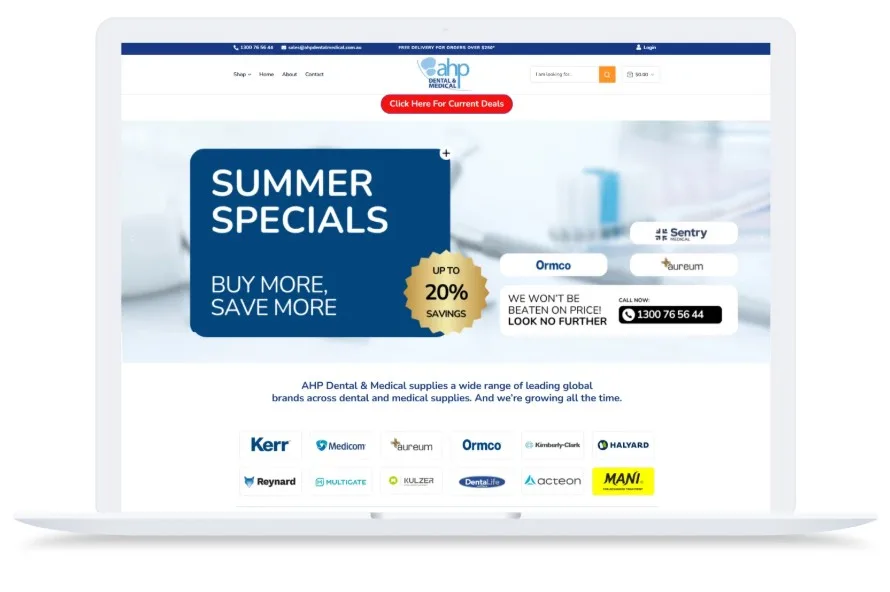
This leading B2B supplier in Australia moved from an outdated, manual ecommerce platform to BigCommerce. Integrating with MYOB through BigCommerce partner MyIntegrator automated key workflows and eliminated costly inefficiencies.
The results: Online orders jumped from 25% to 75% of total B2B transactions while operational overhead dropped significantly.
Replacing siloed, manual processes with unified ecommerce platforms streamlines workflows, improves data accuracy, and creates smoother buying experiences.
B2B brands that move beyond legacy technology unlock efficiency and agility that legacy systems can't provide.
3. Adopt composable architecture for maximum flexibility.
Your B2B ecommerce platform should enable growth, not constrain it.
Choosing the right technology ranks among the most critical decisions in any digital transformation journey. Platform architecture determines how quickly you can innovate, integrate new tools, and adapt to changing buyer expectations.
Monolithic platforms take a one-size-fits-all approach. They limit customization, slow innovation, and often require complex workarounds for B2B functionality.
Composable architecture offers a different path. Built on MACH principles (Microservices, API-first, Cloud-native, Headless), composable ecommerce platforms let B2B brands customize and scale each component independently. Headless commerce separates the frontend from the back end, enabling tailored buyer experiences without disrupting back-end operations.
One example of a headless “starter kit” is Catalyst, which provides composable storefront functionality built for performance and speed. The platform delivers faster time to market while maintaining enterprise-grade security, high performance, and lower total cost of ownership, all with native B2B functionality included.
Take vet medtech brand Movora, for example. After working with a patchwork of legacy platforms and ERP add-ons, they decided to go with BigCommerce to centralize their backend. Then for the front end they went headless, with Catalyst giving them the freedom and flexibility they needed to end outdated-feeling customer experiences, once and for all.
The results were staggering, including over 100% ecommerce growth in the US within months of going live.
If you’re still wondering what are the differences between composable and monolithic architecture, we’ve broken it down for you.
The table below compares key differences:
Capability | Composable Architecture | Monolithic Architecture |
Flexibility | Customize each component to meet specific B2B needs | Limited customization without developer-intensive work |
Scalability | Scale individual services (pricing engine, checkout) as needed | Requires scaling entire system, slower and more expensive |
Integration | Connects easily to ERPs, CRMs, PIMs, CPQs through APIs | Integrations often limited or require custom development |
User Experience | Enables tailored buyer experiences across channels | Restricted to pre-built templates and features |
Time to Market | Faster for specific features; longer initial setup | Quick initial launch; slower long-term innovation |
Best for | Mid-market to enterprise B2B brands needing flexibility and scale | B2B businesses with simple needs and limited development resources |
Selecting the right platform architecture doesn't just support ecommerce, it becomes the engine driving sustainable growth.
4. Personalize experiences based on buyer behavior and account data.
Trends show that B2B buyers expect tailored digital experiences, with personalization driving conversion and loyalty in B2B ecommerce.
Research shows that B2B buyers expect a more personalized experience when researching products online. At the end of the day, generic experiences are becoming less likely to satisfy B2B customer expectations.
A few advanced personalization tactics can deliver big results. Account-based pricing shows contract rates automatically when buyers log in. Dynamic content displays relevant products based on industry, purchase history, or browsing behavior. Predictive analytics suggest items buyers need before they search.
GlassCraft Door Company expanded capabilities by letting distributors create user accounts for their customers and personalize quotes, streamlining the ordering process while improving buyer experience.
“We looked at many different platforms but finally settled on BigCommerce simply because it offered us the customization options and different routes that other platforms did not.”
— Donald Polansky, Senior Manager for Corporate Systems Development, Glasscraft Door Company
Personalization technology has more options than ever to lean on, even for smaller teams looking to boost B2B ROI. Effective personalization can increase engagement, shorten sales cycles, and drive higher average order values across their customer base.
Tools like Klevu, Bloomreach, and Nosto use machine learning and real-time data to automate product recommendations, search results, and content customization. You don't need custom development to deliver personalized experiences.
5. Improve product discovery with accurate, accessible information.
Finding the right product shouldn't feel like work. Poor product discovery frustrates B2B buyers and directly impacts conversion rates. In fact, incomplete or inconsistent product data ranks among the leading causes of cart abandonment in B2B ecommerce.
Buyers expect easy product discovery across every touchpoint, including your storefront, marketplaces, mobile apps, and social media platforms. Omnichannel product discovery isn't optional anymore. Product Information Management (PIM) systems solve this challenge.
PIMs centralize and enrich product data, then distribute it across all selling channels. Whether buyers shop on your ecommerce storefront, a distributor site, or Amazon Business, they see consistent, accurate information.
Integrating your commerce platform with ERP systems automates updates and maintains real-time inventory and pricing accuracy. This integration eliminates manual spreadsheet management and reduces errors.
Search is shifting with help from artificial intelligence.
AI-powered search and filtering can also accelerate discovery, with agentic checkout quickly growing in popularity online.
Large language models (LLMs) now have the power to sift through large amounts of data, curating products and services for online shoppers, and reducing the time it takes to narrow down product search. A great example of this is Perplexity Shopping, which merges natural language processing with real‑time product data to deliver more relevant product recommendations in response to human questions.
Conversational shopping and AI-powered shopping assistants are the next technology trend ecommerce businesses should consider when building out their product pages, which means it’s more important than ever to unify customer data, connect AI systems across platforms, and maintain clear messaging throughout the entire customer experience.
Structured data (e.g., titles, descriptions, images, and specs) should be accurate, rich, and kept up to date for AI agents to find and select your products for shoppers. When it comes to listings across multiple marketplaces, keep in mind that each channel has different requirements for data.
You can ensure you’re structuring your product listings correctly and efficiently by relying on product feed management solutions to help, like Feedonomics.
Then there’s smart search that understands industry terminology and buyer intent. Faceted filters let buyers narrow options by specifications that matter to their procurement needs. Chatbots guide buyers to the right product or connect them with sales reps when human expertise is needed.
Prioritizing product discoverability and data accuracy reduces friction, improves buyer confidence, and increases conversions across every channel.
6. Expand reach through third-party B2B marketplaces.
Marketplaces drive discovery for B2B buyers.
Many buyers begin product research on channels like Amazon Business, Alibaba, and Faire before visiting manufacturer websites. Marketplaces offer speed, convenience, and bulk pricing options that align with procurement workflows.
Selling on these channels helps B2B brands reach new customers, test product demand, and expand into international markets, often without the upfront investment required to build local operations.
Omnichannel presence is quickly becoming the norm.
Yet marketplace strategy requires deliberate execution. Challenges include channel conflict, limited pricing control, and maintaining consistent product data across platforms. Success demands the right approach and tools.
Feedonomics, Commerce's omnichannel feed management solution, simplifies marketplace selling at scale. The platform enables automated listing updates, real-time inventory syncing, and centralized pricing controls.
Amazon Business integration showcases the value of having an omnichannel strategy.
Custom pricing and volume discounts appear only to verified B2B buyers. This functionality helps brands stay competitive on marketplaces without undermining direct sales channels or disrupting existing customer relationships.
B2B sellers should select marketplaces that align with their audience and product category, monitor channel performance closely, and use technology to maintain control while scaling efficiently.
7. Explore social media to influence B2B buying decisions.
Social media is increasingly playing a meaningful role across the B2B buying journey.
Roughly seven in ten B2B decision‑makers now use social platforms to research or evaluate vendors, with usage reaching 75% or more in some segment.
Social media has become essential in the B2B buyer journey. With millennials now representing the majority of B2B decision-makers, mobile-first design and social media presence create competitive advantages.
The social platforms you choose to focus on matters.
LinkedIn excels in product promotion and lead generation through product pages and company updates. YouTube supports how-to content and product demos that build trust and educate buyers. Facebook and Instagram drive awareness through visual content and Facebook Shops functionality.
You don't need social checkout immediately. Instead, use these platforms to drive traffic to your ecommerce storefront with product videos, customer testimonials, and success stories.
These tools help buyers move from awareness to consideration without friction. Social media becomes a valuable touchpoint across the entire B2B sales funnel.
Start with platforms where your target buyers spend time. Create content that educates rather than sells. Measure traffic and engagement to optimize your social commerce strategy over time.
8. Accelerate fulfillment to meet rising delivery expectations.
Anyone who has shopped online knows that fast, reliable fulfillment creates competitive advantages.
B2B buyers expect real-time updates and rapid delivery. Fulfillment speed influences supplier selection and drives repeat purchases.
Meeting these expectations requires streamlined, scalable operations. Order management software (OMS) consolidates orders from multiple channels, automates workflows, and improves inventory visibility across warehouses.
Third-party logistics providers (3PLs) reduce costs and boost efficiency.
3PLs handle warehousing, shipping, and returns on your behalf. They help B2B businesses scale quickly during peak seasons or rapid growth periods without capital investment in fulfillment infrastructure.
Best practices include:
Offering real-time shipment tracking to increase transparency and reduce customer support inquiries
Mitigating supply chain risk by diversifying suppliers and distribution centers
Setting clear delivery timeline expectations and proactively communicating delays
Investing in fulfillment technology and partnerships increases speed, reduces friction, and delivers the seamless experiences B2B buyers demand — even as order volume scales.
9. Implement data governance to unlock business intelligence.
Data powers B2B ecommerce decisions.
Managing complex product catalogs, customer accounts, and sensitive business information requires more than spreadsheets or siloed systems. Without proper data governance, information becomes a liability instead of an asset.
B2B businesses must adopt strong data management practices, ensure compliance with privacy regulations like GDPR and CCPA, and eliminate internal silos that prevent teams from accessing critical insights.
BigCommerce Big Open Data Solutions empowers data-driven decision-making.
The solution integrates with your preferred analytics tools, data warehouses, and customer data platforms. Real-time insights across marketing, sales, inventory management, and customer behavior help teams make faster, smarter decisions while delivering personalized experiences.
Feedonomics handles product feed data at scale.
For businesses managing large catalogs across multiple sales channels, Feedonomics aggregates and optimizes product data for syndication to marketplaces, advertising channels, and more, ensuring consistency and accuracy everywhere buyers engage.
Proper data infrastructure lets businesses spot trends, optimize performance, and scale efficiently while maintaining compliance and alignment across departments.
10. Build mobile apps to serve on-the-go buyers.
Mobile drives significant B2B product research and purchasing.
Buyer demographics continue shifting toward millennials who expect the same mobile convenience they experience as consumers. Mobile transactions grow rapidly as expectations rise.
Custom mobile apps give B2B brands powerful tools to meet these expectations while streamlining the path to purchase. Apps offer functionality beyond responsive web design — offline access, faster load times, and push notifications for order updates or personalized offers.
Key mobile app features enhance B2B buying:
Account-based pricing and customized product catalogs
Quick reorder tools for frequently purchased items
Barcode scanning for easy inventory replenishment
Real-time inventory and order tracking
In-app messaging, connecting buyers with sales reps
Successful apps feel like natural extensions of your digital ecosystem, not standalone tools. Consider buyer workflows, device preferences, and how the app integrates with your ecommerce platform and back-office systems.
B2B brands investing in mobile-first strategies drive convenience, loyalty, and repeat purchases as mobile usage continues accelerating.
11. Use dynamic pricing to optimize margins and competitiveness.
Dynamic pricing adjusts rates based on real-time variables.
B2B sellers can modify pricing based on customer type, order volume, inventory levels, and market demand. This flexibility helps businesses stay competitive, protect profitability, and serve diverse buyer needs.
Combined with personalization data — purchase history, location, or account status — dynamic pricing becomes even more powerful.
Strategic applications include:
Exclusive discounts for repeat buyers reward loyalty
Volume-based pricing for high-value or wholesale accounts encourages larger orders
Geo-specific promotions drive local demand in targeted markets
But implementation requires clean data and governance.
Dynamic pricing demands accurate customer data, clear pricing rules, and tools to manage complexity. B2B brands using BigCommerce can integrate with ERP or CPQ systems to automate contract-based pricing or display personalized rates to logged-in buyers.
Executed well, dynamic pricing paired with personalization delivers the tailored experiences B2B buyers expect while driving measurable improvements in conversion rates and profitability.
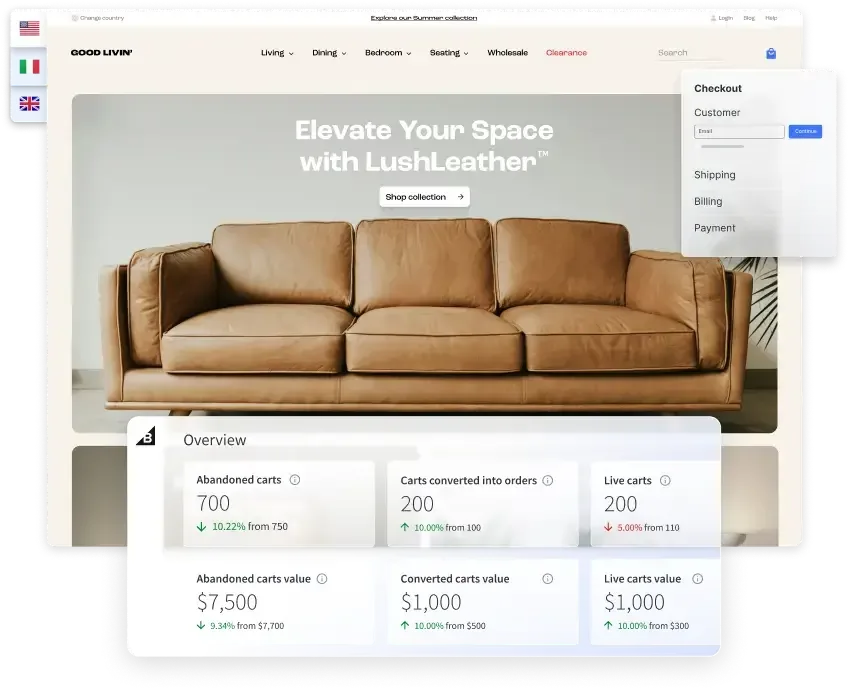
⏰ Isn't about time that you evaluated your ecommerce platform?
Request a demo to see how the BigCommerce platform is different.
How to evaluate B2B ecommerce trends for your business
Not every trend deserves your investment.
Adopting the wrong trend wastes time and resources. Chasing innovations that don't align with your business goals creates a distraction without delivering ROI.
Smart B2B companies evaluate trends strategically before committing resources. They focus on initiatives that solve real problems, match customer expectations, and fit their team's execution capabilities.
Use this framework to prioritize trends.
1. Assess business fit.
Does this trend solve a clear problem or unlock new value? Consider the impact on both customers and internal teams.
2. Estimate ROI
Calculate potential effects on revenue, operational efficiency, or customer satisfaction. Quantify expected returns wherever possible.
3. Evaluate risk
Weigh implementation costs, technical complexity, and potential disruption to existing workflows.
4. Check readiness.
Do you have the ecommerce platform, team skills, and infrastructure to support this trend?
5. Study the market.
Examine how competitors and industry peers are adopting — or deliberately avoiding — the trend.
Involving key stakeholders early ensures new trends align with business objectives and actual buyer needs. Strategic evaluation helps you invest in what moves the needle while avoiding distractions that don't serve growth.
Follow industry research to spot emerging opportunities.
Credible data reveals where B2B ecommerce is heading.
Industry reports provide insights you can't gather from your business alone. They benchmark performance, identify emerging trends early, and validate — or challenge — your strategic assumptions.
Trusted sources deliver reliable intelligence. Forrester analyzes B2B buying behavior and technology adoption. Gartner evaluates commerce platform capabilities and market positioning. Digital Commerce 360 tracks B2B sales data and growth projections. Salesforce publishes buyer expectation research.
Evaluate reports critically before acting on them.
Consider methodology, sample size, and recency. Verify that findings apply to your vertical, company size, and target customer segment. Research conducted with enterprise brands may not apply to mid-market B2B sellers.
Regularly consulting industry data helps you understand market direction, prioritize innovations, and maintain competitive positioning in an evolving B2B ecommerce landscape.
Analyze customer behavior to identify relevant trends.
First-party data reveals what your buyers actually need.
B2B ecommerce platforms generate rich behavioral insights. Purchase frequency, order values, preferred channels, device usage — this data shows how customers interact with your business.
Analytics tools help you dig deeper into patterns. Google Analytics tracks traffic sources and conversion paths. Mixpanel measures user engagement across touchpoints. BigCommerce's built-in reports provide cohort analysis, customer segmentation, and buyer journey tracking.
Combine quantitative data with qualitative feedback.
Post-purchase surveys capture satisfaction levels and pain points. Account manager conversations reveal unmet needs and feature requests. Customer support tickets highlight friction in the ordering process.
This combined intelligence surfaces which trends matter most to your specific customer base. Use insights to improve retention strategies, personalize the buying experience, and guide product catalog decisions.
B2B businesses that actively monitor customer behavior can evaluate trends based on actual needs rather than industry hype, driving long-term growth through data-backed decisions.
Monitor competitors to understand market momentum.
Competitive intelligence reveals which trends gain traction.
Watching how competitors implement new strategies helps you evaluate risks and opportunities. Successful adoption signals potential value. Failed implementations offer lessons without the cost.
Tools that provide ethical competitive insights can go a long way.
Similarweb analyzes traffic sources and audience demographics. Semrush reveals SEO strategies and paid advertising approaches. BuiltWith identifies ecommerce platforms and technology stack components. Wappalyzer detects marketing automation and analytics tools.
Monitor competitor websites, product launches, content strategies, and customer reviews regularly. Look for patterns in their approach to B2B sales, self-service functionality, or omnichannel integration.
Benchmarking against industry leaders guides positioning decisions.
Identify gaps in areas like checkout experience, pricing strategy, or product discovery features. Spot differentiators that create competitive advantages. Use insights to inform your ecommerce strategy without blindly following competitors.
Understanding competitor direction helps you make proactive, informed decisions about which B2B ecommerce trends align with your growth objectives.
How BigCommerce supports B2B growth
B2B functionality is built in, not bolted on.
BigCommerce delivers native B2B features that eliminate manual workflows. Price lists and customer groups display SKU-level pricing automatically. Volume discounts and targeted promotions run without third-party apps.
Multi-storefront support lets you manage multiple brands or customer segments from a single back end. B2B Edition adds self-service capabilities: an open-source Buyer Portal for reordering and account management, customer-requested quotes that speed sales cycles, and payment method controls that streamline compliance.
In addition, a recent IDC study found that B2B Edition users saw a 391% three-year ROI and upwards of 24% increase in sales team productivity.
Tools like these solve real problems like manual quote handling, inconsistent pricing, fragmented ordering, and lack of payment options, while improving sales efficiency and customer retention.
Open architecture enables greater flexibility.
BigCommerce connects seamlessly with ERP, CRM, and PIM systems through open APIs. Real-time data flow eliminates manual rework and keeps inventory, pricing, and customer information synchronized.
The platform holds PCI DSS 4.1 Level 1 certification, ISO/IEC 27001:2022, and ISO/IEC 27701:2019 compliance. DDoS protection and 99.99% uptime ensure your operations stay secure and accessible during peak demand.
Industry analysts recognize this approach. BigCommerce earned placement in the 2025 Paradigm B2B Combine for Mid-Market and Enterprise, was named a Challenger in the 2025 Gartner® Magic Quadrant™ for Digital Commerce Report, and named one of G2's Best Commerce Software Products of 2025.
Composable commerce built on your terms.
If you run a B2B business that needs limitless flexibility when creating your online experience, it helps to start by understanding what composable commerce is, what it can do, and how to implement it to build your dream tech stack.
Composable commerce is a modern method to build ecommerce systems that uses independent software (including features like search, cart, or checkout), connecting them through APIs. Composable is more agile, modular, and ultimately more flexible than traditional ecommerce platforms, and gives businesses the ability to piece together their tech stack like building blocks.
That means you have the ability to build out the B2B ecommerce site that suits your business needs, complete with third-party APIs, ERPs, and a plethora of other outside tools of your choosing.
Then there’s headless architecture, which lets you decouple the front end from the back end of your system, providing another layer of functionality and freedom.
BigCommerce’s composable storefront, Catalyst, provides a lower total cost of ownership than platforms like SAP Commerce Cloud or Adobe Commerce. You get design flexibility through APIs, headless builds, or drag-and-drop editors without heavy developer resources.
Mobile-optimized storefronts, personalized product recommendations, and streamlined reordering create B2C-quality experiences that B2B buyers expect. Merchants report higher conversion rates, increased repeat purchases, and stronger customer satisfaction scores.
The partner ecosystem extends capabilities.
Technology partners add specialized functionality without custom development. Feedonomics optimizes product data across marketplaces and channels. Klevu delivers AI-powered search and merchandising. Avalara automates tax calculations globally. Salesforce and HubSpot enable advanced CRM workflows.
Recent integrations include enhanced Amazon Business functionality, expanded ERP connectors, and tools supporting AI personalization and subscription billing.
Zero-downtime maintenance is included.
BigCommerce manages security patches, platform updates, and performance optimizations automatically. Managed updates roll out seamlessly with no manual intervention required.
Service level agreements and 24/7 support ensure business continuity. Automatic updates mean you always run the latest platform version with new features deployed continuously — eliminating operational risk and unexpected disruptions.
The final word
The future of B2B ecommerce is here. And the brands that stay on top of emerging trends will have the competitive advantage.
Buyers expect seamless digital experiences. They demand self-service options, personalized pricing, and omnichannel access. Meeting these expectations requires the right ecommerce platform and strategic execution.
The trends outlined here aren't theoretical — they're already reshaping how B2B companies acquire customers, serve existing accounts, and scale operations.
Start with trends that solve your biggest challenges. Evaluate ROI. Deploy strategically.
Ready to transform your B2B ecommerce strategy? Explore BigCommerce B2B Edition.
FAQs about B2B ecommerce trends
Not exactly.
A "B2C experience" really means user-friendly, customer-focused design. That's what buyers want — regardless of whether they're purchasing for business or personal use.
B2B sales processes add complexity. Multiple approvers, custom pricing, bulk orders, quote requests, requirements that differ from consumer shopping.
But complexity doesn't excuse poor user experience.
B2B customers expect easy product search, quick access to specifications and pricing, and efficient checkout. They want self-service options for routine purchases and human support for complex decisions.
Deliver intuitive navigation, clear product information, and streamlined purchasing. That's what "B2C-like experience" actually means in B2B ecommerce.
Yes, and buyers expect it.
B2B customers demand seamless experiences across every channel, including your website, marketplaces, social media, mobile apps, and in-person interactions with sales reps.
They research on LinkedIn. They compare pricing on Amazon Business. They reorder through your mobile app. They finalize complex purchases with your sales team.
Each touchpoint should reflect consistent product data, pricing, and brand experience.
Omnichannel requires the right ecommerce platform infrastructure. Your technology must synchronize inventory, pricing, and customer data across all channels in real-time. Without integration, you create friction and lose sales.
BigCommerce supports omnichannel selling natively, connecting your storefront to marketplaces, social platforms, and back-end systems through open APIs.
B2B merchants who invest in true omnichannel capabilities meet buyer expectations and capture sales across every channel.
Traditional tactics still work, but digital marketing is essential.
Cold calling, printed collateral, and in-person trade shows remain relevant for relationship-building and complex sales. Many B2B customers value face-to-face interactions.
But relying solely on traditional methods limits your reach and growth potential.
Digital marketing expands your audience. SEO helps buyers discover your products during research. Social media builds brand awareness and credibility. Paid advertising targets specific industries and decision-makers.
Content marketing educates B2B customers throughout their buying journey. Product videos demonstrate capabilities. Case studies prove ROI. Blog posts answer technical questions and establish expertise.
Successful B2B brands balance digital and in-person approaches. Use digital channels to generate awareness and leads. Deploy your sales team for high-value relationships and complex deals.
The businesses thriving in B2B ecommerce aren't choosing between traditional and digital — they're integrating both strategically.
Stop treating ecommerce as a threat to your sales reps.
Many B2B companies resist digital transformation because they fear it will reduce the sales team's role or eliminate jobs. That assumption costs you growth.
Ecommerce helps sales reps close deals faster by automating manual, time-consuming processes. For a good example of this, consider quote requests.
Without automation, a buyer emails your sales rep requesting pricing for 47 items. The rep manually checks inventory, calculates volume discounts, creates a proposal document, and emails it back. Days pass. The buyer has questions. More emails follow.
With ecommerce automation, the process accelerates.
B2B customers add items to a quote cart and submit their request with a few clicks. Your sales rep receives the request with all product details, pricing parameters, and customer history already compiled. They review, adjust if needed, and send a linked quote that the buyer can convert to an order immediately.
Your sales team focuses on strategy, relationship-building, and complex negotiations — not manual data entry and quote assembly.
Ecommerce platforms don't replace sales reps. They amplify their effectiveness and let them handle higher-value activities that actually require human expertise.
Stop viewing digital and in-person as competing approaches. Start using ecommerce to make your sales team more productive and your B2B customers more satisfied.
We're serious about B2B.
BigCommerce B2B Edition gives you account management and quoting tools to help your sales team get more orders.